The Shift from Apps to Messaging Agents
The AI startup Photon is operating on the premise that conversational agents will eventually replace standalone mobile apps, recently marking the shift with a symbolic event. Photon, which helps developers build agents that work over iMessage and WhatsApp, has secured $4.5 million in seed funding to expand its product offerings. The investment follows rapid growth, with the company signing up over 40,000 developers.
Image Credits:Photon
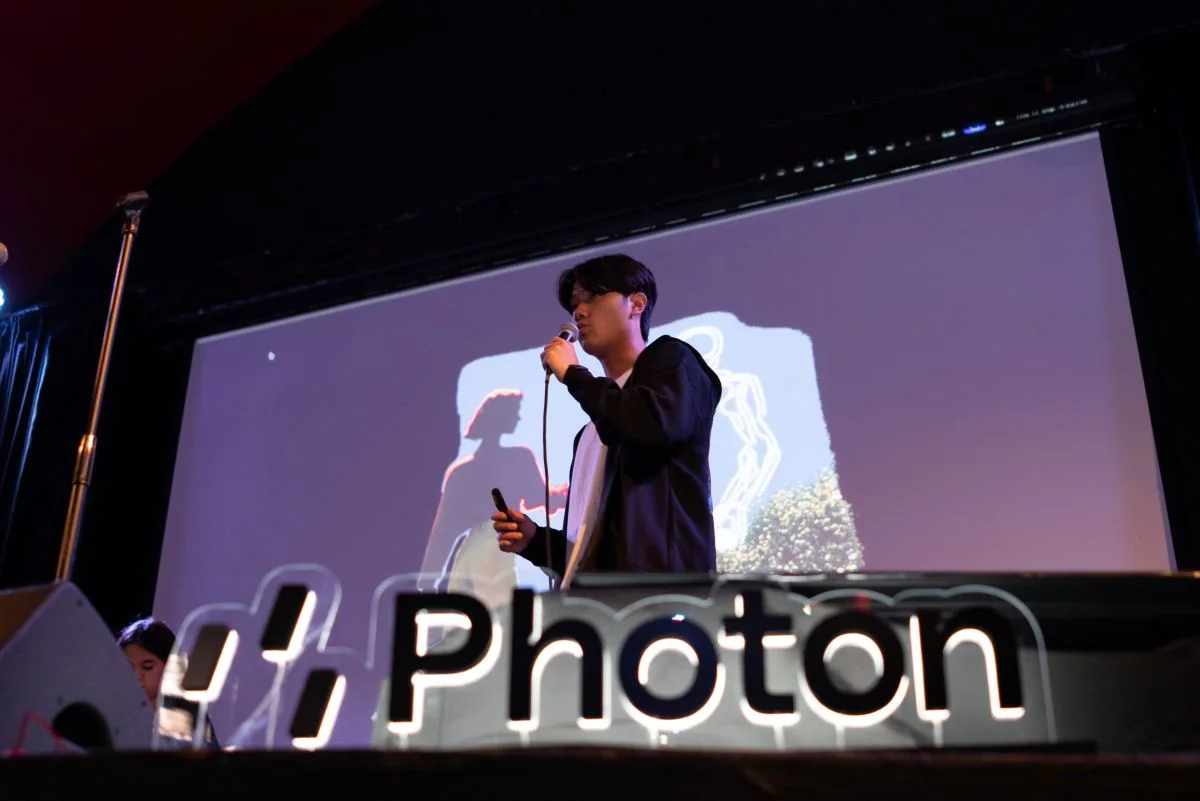
Co-founder and CEO Daniel Tian noted that the recent launch event in San Francisco served as a developer day featuring panels from industry figures, complete with a symbolic coffin for traditional application icons.
While hosting a mock funeral was tongue-in-cheek, Tian maintains that the traditional app era is nearing a long-term conclusion. He stated that while the transition will take time, the directional shift toward conversational interfaces is inevitable.
Image Credits:Photon
The underlying thesis is that consumers experience application fatigue and prefer interacting with capabilities through existing messaging environments like iMessage and WhatsApp rather than downloading new standalone programs.
Developer Tools and Managed Platform
To support this ecosystem, Photon provides a suite of developer tools including a unified API, an extensible channel framework, a command-line interface, and an observability suite. These components allow developers to deploy agent experiences across iMessage, WhatsApp, Telegram, SMS, RCS, email, and voice channels.
The concept originated when Tian and CTO Ryan Zhu encountered distribution bottlenecks while building consumer applications as students. By routing agent interactions through Apple's Messages app, they found an effective channel to reach users directly.
Image Credits:Photon
After Tian built an initial prototype that responded to friends over iMessage, the pair released the technology as open source on GitHub, where it gained thousands of adoptions. This momentum led Tian to leave his university program and Zhu to transition away from high school to focus on the project full-time.
The open-source version of Photon continues to account for the vast majority of its overall usage.
Enterprise Compliance and Funding
In April, the founders launched a managed platform offering paid subscription tiers with 99.95% uptime guarantees. The hosted service is SOC 2 Type II and HIPAA-compliant, making it suitable for enterprise applications in regulated sectors such as healthcare.
Image Credits:Photon
Photon's platform has attracted more than 40,000 developer sign-ups, enforcing paid tiers for implementations exceeding ten users. The company reports low customer churn and strong month-over-month growth in messaging volume.
Current customers utilize Photon for vertical use cases spanning insurance, fintech, dating platforms, and AI-driven email clients.
Technology integration partners include Vercel, Nous Research, and Tencent, alongside infrastructure integrations across LangChain, Mastra, Convex, Render, Railway, and Telnyx.
Image Credits:Photon
The $4.5 million seed round was co-led by Gradient and A*, with participation from Vercel, HongShan, Z Fellows, Llama Ventures, Karman, and angel investors.
Combined across its open-source and hosted offerings, Photon's underlying technology reaches millions of end users.
Future Agent-to-Agent Communication
Looking ahead, Tian envisions expansion beyond human-to-agent interactions into an ecosystem where autonomous systems communicate directly with one another.
In this future framework, a primary AI assistant could coordinate specialized secondary agents—such as flight or hotel booking systems—on behalf of a user, pointing toward an emerging agent-to-agent communication layer.