The rapid advancement of artificial intelligence raises critical questions for businesses and society. Founders must consider the implications of deploying AI agents within company systems, integrating autonomous vehicles, and utilizing robots in complex physical environments.
The Imperative of AI Safety and Security
These are no longer theoretical concerns for creators of AI. As AI transitions from demonstration phases to practical applications in businesses, vehicles, robotics, and autonomous agents, safety and security are becoming integral components of product design and deployment.
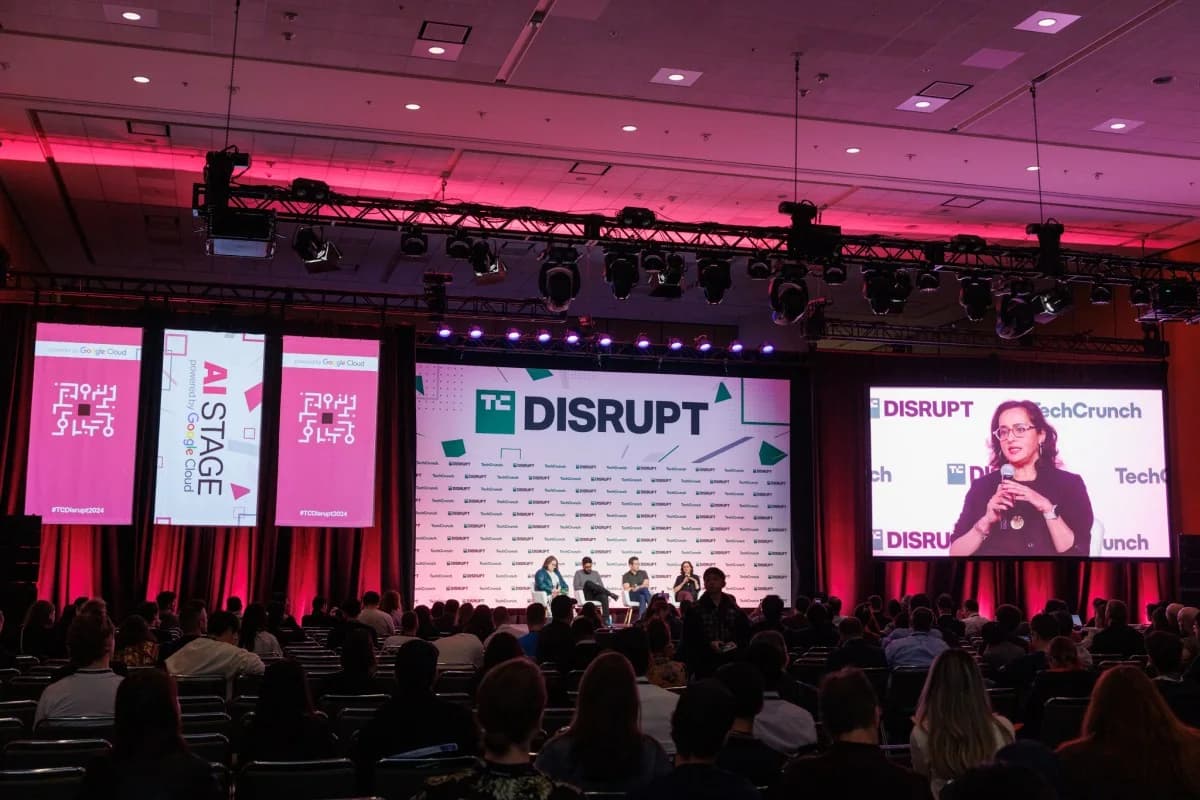
TechCrunch Disrupt 2026 will host five dedicated sessions on its AI Stage and Real World AI Stage, focusing on these challenges. These discussions will guide founders on developing AI solutions that earn the trust of both individuals and enterprises, covering topics from agent security to successful enterprise AI implementation.
Building the next generation of AI? Secure your pass to Disrupt and add these five AI safety sessions to your agenda. Save up to $200 on your pass before September 25 at 11:59 p.m. PT. Get a second pass at 50% off.
Image Credits:Jeff Bottari / Flickr (opens in a new window)
Anthropic's Insights on Enterprise Claude Deployments
While some enterprises achieve significant value from AI, others remain in pilot phases for extended periods. Understanding the factors behind these differing outcomes is crucial for successful integration.
Cat de Jong, Anthropic's Head of Applied AI, observes firsthand how enterprises implement Claude into essential workflows. Her experience reveals the distinctions between successful deployments and those that encounter obstacles.
During her AI Stage session, de Jong will discuss the transition from AI experimentation to production within companies. This offers founders insights into why certain deployments generate tangible business value, while others struggle to move beyond pilot stages.
Want to know what separates AI pilots from deployments that deliver real business value? Hear what Anthropic is seeing firsthand. Register for Disrupt now to save up to $200 before September 25.
Security for Autonomous AI Agents
AI agents capable of independent action introduce novel security concerns. Key questions arise regarding their access privileges, permissible actions, and the limitations of conventional application-level permissions in managing these agents.
Ric Smith, Okta's President of Products and Technology, and Gavriel Cohen, NanoCo co-founder and CEO, will lead an AI Stage session on infrastructure-level agent security. They will address vulnerabilities in application-level permission models and critical architectural considerations for founders deploying agentic AI.
If agents are on your product roadmap, security belongs there, too. Get your ticket today to save up to $200 and add this session to your Disrupt agenda.
Beyond Demos: Enterprise AI Requirements
Successfully integrating an AI product into an enterprise environment demands more than just a compelling demonstration.
When enterprises evaluate AI for critical systems, discussions invariably expand to encompass security, governance, and observability frameworks.
The AI Stage session will feature AWS VP of Security Services Rudy Mitra, Luta Security CEO Katie Moussouris, and cybersecurity expert Wendy Nather. They will discuss the essential infrastructure required by enterprises as AI systems assume increasingly autonomous functions.
This session provides an opportunity for founders developing enterprise AI to understand how innovative solutions must align with the stringent security demands of potential corporate clients.
Building AI for enterprise customers? Get closer to the security requirements that can stand between your product and deployment. Secure your pass to Disrupt before September 25 to save up to $200.
High Stakes in Physical World AI
AI deployed in physical environments carries significant risks, as errors can extend beyond digital interfaces to impact vehicles, aircraft, industrial operations, and critical missions.
The Real World AI Stage will host Nathan Michael, Shield AI CTO; Mikell Taylor, General Motors Director of Robotics Strategy; and Raquel Urtasun, Waabi founder and CEO. They will share insights from defense and autonomous systems, addressing the complex question of determining when an autonomous system is sufficiently safe for deployment.
This session will delve into establishing a robust safety culture, rigorous AI testing and validation, managing regulatory complexities, and fostering trust in companies developing systems where physical failure has severe consequences.
When failure isn’t an option, testing can’t be an afterthought. See how leaders in autonomy are approaching safety at Disrupt. Explore your ticket options, and save up to $200 on your pass before September 25.

Image Credits:Kimberly White / Getty Images
The Data Gap in Physical AI
Robotics currently faces a significant data challenge, lacking access to the extensive training datasets that propelled progress in language models and autonomous vehicles.
This data deficit presents a major barrier to scaling physical AI. Les Karpas, Nvidia Inception Global Head of Physical AI, will discuss how data pipelines, simulation tools, and foundation models can bridge this gap, enabling the development, testing, and deployment of more advanced and dependable robots.
The session will address the crucial question for physical AI founders: what is required for robotics to achieve a transformative breakthrough, akin to ChatGPT, and gain the public trust necessary for real-world deployment?
Get an inside look at what could help robotics clear its next big hurdle. Register for Disrupt today to save up to $200 before prices increase.
Key Questions for Every AI Founder
A central theme across these five sessions, and indeed the broader TechCrunch Disrupt 2026 event, is the question of public trust in AI innovations. The conference, scheduled for October 13-15 at Moscone West in San Francisco, will feature over 200 sessions, attracting more than 10,000 attendees, 250+ speakers, and 300+ exhibiting startups.
While developing advanced AI models, capable agents, or groundbreaking robots is a significant achievement, securing customer trust for deployment often presents the most formidable challenge in bringing these technologies to market.
Secure your pass to Disrupt now and save up to $200 before September 25 at 11:59 p.m. PT. Save 50% on a second ticket. Hear how AI leaders are tackling the safety, security, and reliability challenges that can stand between breakthrough technology and real-world adoption.

Image Credits:Eric Slomonson, The Photo Group