AI Software for Logistics
The best path to successfully deploying a robot is not building one at all, according to Destro, a startup that came out of stealth with an $8 million seed round.
Most new robotics companies are focused on finding the right form factor or developing an AI model that can put metal hands to work. Destro has instead built an AI intelligence layer that lets robots work effectively in logistics settings, in part by also telling the human workers what to do.
Founder Manthan Pawar noted that many robotics companies are driven by what engineers find interesting rather than direct customer utility. One of the primary advantages of their approach is focusing strictly on software solutions rather than manufacturing hardware.
Pawar earned a master’s degree in robotics at NYU Tandon and spent roughly eight years in the U.S. supply chain and robotics industry before launching the venture.
Real-World Warehouse Testing
Richard Brunelle, the director of automation for the American logistics group at Yusen Logistics, helped guide the startup toward specific industry challenges. Brunelle manages automation across approximately 30 facilities in the U.S., utilizing fixed automation while piloting trailer-unloading robots and autonomous floor scrubbers.
Finding ways to implement new technology remains a priority as Yusen evaluates automated facilities in the U.S. and abroad. When Brunelle met Pawar, Destro was initially focused on picking and pack operations.
Brunelle identified cross-docking—unloading goods from one truck and sorting them into mixed loads for outbound delivery—as a primary operational challenge that shared similar complexities.
Destro adapted its solution to fit the cross-dock environment after recognizing an unmet need in that specific operational niche.
Deploying Vision Models
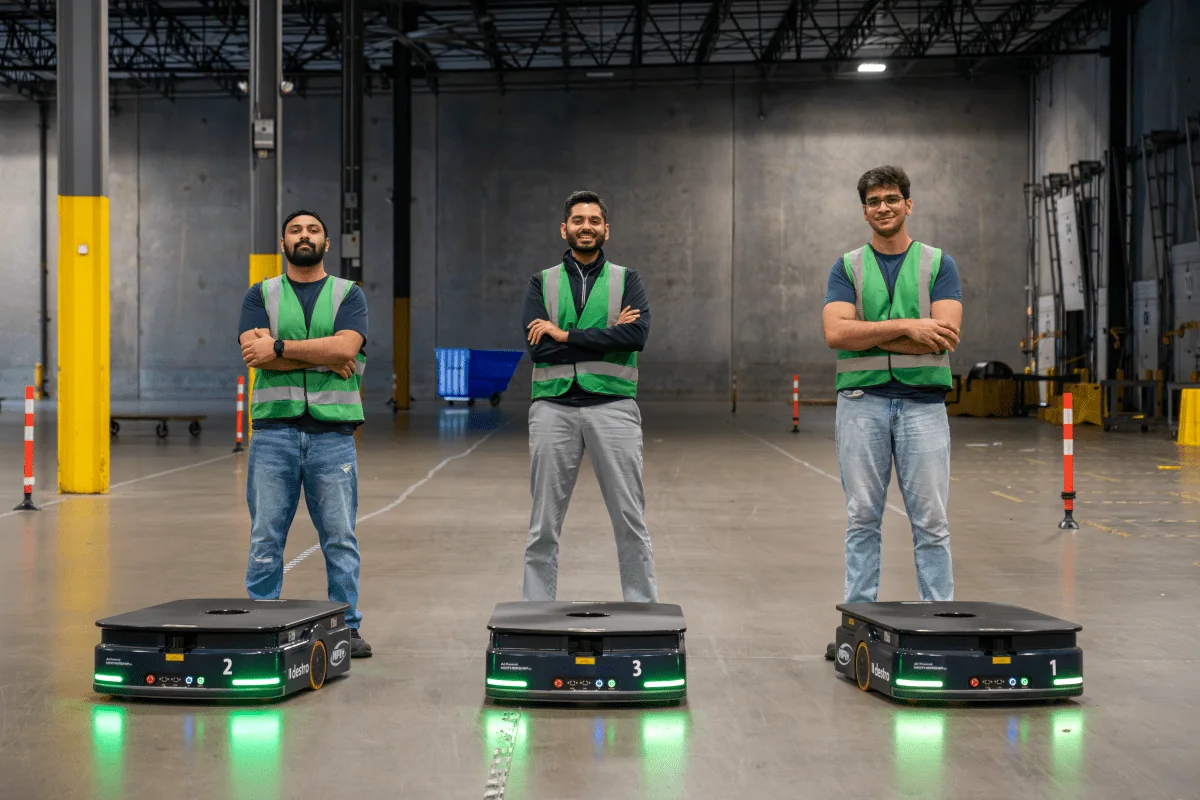
Destro initiated a pilot program at a Yusen facility in the Pacific Northwest using three cart-moving robots built by Miva Robotics, operated by Destro’s Vision operating system based on open-weight vision-language-action models.
As human workers unload goods into different carts, the robots transport the completed loads to their destinations. Both the human workers and autonomous carts are directed by Destro’s Mothership operating system.
The platform reduces reliance on paper workflows and makes the operation more systematic.
Yusen evaluated other robot startups in the space, but found that competitors either lacked comprehensive fleet management or required constant human oversight for orchestration.
Expansion and Funding
Destro is expanding its initial pilot to 26 robots and launching another pilot with 17 robots at a facility in Southern California. The startup's seed round was led by Base10 Partners and Bonfire Ventures, with additional investment from CoFound Partners.
Challenges and Future Outlook
Potential hurdles for the company include workflows requiring advanced dexterity and manipulation, capabilities that generic robot bodies and open-source models have yet to consistently demonstrate.
Pawar remains confident that software orchestration represents a critical layer of value in the broader robotics ecosystem.
Destro positions its technology as a complex software harness that makes otherwise difficult automated workflows feasible.
Industry adoption of bipedal humanoid robots remains limited as companies prioritize immediate operational efficiency over novel form factors.
Automation decisions continue to be driven by measurable operational problem-solving rather than technological novelty.
Destro will be making its case for the non-robot robot company at TechCrunch Disrupt in just a couple weeks. Join us October 13-15 to see Destro in person, along with the rest of our Startup Battlefield competitors.