The Next Wave of AI Hardware
While artificial intelligence has made plenty of inroads on phones and computers, it has largely failed in dedicated devices. Over the coming year, Meta and OpenAI will attempt to change that by testing appetites for physical hardware backed by cutesy software agents.
The AI Tamagotchis Are Coming
Personal AI hardware has mostly crashed and burned. OpenAI and Meta are counting on two selling points: It’s useful, and it’s cute.
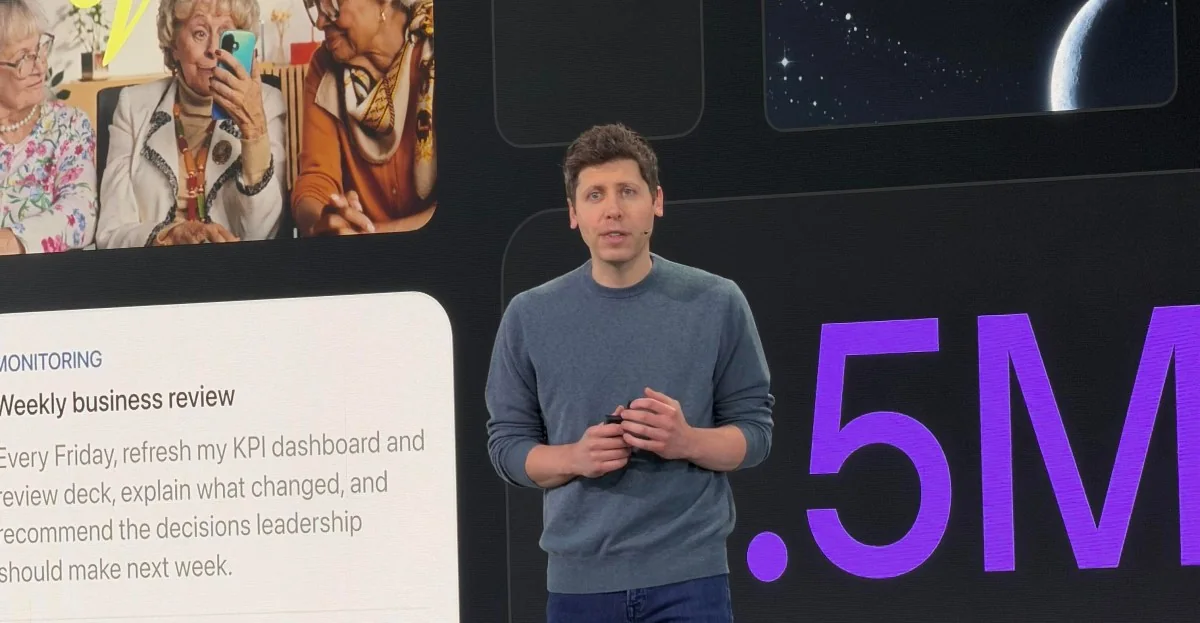
Sam Altman onstage at OpenAI’s DevDay 2026.
The AI Tamagotchis are coming
Personal AI hardware has mostly crashed and burned. OpenAI and Meta are counting on two selling points: It’s useful, and it’s cute.
Overcoming Industry Skepticism
Dedicated AI devices like the Friend and Humane AI Pin have inspired mainly frustration and backlash, which may worsen as public skepticism toward AI grows. Meta and OpenAI are pushing ahead regardless. OpenAI is collaborating with former Apple designer Jony Ive and plans to ship hardware no earlier than February 2027, according to a public filing. Meta aims to launch a pendant-like device ahead of the holiday shopping season.
Although OpenAI’s hardware did not appear at DevDay, the company debuted a major new AI agent platform called Dots, featuring personalizable colored blobs with eyes. Asked whether Dots would eventually power a physical device, CEO Sam Altman stated it seems like a reasonable assumption, while declining to offer further specifics.
Meta Muse and Software First Strategies
Meta is more directly tying its hardware to the recently released Muse agent. Described by CEO Mark Zuckerberg as keychain-like, the device is called the Muse Charm and features a screen displaying the cuddly AI agent. Zuckerberg noted the device provides a fast way to interact with the Muse assistant without wearing smart glasses.
Both companies appear to be soft-launching AI agents before hard-launching the underlying hardware to prime the market. By getting users accustomed to interactive software agents, the companies hope to build demand for physical form factors once consumers find tangible value in the assistants.
Evolving the Assistant Interface
Discussing the integration of Dots, OpenAI head of core products Thibault Sottiaux explained that ChatGPT will evolve in place into a personal assistant accessible via email, text, or phone call, eventually blurring the points of interaction into a natural part of daily life.
Altman emphasized that Dots is designed to function as an always-on helper capable of handling larger tasks and providing proactive assistance over time as it learns user preferences.
While both companies are betting that refined everyday tools will break through to broader consumer markets, recent demonstration hiccups and software exploits indicate that significant development work remains.