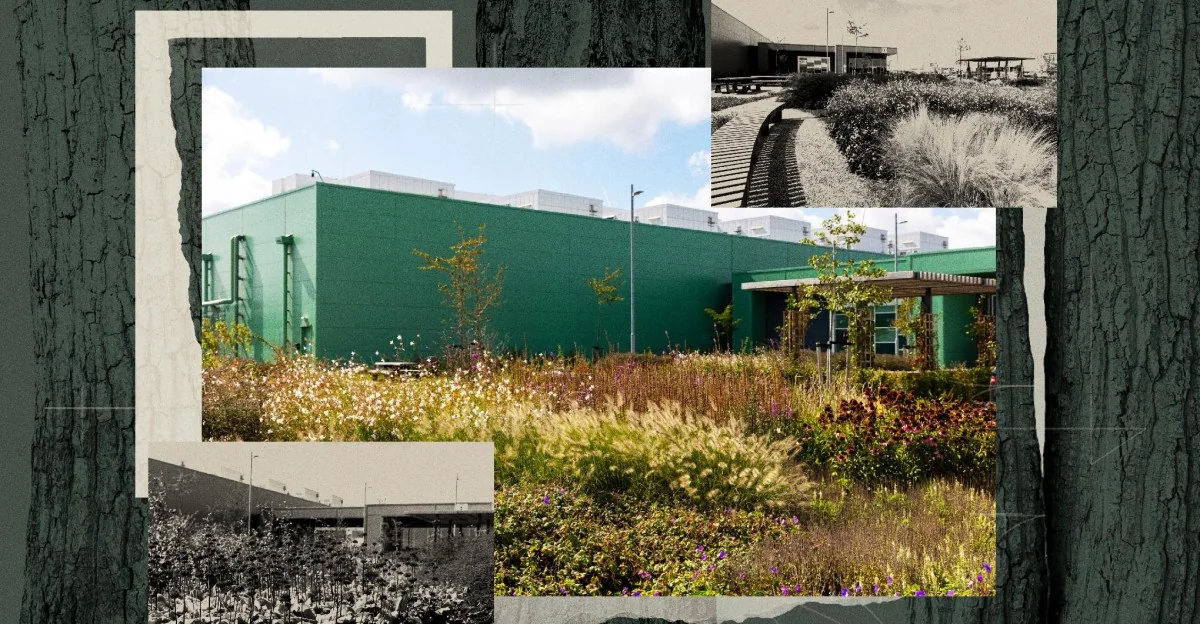
San Antonio City Councilmember Ric Galvan remembers when data centers first arrived in his city in the 2000s, looking like relatively unassuming office buildings. But that’s changed in recent years, as data centers have grown into massive hyperscale facilities spanning millions of square feet and housing the physical infrastructure for artificial intelligence.
If a Data Center Is Camouflaged in the Woods, Will Anyone Hate It?
Microsoft is expanding biomimicry at its data center sites as it faces mounting pushback from local communities over construction, pollution, and noise.
Hell or High Water: When Disaster Hits Home, a podcast from Vox Media and Audible Originals.
Local Opposition and Infrastructure Expansion
There are now more than a dozen data centers in Galvan’s roughly 55-square-mile district, and he expects that number to grow to around 20 over the next few years if proposed projects are completed. They’re clustered along two main roads, concentrating nuisances in the same neighborhoods: traffic and trees cut down during construction, followed by constant bright lights and noise when the facility is operating.
A lot of the area used to be green fields, allowing many residents to feel close to nature. Now, that feeling gets taken away pretty quickly when you make a gigantic data center.
That feeling gets taken away pretty quickly when you make a gigantic data center.
Across the United States, more communities are rising up against these large data warehouses, protesting their effects on quality of life, pollution, water resources, and electricity bills. Tech companies have responded with promises to mitigate potential harm by funding infrastructure upgrades needed in local water and power systems.
Microsoft is also taking a different approach to soften the impact its data centers have. It announced plans to make its facilities less jarring to local communities and the environment through what it describes as biomimicry.
Biomimicry is a catch-all term for ways technologies take inspiration from nature, from painless needles that imitate a mosquito’s proboscis to naturally ventilated buildings modeled after termite mounds. In Microsoft’s case, biomimicry involves blending data centers into the natural landscape to create resilient ecosystems that support biodiversity, strengthen community ties, and help facilities become better neighbors.
Essentially, Microsoft wants to make its data centers greener with more gardens and native trees on-site, alongside investments in projects that repair damaged ecosystems where it operates. The company believes these efforts will limit problems like noise pollution and the loss of green space.
Advocates and sustainability experts note that Microsoft has engaged more with communities where it builds compared to some of its rivals, which has helped appease certain local concerns.
However, these data centers are expanding rapidly, frequently razing thousands of trees, while Microsoft’s greenhouse gas emissions grow alongside the energy demands of AI. Critics want the company to limit its broader environmental footprint.
Implementation and Community Response
Galvan acknowledges that while the initiatives may be an attempt to cover bases, they are acceptable as long as operators genuinely address long-standing concerns regarding pollution, water use, and green space destruction.
Microsoft has operated data centers in the Greater San Antonio area for almost a decade and is spending hundreds of millions to build more. In 2022, the company cut down over 2,600 trees across a 33-acre expanse for a project, sparking significant local controversy over zoning changes and tax incentives.
Local leaders note that tree canopies are critical for mitigating extreme heat in Texas. In response, a Microsoft representative stated the company is investing in enhancement projects that include over 400 acres of woodland and pollinator prairie restoration.
Microsoft operates more than 300 data centers across 34 countries, having initiated biomimicry projects in the Netherlands in 2022. It now plans to bring nature-inspired restoration solutions to more than 20 sites in the United States and Germany.
Kaitlin Chuzi, director of global land strategy at Microsoft, notes that solutions are customized to fit local habitats, enhancing what is already present and restoring past losses.
In Mount Pleasant, Wisconsin, Microsoft repurposed a shuttered factory property, funding a 4.2 million dollar project in 2023 to restore a local creek's flow in partnership with the Root-Pike Watershed Initiative Network.
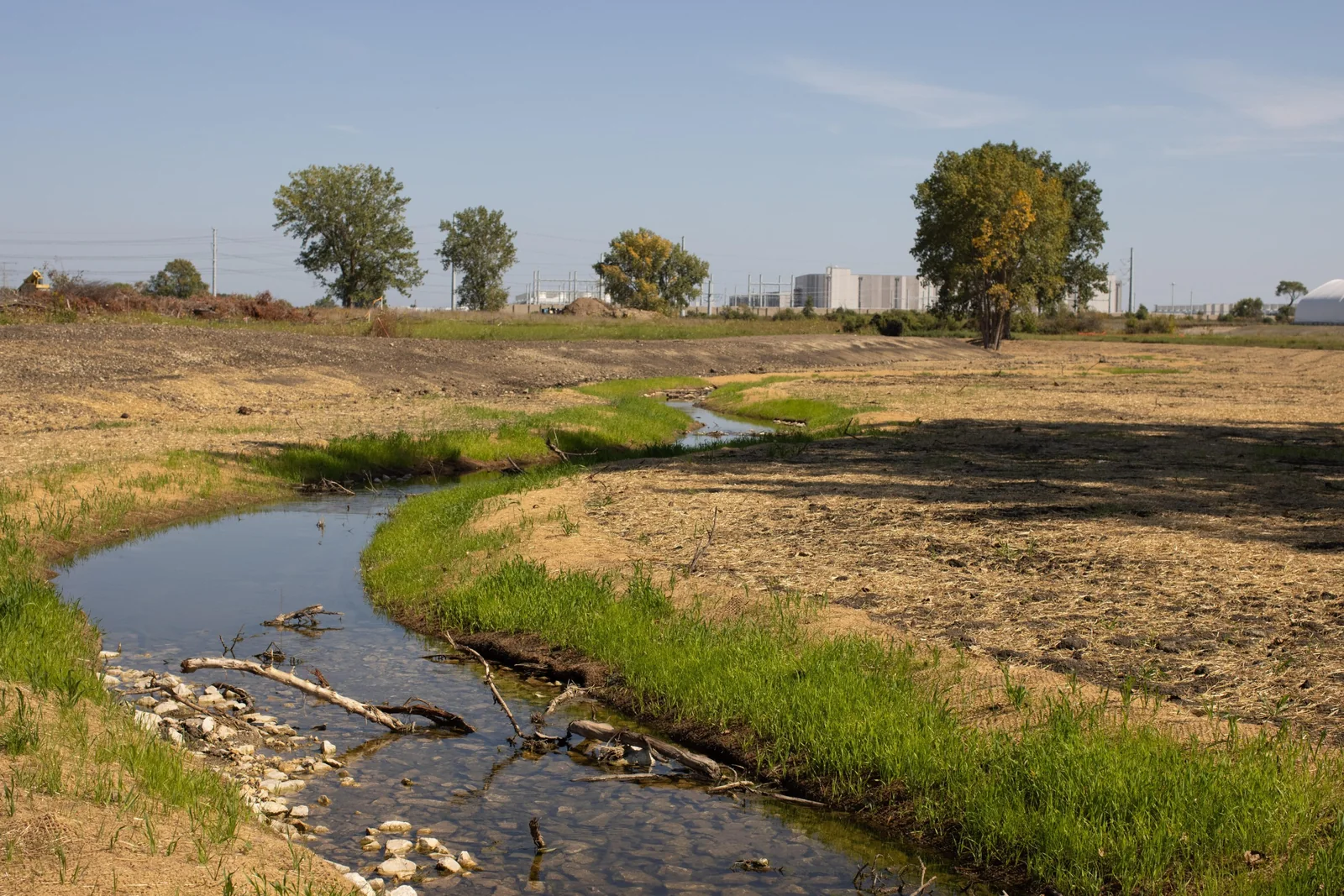
Root-Pike WIN executive director Dave Giordano praised Microsoft for outfitting stormwater ponds with forebays to capture sediment, noting that such practices are uncommon among data center operators.
Galvan also credits Microsoft for employing a responsive local representative. In January, the company introduced a Community-First AI Infrastructure plan to help manage local energy and water demands.
Not all data center companies are the same.
Proposed tactics in San Antonio include planting pollinator gardens for migrating monarch butterflies and establishing plant buffers to muffle generator noise and reduce visual impacts.
Broader Environmental Concerns and Resource Demands
Despite these nature-based proposals, advocates argue there is a mismatch between localized aesthetic improvements and the broader environmental footprint of surging computational resource demands.
Adrian Shelley, Texas director at Public Citizen, supports ecosystem-sensitive solutions but characterizes the broader outreach as insufficient given the wider environmental costs.
Shelley points to a 20-year agreement between Microsoft and Chevron to power a West Texas AI data center campus using co-located natural gas power developments.
Critics argue that no level of biomimicry investment can offset the addition of new fossil-fuel power plants as neighbors.
Rapidly rising electricity demand is driving new fossil-fuel infrastructure, raising concerns that local ratepayers could be left shouldering financial risks if the AI infrastructure boom slows.
Amid these concerns, Galvan proposed a local development moratorium in San Antonio, while Texas Governor Greg Abbott imposed statewide moratoriums on certain data center grid connections pending resource audits.
Data centers require significant water for cooling directly, though a larger portion of their water footprint stems from electricity generation at fossil fuel and nuclear power plants.
According to the Houston Advanced Research Center, data centers in Texas consumed roughly 25 billion gallons of water last year, a figure projected to rise significantly by 2030 depending on cooling technologies deployed.
Researchers note that transitioning to renewable solar and wind energy can help reduce this water footprint. While customized local biomimicry projects hold promise, experts emphasize that matching community expectations and rigorous tracking of ecological benefits remain critical.
Corporate Sustainability Goals Under Pressure
Microsoft maintains public targets to become water positive and carbon negative by 2030.
However, the company's corporate carbon pollution rose significantly in recent reporting periods due to AI infrastructure expansion, and reports indicate the company has reconsidered strict hourly renewable energy matching goals.
In 2024, former Microsoft ecosystem restoration manager Holly Alpine departed the company, citing contradictions between corporate climate initiatives and business deals supporting fossil fuel operations.
While praising the design of the biomimicry projects, Alpine noted they were insufficient to outweigh the environmental damage linked to cloud services and AI tools deployed for fossil fuel production optimization.
The company’s focus on AI has jeopardized some of its sustainability goals.
Research co-authored by climate analysts suggests that potential AI-driven productivity gains in energy sectors may ultimately stimulate net-increases in emissions that outweigh localized mitigation projects.
A Microsoft spokesperson emphasized that the company remains focused on global sustainability challenges, investing significantly in carbon-free electricity and decarbonization technologies to support infrastructure growth over time.
When questioned regarding whether there are geographic thresholds where the company might decline to build a facility, representatives described the process as an ongoing learning experience in community relations.
Management notes that understanding what it takes to be a welcome neighbor is an iterative process requiring long-term commitment and adaptation.