Introduction
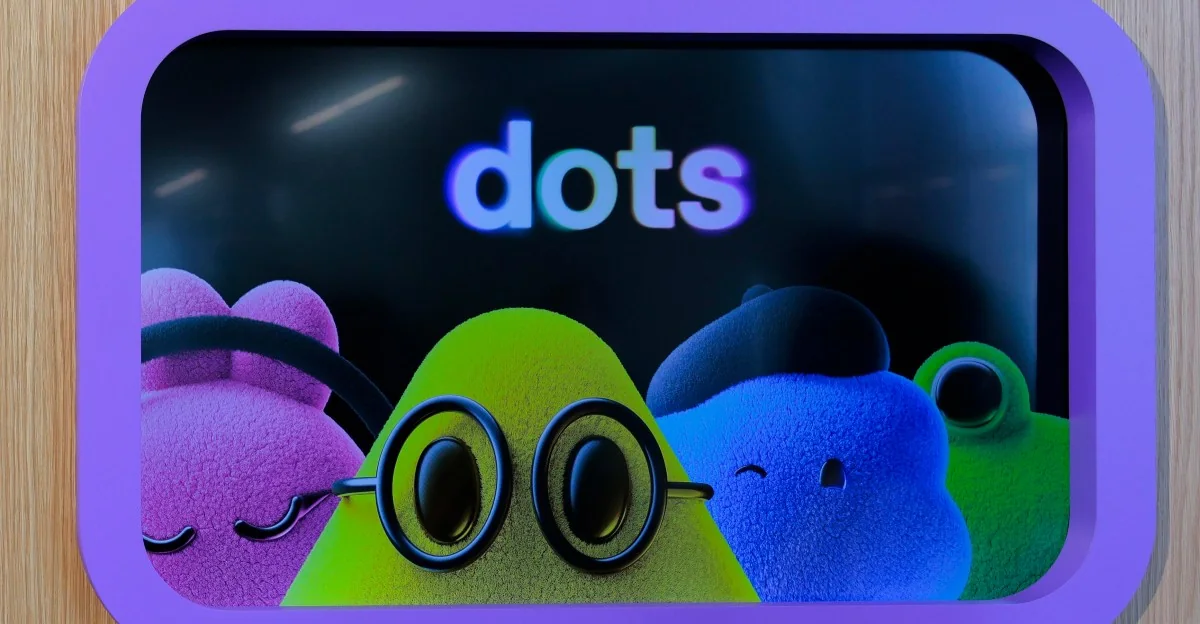
At OpenAI’s annual DevDay conference, the company announced Dots, a new AI agent powered by GPT-6 Astra. Designed with customizable, personalizable blob aesthetics similar to Meta's rival Muse platform, Dots aims to serve as a capable assistant and virtual world builder. However, a major differentiator lies in pricing and accessibility.
OpenAI’s new agent is a shot at Meta — but can it compete with free?
OpenAI and Meta’s cutesy AI agents are about to fight to the death.
OpenAI’s new agent is a shot at Meta — but can it compete with free?
OpenAI and Meta’s cutesy AI agents are about to fight to the death.
Pricing and Accessibility
Muse’s main selling point is free and frictionless access, providing a virtual machine for both the agent and user data. By contrast, OpenAI restricts Dots to users on its $20/month Pro plan and higher, meaning most of ChatGPT’s user base cannot access it immediately.
Financial Pressures and Compute Costs
OpenAI's financial constraints help explain the paywall. The lab aims to raise billions in funding at a high valuation amid massive projected spending on compute resources. CEO Sam Altman noted that compute is expensive and Dots requires significant resources to operate as a premium product, though mass-market options are anticipated in the future.
“Dots are starting out as a premium product — it uses a lot of compute,” Altman said during a press Q&A after his DevDay keynote, adding, “I think it will help us understand and help people understand how expansive and what AI can do. But you should of course expect us to do a mass-market thing for billions of people someday.”
Capabilities and Enterprise Focus
OpenAI positions Dots as a professional tool capable of acting like a chief of staff or experienced engineer for complex, multi-step tasks such as software QA, website design, and trip planning. Specialist versions tailored for accounting and legal analysis are expected soon, with planned integration into Microsoft's Agent 365 platform.
The goal, Altman said, is to go beyond agents that simply book reservations, purchase meals, search calendars, and schedule appointments — classic use cases for consumer-facing tools like Muse.
Technical Differentiation
OpenAI executives emphasize that Dots differs from competitors through its long-horizon task execution, maintaining focus over extended periods, and offering deep multimodality across text, voice, and phone calls.
Altman said during the Q&A that the long-horizon and knowledge-work tasks were what set Dots apart, adding, “I think this is far beyond anything else available on the market today.”
Positioning Dots for professional workflows helps OpenAI challenge Anthropic, which has traditionally dominated enterprise AI, while simultaneously growing its own enterprise business.
OpenAI highlights safety features powered by the GPT-6 Astra model and the OpenAI Private Intelligence framework, which offers stronger data controls and zero data retention policy options for businesses.
Altman stated that OpenAI aims to set a new standard for privacy in frontier AI, following recent controversies involving rival agent errors and privacy lapses on other platforms.
Executives noted that taking a deliberate, careful approach to agent actions, plug-ins, and user identity management is critical to avoiding costly user errors.
The central challenge for OpenAI is whether advanced capabilities can overcome a price disadvantage compared to free alternatives backed by deep platform integrations from tech giants.
“We might move a tiny bit slower, but we also know that if people have Dots that go out there and YOLO-buy stuff on Facebook Marketplace, that’s just not something we want to put 1.2 billion users through,” Coates said. “We’re trying to do it right, basically.”