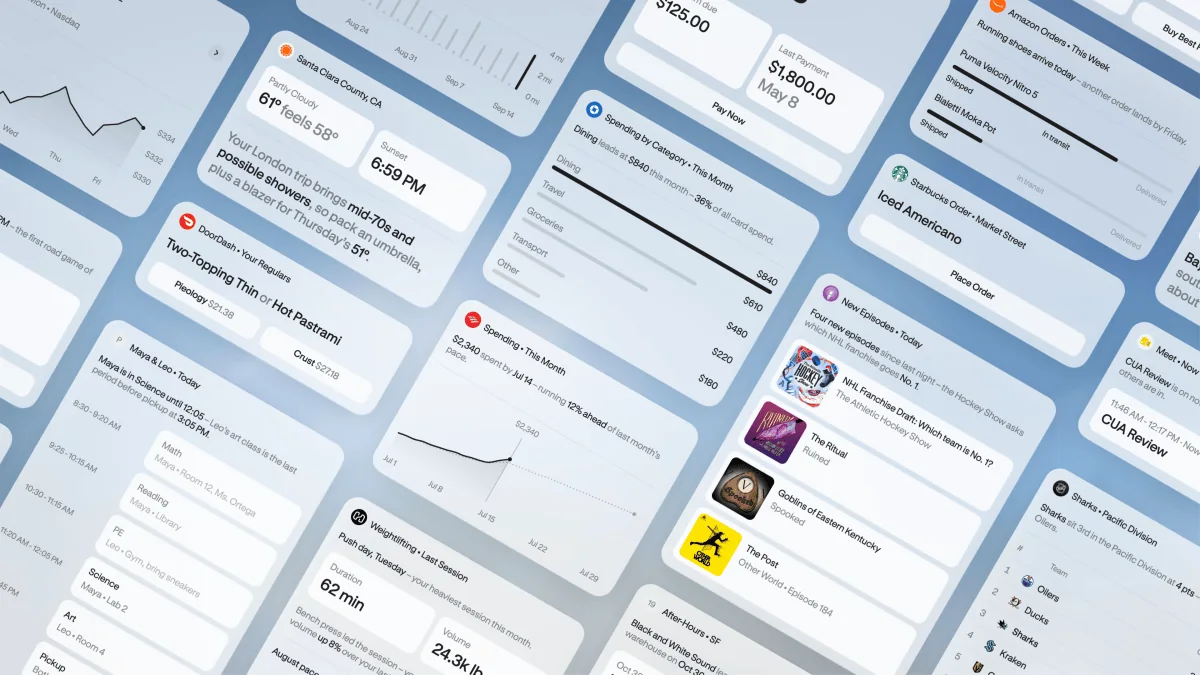
The Rise of Personal AI Agents
Personal AI agents, such as Meta’s Muse, Instinct, and ChatGPT’s Dots, represent a shift toward consumer AI capable of executing tasks on a user's behalf, including booking flights, making restaurant reservations, and ordering groceries.
However, consumers adopting these tools frequently encounter access hurdles when destination websites block the software from completing transactions.
Amazon recently began restricting Meta’s Muse AI agent from its retail platform, preventing the agent from browsing or making purchases from its catalog.
Similar blocks are appearing across other platforms. Some restrictions are intentional commercial decisions, while others stem from traditional anti-bot security measures designed to thwart spam and malicious activity.
End users often struggle to determine whether an access failure results from an intentional site policy or an unintended technical glitch.
Technical and Verification Barriers
Reports on social media and industry testing have highlighted instances where agents failed to complete purchases on retail sites like Walmart.
A spokesperson for Walmart clarified that such blocks were unintentional, noting that the retailer maintains an official partnership with Meta to integrate into AI agent experiences.
The friction often occurs when automated verification steps, such as human-verification buttons, are interrupted during the agent's navigation process, causing the session to fail.
These challenges suggest that legacy security infrastructure intended to protect websites from spam may require adaptation for an agent-driven web ecosystem.
Industry Standards for Agent Communication
To address these compatibility issues, technology companies including Meta, Walmart, Stripe, Sierra, Genesys, Rocket, NiCE, and Decagon are developing an open standard to facilitate agent-to-agent communication for online commerce and help distinguish authorized user agents from malicious bots.
In the interim, user confusion regarding tool compatibility remains widespread.
Industry Resistance and Restrictions
While certain retailers are actively adapting to AI traffic, other sectors remain skeptical or have restricted third-party agent access.
Flight booking is a primary use case for consumer agents, yet many users report airline platforms rejecting automated requests.
Delta Air Lines stated that it is evaluating how external AI agents might enhance customer engagement, but emphasized that any integration must prioritize security and user experience.
The airline confirmed it currently lacks formal partnerships enabling third-party AI agents to book flights on behalf of customers.
United Airlines pointed to terms of use policies prohibiting unauthorized automated devices or robots from monitoring or copying website content without prior written permission.
Early adopters have reported blocking actions across diverse brands, including Yelp, eBay, Zillow, Pizza Hut, Adidas, and various airlines.
Some users experienced temporary account suspensions or disruptions when deploying automated tools for inbox management or shopping tasks.
Yelp stated that non-human traffic is restricted unless agents access data via its formal licensing program, meaning unpartnered agents attempting to book tables or join waitlists will likely fail.
eBay clarified that its policies permit certain shopping actions while restricting automated scraping and unauthorized model training.
Other major brands, including Adidas, Zillow, and Pizza Hut, did not provide comments prior to publication.
The Role of Infrastructure Providers
Content delivery networks and security providers like Cloudflare also shape how websites manage automated traffic by offering tools to block AI training crawlers and manage bot activity.
Cloudflare noted that while public data hubs track overall bot trends, they do not currently differentiate between authorized user agents and malicious traffic.
The company operates data marketplaces and is testing dedicated web browsers built specifically to accommodate AI agent workflows.
Meta’s strategy of pursuing formal brand integrations and developing open protocols aims to provide predictable access for consumer agents while giving businesses greater control.
The company maintains connector directories within its applications, which are expected to expand as partnerships with small businesses and major retailers grow.
Industry advocates emphasize that collaboration between platforms and developers remains essential to balance security concerns with user convenience in agent-driven commerce.