The Normalization of Ambient Listening
Earlier this month, Apple announced that its new Apple Watches will have the ability to continuously listen to every spoken word they detect and create summaries of whatever’s going on around you. The privacy blowback was immediate and inevitable: Experts warned of the legal risks of using the features, especially in nonpublic spaces and states where eavesdropping laws require both parties to consent to being recorded. Many others called the tech creepy.
Everything is spying on you and there’s no opting out
A new wave of AI-enhanced consumer creep-tech disregards the privacy of everyone but the wearer. The people have had enough.
Everything is spying on you and there’s no opting out
A new wave of AI-enhanced consumer creep-tech disregards the privacy of everyone but the wearer. The people have had enough.
Apple, prepared for the backlash, launched an entire page of technical details in an attempt to reassure people that no, it’s not spying on them. The company claimed that one feature, Live Rewind, uses a rolling buffer that only transcribes the last 15 seconds of speech, and another, Siri Recap, only provides high-level summaries of what it captured throughout the day — both without identifying individual speakers. There’s even an audible chime that warns people nearby when the device is transcribing to prevent surreptitious eavesdropping! At least, in theory.
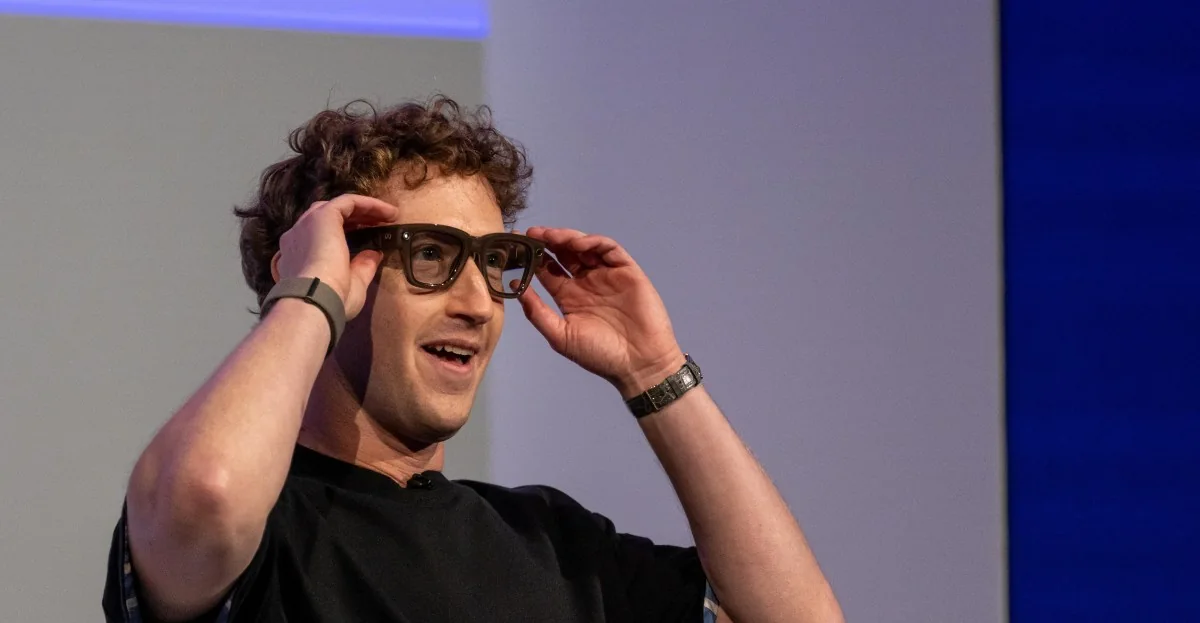
To many, these supposed privacy safeguards are cold comfort at a time when widely hated surveillance tech like Flock cameras cover rural and suburban communities, subway walls advertise always-listening AI Friend pendants, and predatory influencers use Meta RayBan glasses to harass women in public. It’s 2026, and the number-one consumer technology trend seems to be devices that constantly listen to and record everything and everyone around us at all times — with or without consent — subjecting people to a new kind of surveillance where they’re responsible for spotting subtle lights and beeps to know that they’re being spied on. And it’s not surprising that many people have simply had enough.
Shifting the Burden of Privacy
After Meta faced widespread criticism and lawsuits over its camera-equipped smart glasses, the company introduced a version without a camera alongside new wearable models at Meta Connect 2026. Usually known as the more privacy-conscious of its Silicon Valley kin, Apple is now signaling its entry into this growing trend of ambient consumer surveillance devices, attempting to shift the burden of privacy from the corporation to the consumer.
Usually known as the more privacy-conscious of its Silicon Valley kin, Apple is now signaling its entry into this growing trend of ambient consumer surveillance devices.
The true purpose of these features is to attempt to shift the burden of privacy from the company to the consumer — and then from the consumer to the average person who happens to be nearby.
I think Apple entering the space as the company that has based their reputation on privacy is especially relevant because they are trying to essentially change the definition of what record means, Chris Gilliard, an independent privacy researcher and author of Luxury Surveillance, told reporters. And because of the popularity of their devices, the potential for normalizing always being surreptitiously listened to is enormous.
The companies making these products advertise features that could alert those nearby that they may be recorded — a tiny, blinking red light on Meta smart glasses or a chime sound on the Apple Watch — as privacy safeguards. Together with releasing best practices guides that make suggestions for proper device etiquette, these features help create the appearance that the company is taking privacy concerns seriously. But critics argue that the true purpose of these features is to attempt to shift the burden of privacy from the company to the consumer — and then from the consumer to the average person who happens to be nearby.
Incompatible With Social Norms
The problem, which tech companies have surely realized, is that this warn and record design approach is fundamentally incompatible with the established social norms of shared spaces.
This really isn’t how consent works. All of these are after the fact and require some action from the people who are already being recorded or listened to, rather than them being able to say no before a recording begins, said Gilliard. It doesn’t really solve the problem, but allows the company to claim that it’s an issue they are trying to address.
In other words, no matter what privacy safeguards these devices might have, they don’t change the simple fact of what they are designed to do: capture everything around them, with or without the knowledge or consent of humans who happen to be nearby.
Real-Time Transcription Dilemmas
The new Apple Watch live recording features complicate matters further, since the devices aren’t storing audio, but attempting to transcribe audible speech and sounds in real time. It adds to a growing pile of legal and ethical loose ends created by the presence of always-listening tech products: If two people have a conversation in a cafe and a nearby AI-enabled device roughly summarizes what was said for a third party without retaining any audio data, can you honestly argue that’s not a recording? How accurate would the automated transcription need to be in order for it to be considered a recording, and at what point would that recording become accurate enough to, for example, be admissible in court?
It would be a fascinating philosophical debate, if not for the fact that major tech companies have already had the debate without consumers and created the technology anyway.
By now, Silicon Valley has strategically moved the goalposts for what constitutes consent, and it is vanishingly far from its commonly understood definition. From ad-tech tracking internet browsing to Ring doorbell cameras overlooking neighborhoods and Alexa listening for commands at home, the tech industry has used a gradual strategy to erode expectations of privacy in public and private spaces.
While Apple is far from the worst offender, privacy advocates say its entry into the ambient surveillance trend is indicative of how tech companies have used these devices to push the boundaries of what is considered normal and acceptable behavior in shared spaces.
Silicon Valley has strategically moved their goal posts for what constitutes consent, and it is vanishingly far from its commonly understood definition.
The Erosion of Ephemeral Interaction
At the core of this tension is how ambient surveillance tech threatens to shift interactions that would otherwise be regarded as fleeting and low-stakes into something recorded and permanent. While some cheer instant replays as a solution to spacing out during work meetings, others worry about the thought of ephemeral in-person conversations being turned into permanent records by invisible robotic overseers, chilling free speech and spontaneous thought.
Opt-out models are not consent, said Jenna Sherman, a campaign director for the advocacy group UltraViolet. Being given the option to opt out rather than choosing actively to opt in are very different. One requires a person to be informed and to be enthusiastically and intentionally choosing something, and the other is passive and doesn’t actually place any power into the consumer’s hand.
Sherman notes that companies are likely well aware that many people will find it difficult or impossible to truly opt out when always-listening devices become ubiquitous, placing an unfair onus on everyday people to constantly look out for subtle warning lights and chimes.
On some level, tech companies seem to realize they are fighting a losing cultural battle. Everyday people have begun vandalizing Flock cameras in communities across the country, while populist opposition to power-hungry AI data centers has catalyzed intense nationwide protests. Privacy-focused tools, such as mobile apps designed to detect nearby smart glasses via Bluetooth signals, have climbed app store charts, and some hospitality venues have begun permanently banning smart glasses entirely.
Even Apple’s scaled-back listening features appear to be a way to strategically distance the brand from more extreme luxury surveillance products. However, critics argue these products still stretch normative boundaries of consent, disproportionately impacting women and marginalized populations.
These tools might be useful in certain cases, but as a whole they are not built for us. If anything they were built to harm us, and we know that because the entire model is nonconsensual, said Sherman. They’re creating an environment in which we have to be constantly vigilant about whether or not we might be watched or recorded.
It’s not just their own privacy that they’re compromising, it’s every single person in their life.
Despite these pressures, privacy advocates emphasize that recent pushback shows regular people are not ready to accept constant surveillance. Incidents involving law enforcement misusing automated surveillance tools have further heightened public skepticism regarding the unchecked expansion of data collection networks.
I think that tech companies have ultimately underestimated our consumer power and our sense of our own agency, said Sherman. This is a collective burden we have to share, and every consumer has a responsibility to reject these tools and to say explicitly why they reject them.
My guess is that these companies still know these ideas are massively unpopular, and these interventions are a way of pretending that they are proceeding carefully, said Gilliard. They know what people want, but their needs are different.