Wabi Shifts to Messaging
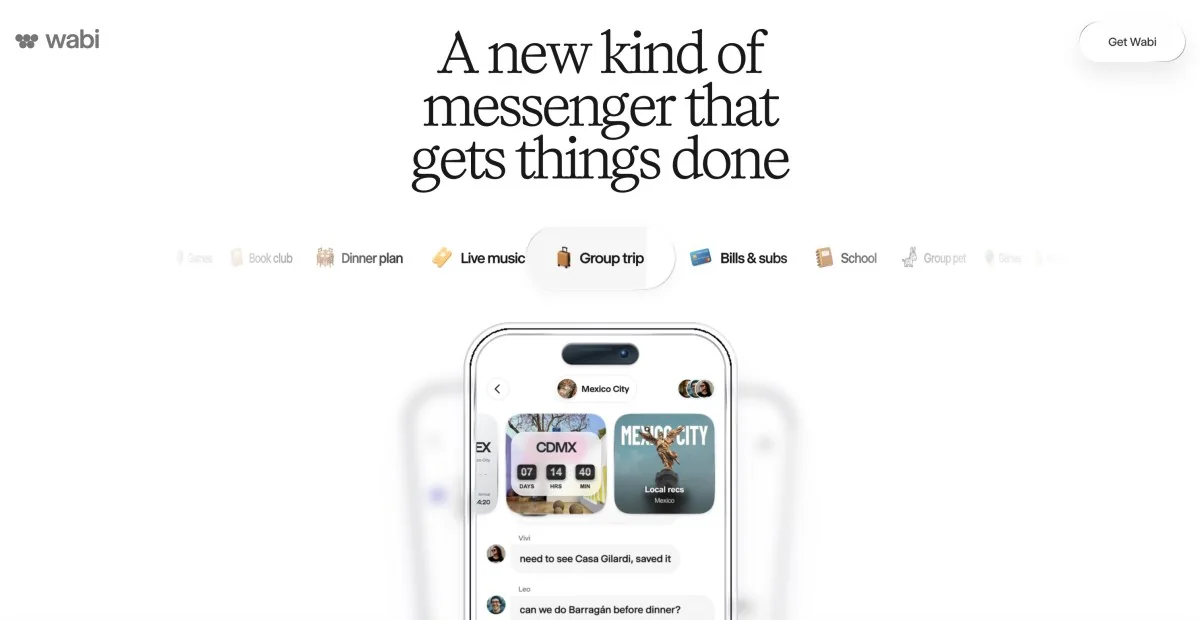
Wabi, the AI startup that allowed users to build applications through text prompts, is shifting its focus toward a messaging-driven interface as competition in the AI agent space intensifies. The company announced that the platform is transforming into an AI messenger that retains its core capability of generating customized tools on demand.
Founder Eugenia Kuyda, who previously established AI companion startup Replika, characterized the updated platform, designated Wabi 2.0, as a personal agent designed to execute tasks and dynamically construct the necessary interface.
While maintaining a similar fundamental purpose to the original software, the revised version alters user interaction. Rather than competing exclusively within the coding-assistant category, Wabi 2.0 positions itself against broader conversational agents that integrate chat functionality with productivity workflows within a unified interface.
Industry Shifts in AI Interfaces
This transition coincides with broader industry developments as major technology firms evaluate how software applications integrate within conversational chatbot environments, including updates allowing external programs to provide interactive experiences directly inside sidebar panels.
In a public statement, Kuyda elaborated on why the messaging format provides a more sustainable consumer experience than text-only interactions.
Extended chat sessions often become difficult to navigate as ongoing tasks accumulate in a continuous scroll. Users benefit from combining conversational elements with traditional software interactions, merging text input with visual navigation.
Dynamic Interface Generation
Under the updated system, when a user requests a specific task, the agent generates a specialized user interface to facilitate completion. Examples include custom tools for tracking caloric intake, fitness routines, or weight management within health-focused conversation threads.
Additional thematic threads can incorporate family schedules, language learning modules, or local event finders to support household coordination and specific interest management.
The platform aims to integrate personal agents, customized applications, and social connections into a single ecosystem to manage complex daily routines collectively.
Access to the updated application is currently restricted, requiring an invite code distributed through social media channels.