In October, Amazon announced its refreshed Kindle lineup, introducing a significant design overhaul across its e-reader devices. The updates featured an edge-to-edge design that eliminated traditional raised bezels, alongside thinner and lighter models with improved displays and page-turning accessories.
However, driven by industry memory-chip shortages linked to the broader technology boom, the new Kindles debuted with pricing increases of $40 to $50 across the lineup, making premium devices harder to justify for casual consumers.
Design and Portability
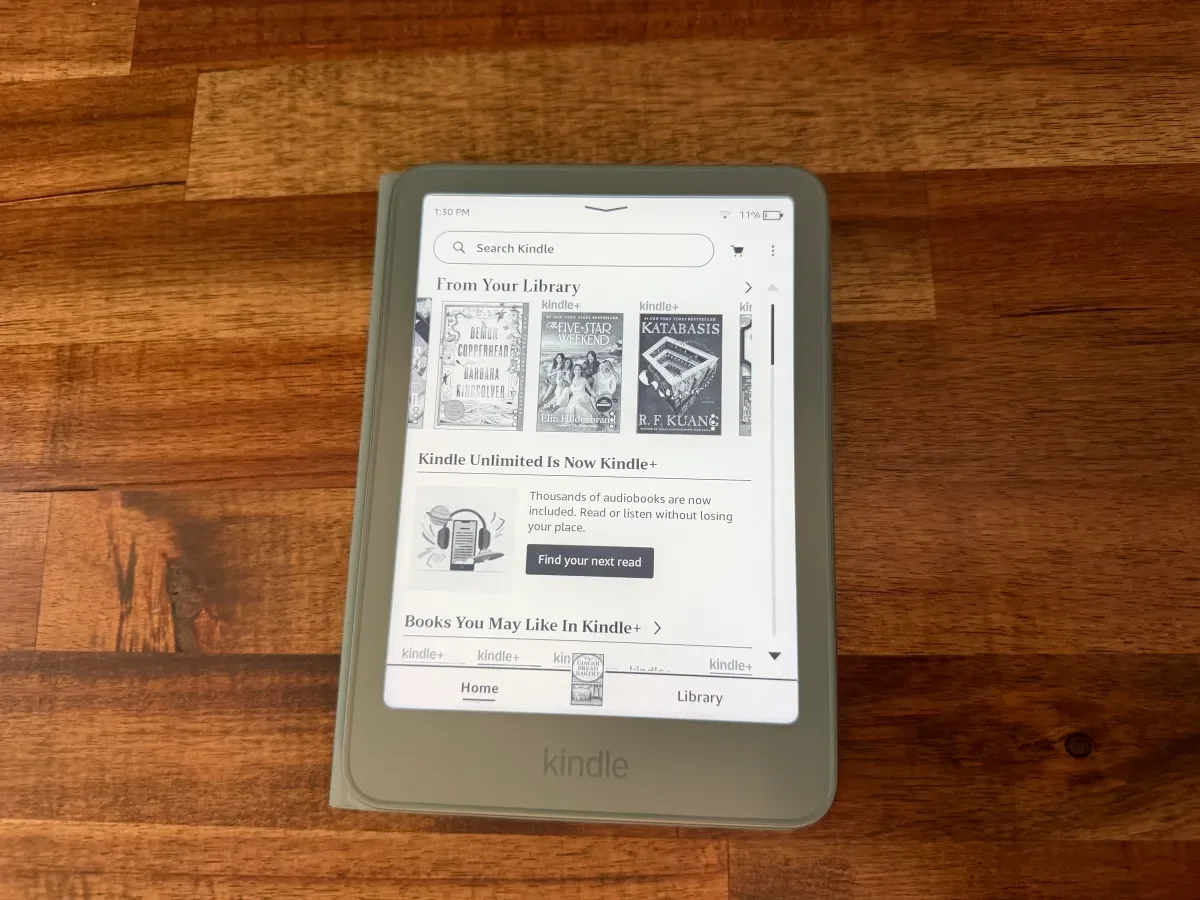
For that reason, the 6-inch entry-level device, which starts at $169.99 for the ad-free version, stands out as the most affordable option for new e-reader buyers facing recent price hikes.
Image Credits:TechCrunch
Testing reveals that the basic Kindle remains worth buying if you prefer a smaller, lighter device and can live without advanced capabilities.
Feature Trade-Offs
The 6-inch Kindle omits a warm light for reducing eye strain, color displays, auto-adjusting brightness, page-turn cover compatibility, and waterproofing. Its smaller size also translates to a smaller battery, delivering up to 6 weeks of battery life compared to the Paperwhite's 12 weeks.
Despite these omissions, the basic Kindle benefits from noticeable physical design improvements.
The plastic model is 11% lighter and 14% thinner than the previous iteration, weighing 140g versus 158g and measuring 6.85mm thick. This reduction is noticeable during extended reading sessions or when carrying the device in a bag.
An alternative aluminum version weighs 162g, maintaining a slim profile while offering alternative materials.
Image Credits:TechCrunch
The starter device also received a flush-front screen update for improved comfort. Amazon adjusted the capacitive touch detection to create a dead zone along the borders, preventing accidental inputs while allowing users to rest their thumbs on the outer edge.
In practice, resting a finger on the colored border does not trigger an unintentional tap or register as an attempt to highlight or look up text.
Software and Performance
Software performance is snappier than the previous generation, with Amazon claiming a 30% improvement in book-opening speeds.
Image Credits:TechCrunch
Compared to older baseline models, the updated hardware adds USB-C connectivity, storage scaling up to 16GB or 32GB, a flush screen, and a resolution jump to 300 ppi.
Pricing and Options
Buyers can choose between a $169.99 plastic model with 16GB of storage and an $189.99 aluminum version with 32GB of storage available in distinct hues.
Additional color choices, such as a purple option called Ube, offer personalization beyond traditional graphite.
The device remains compatible with external Bluetooth page-turning accessories, though its compact size makes handheld reading straightforward.
Image Credits:Amazon
Verdict
The primary consideration is whether the absence of a warm light is a dealbreaker. Warm lighting adjusts the color temperature from a bluish-white to an amber glow to reduce eye strain during nighttime reading.
Readers who frequently read in bed under low light conditions might prefer upgrading to a Paperwhite model.
Similarly, outdoor or poolside reading may justify investing in waterproof hardware.
However, for users who can forgo these extras in favor of a lightweight, highly portable form factor, the basic Kindle remains a compelling choice.