Terafab Equipment Shipments
Elon Musk states that ASML and other critical semiconductor equipment suppliers have expedited shipments for the Terafab semiconductor manufacturing facility, supporting the aggressive timeline for the joint megaproject between Tesla and SpaceX. During a live broadcast of SpaceX's Q3 2026 earnings call, Musk announced that the company is targeting volume chip production at the Gibbons Creek, Texas facility by the third or fourth quarter of 2028, while acknowledging the timeline carries significant uncertainty.
Expressing appreciation for the accelerated deliveries, Musk noted the demanding schedule. SpaceX plans to manufacture its first experimental test chip at its research fabrication facility in Austin, Texas, around the second quarter of 2027.
AI Computing Capacity Targets
Alongside the Terafab update, Musk outlined near-term ambitions for his AI ventures, anticipating 2.5 to 3 gigawatts of active computing capacity by the end of 2026. He expressed confidence in bringing an incremental 10 gigawatts online in 2027, aiming for a total of 13 gigawatts by the end of that year.
To achieve the 13-gigawatt milestone, SpaceX and xAI are procuring next-generation NVIDIA architecture. Plans include deploying a massive 440,000-GPU Nvidia Vera Rubin training cluster by the end of the second quarter of 2027.
Facility Scale and Manufacturing Goals
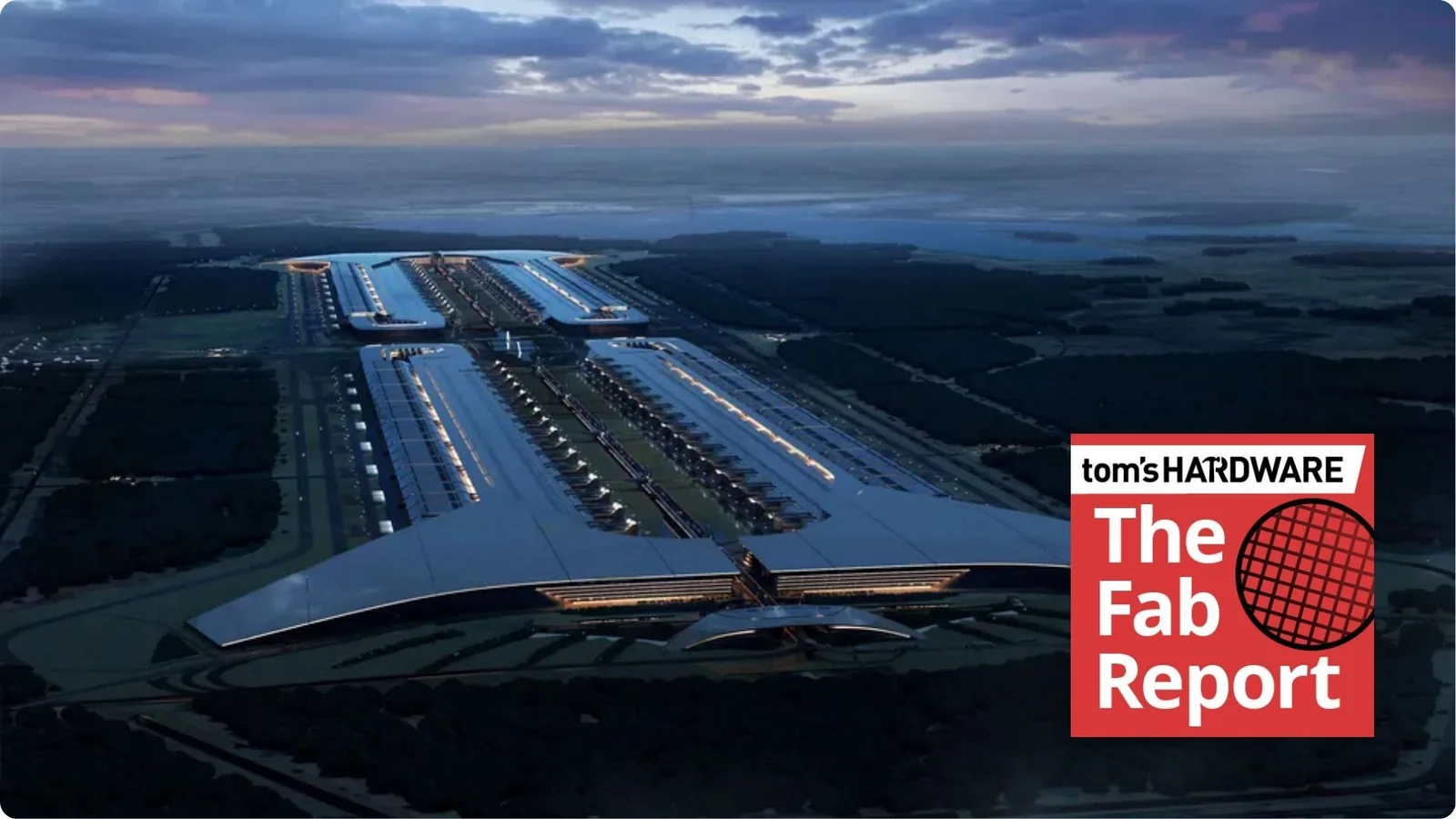
Once fully scaled, the commercial value of Terafab's output is projected to rival major global economies. The multi-billion-dollar, vertically integrated Texas factory targets an annual production of 1 terawatt of AI computing power, combining logic, memory, and advanced packaging under one roof using Intel's 14A manufacturing node technology.
Supply Chain and Partner Collaborations
Intel joined the Terafab venture to co-develop silicon fabrication technology, providing access to its 14A manufacturing process. ASML remains a critical partner, supplying extreme ultraviolet lithography systems necessary for leading-edge production.
Additional equipment partners include Applied Materials, Lam Research, KLA Corporation, and Tokyo Electron, alongside several South Korean firms providing specialized packaging and processing machinery.
The expedited supply chain aims to mitigate external shortfalls, supplying processors for xAI clusters, self-driving vehicles, Optimus humanoid robots, and orbital data centers.
Industry Skepticism
Industry experts have raised questions regarding the feasibility of the 1-terawatt ambition, noting that global AI-optimized data center capacity remains significantly lower, highlighting the massive scale of the proposed undertaking.