Asus ProArt P16 RTX Spark: two-minute review
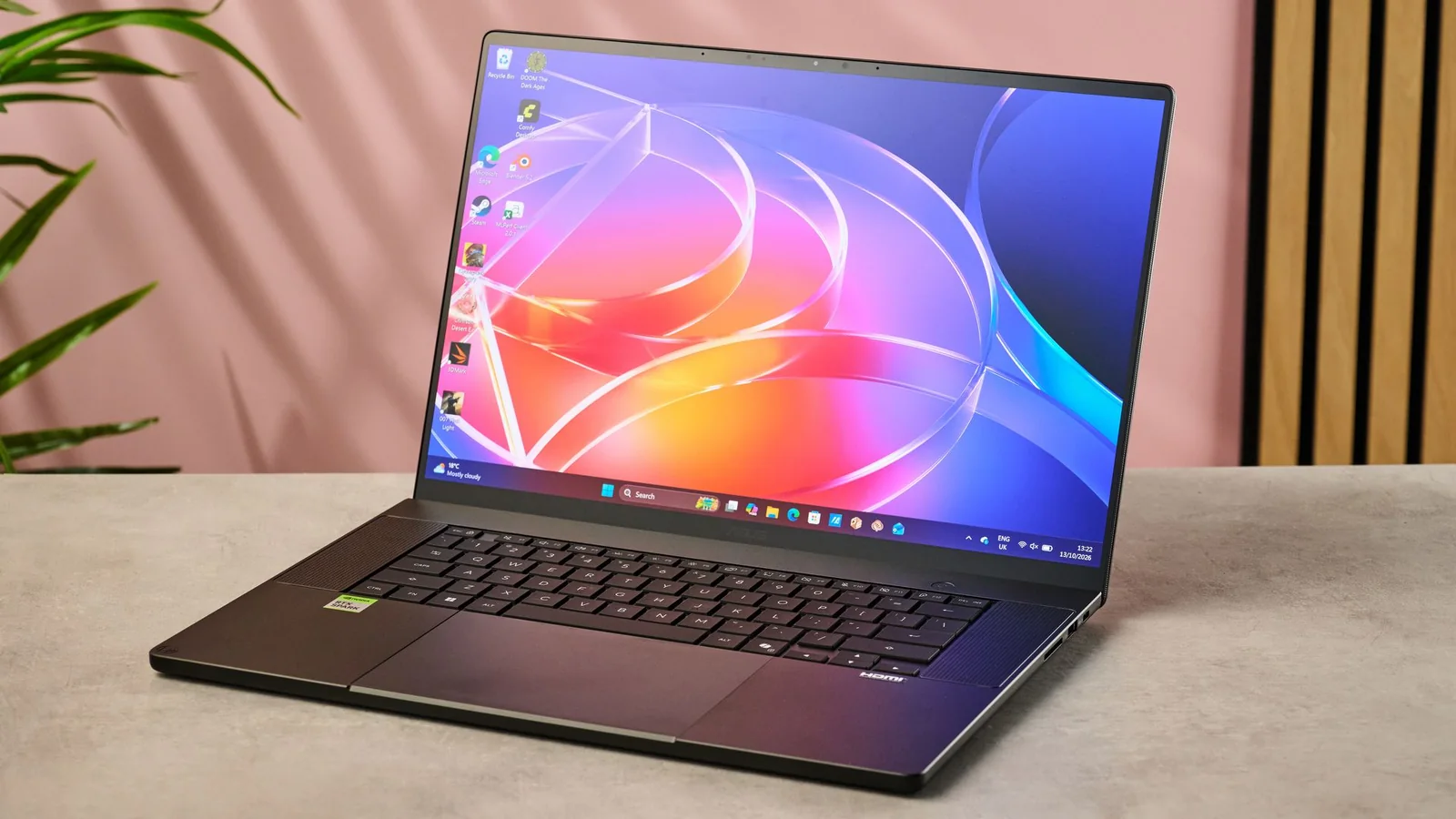
The Asus ProArt P16 RTX Spark introduces a new generation of laptops powered by Nvidia’s RTX Spark chip. This system-on-a-chip packs 20 ARM CPU cores and a 6144 CUDA GPU backed by up to 64GB of RAM, aiming to deliver robust AI, creative, and gaming performance within a lightweight form factor.
The device features a vibrant 16-inch OLED screen boasting a peak brightness of 1,100 nits, a 100% DCI-P3 color gamut, and a 120Hz VRR, making it well-suited for media consumption, digital art, and gaming.
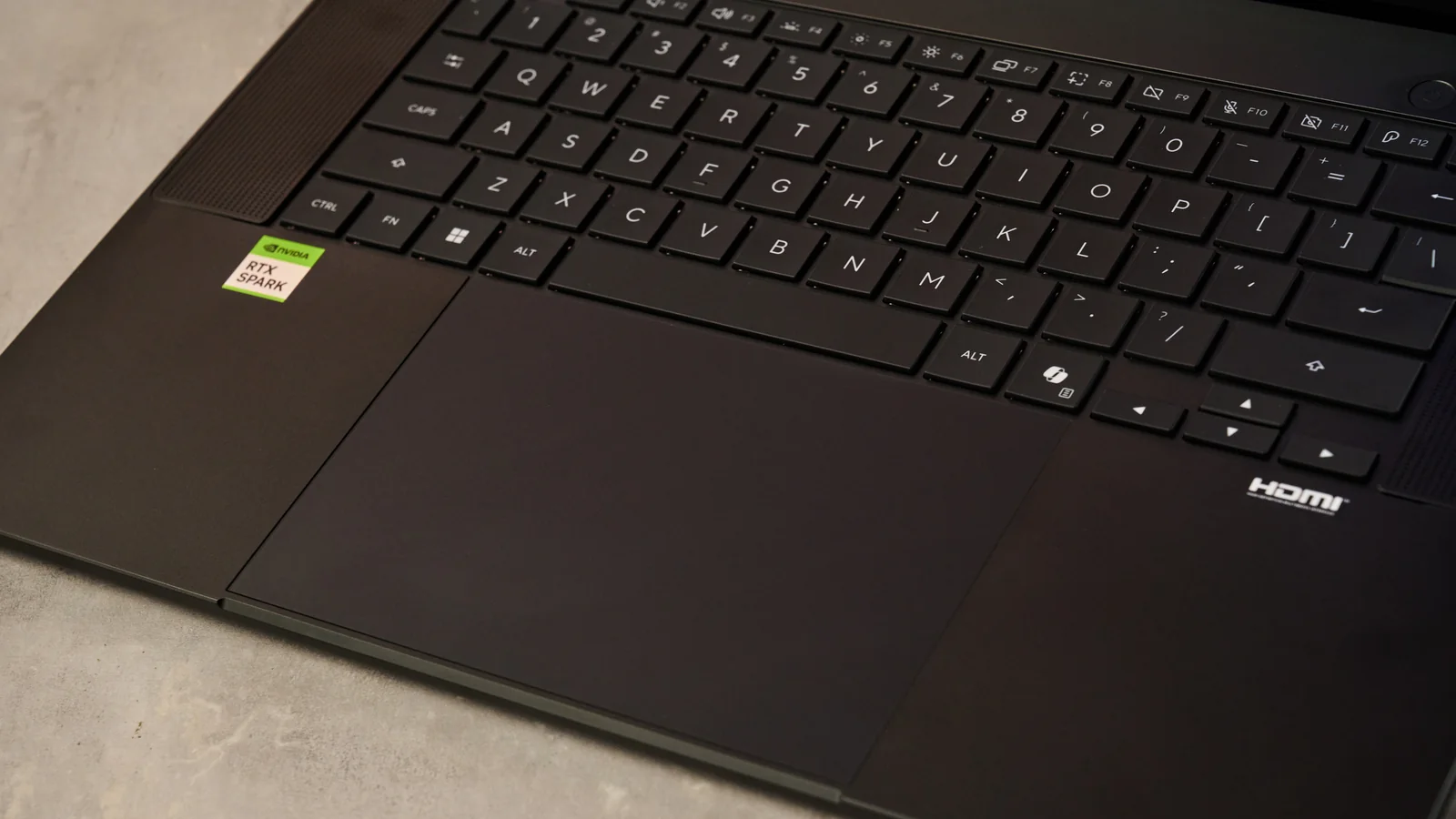
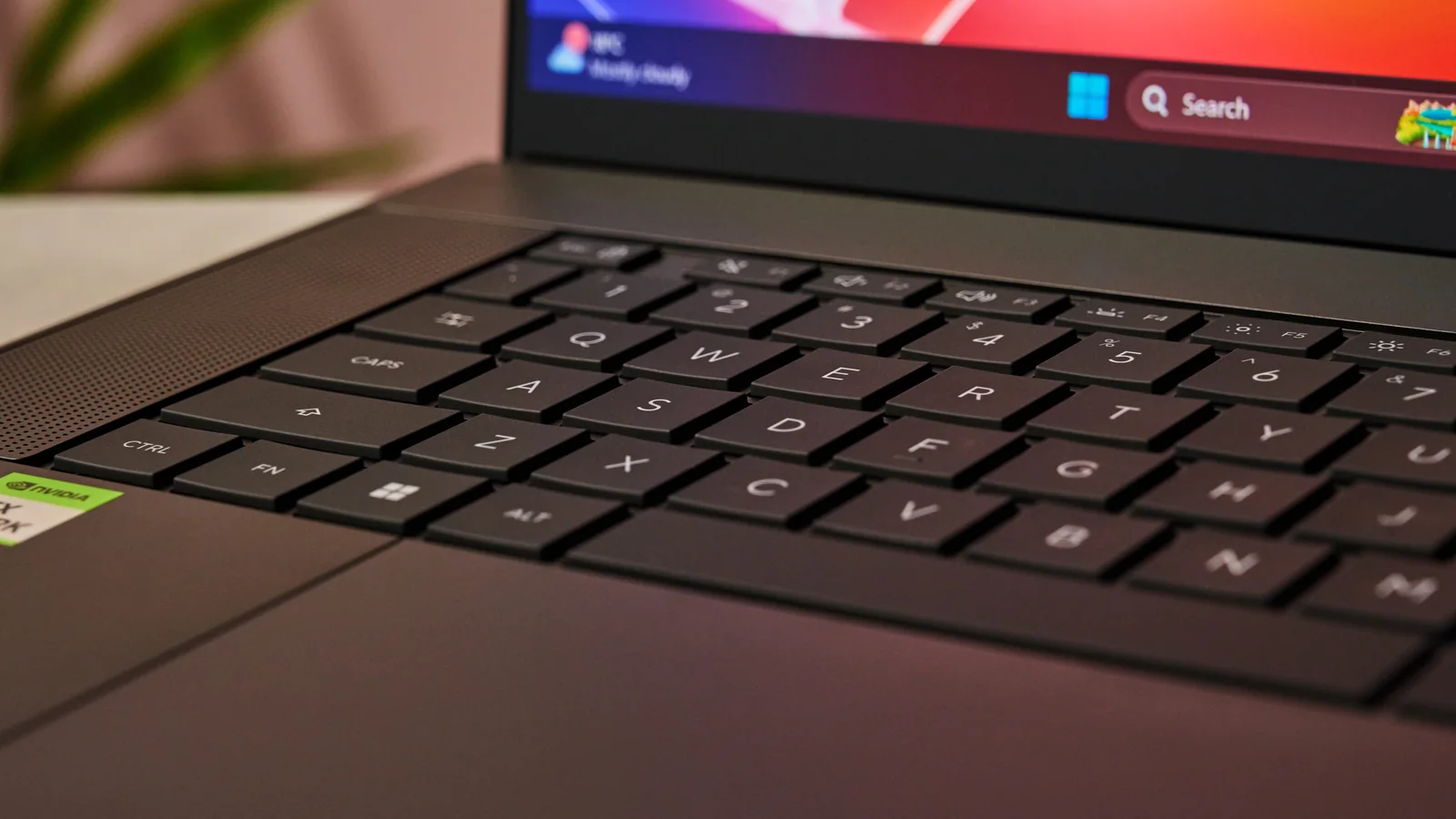
The build quality feels premium with a smooth metal casing. The keyboard offers a pleasant typing experience, and the haptic trackpad is precise, though the display hinge exhibits a minor amount of wobble.
Under the surface, the Nvidia SoC enables the laptop to tackle a remarkably diverse range of computing tasks.
Designed for hybrid workflows, the RTX Spark simplifies running AI agents using local and cloud models. Testing with the Qwen 3 8B open-source local model demonstrated snappy performance for basic data analysis workflows.
More complex tasks required iterative prompting and refinement across multiple sessions, but executing such advanced workflows on a lightweight and portable machine remains impressive.
In creative software benchmarks, the ProArt P16 closely trailed Apple's M5 chip in Photoshop tasks and outperformed it in Premiere Pro video processing. Large, layered 4K files and complex filters executed smoothly.
Leveraging Nvidia's gaming heritage, the laptop delivers solid gaming capabilities. It achieves stable frame rates in titles like Cyberpunk 2077 on medium ray-tracing settings and high frame rates in other demanding games.
Battery life is competitive, delivering over 14 hours during productivity-based workflows and around 11 hours of continuous video playback, easily lasting a standard workday.
The primary drawback is the cost. With a starting price point matching high-end gaming laptops and professional workstations, users prioritizing a single specialized niche might find better value elsewhere.
Ultimately, for professionals requiring a single device capable of handling AI agents, content creation, and gaming on the move, the Asus ProArt P16 RTX Spark is a compelling option.
Asus ProArt P16 RTX Spark review: price & availability
The Asus ProArt P16 RTX Spark ships with the higher-end Nvidia RTX Spark N1X, featuring a 6144-core GPU and a 20-core CPU.
Pricing begins at $4,399.99 / £3,899.99 / AU$7,999 for the configuration featuring 64GB of RAM, a 3K display, and a 1TB SSD, scaling up for higher memory and storage tiers.
This positions the laptop firmly in the premium price bracket, comparable to rival high-end creator and ultraportable machines.
Alternative options in this price range include configurations of the MacBook Pro M5 Pro, which offer strong creative performance but less gaming capability.
Asus ProArt P16 RTX Spark review: design
The Asus ProArt P16 maintains a slim profile despite its expansive 16-inch screen size, weighing in at 1.77 kg. It features clean lines and premium colorways.
The smooth metal chassis feels tactile, though the display hinge could benefit from additional rigidity to eliminate minor wobbling.
The 3K Lumina Pro OLED touchscreen delivers exceptional color vibrancy, high contrast, and deep black levels.
The keyboard provides a fluid typing experience with comfortable key travel suitable for extended work sessions.
The large haptic trackpad is accurate, though right-clicks occasionally trigger further left than expected.
Connectivity options are robust, featuring Wi-Fi 7, Bluetooth 5.4, multiple USB-C ports, a standard USB port, HDMI 2.1, an audio jack, and an SD Express card reader.
Asus ProArt P16 RTX Spark review: performance
Nvidia’s RTX Spark chip combines CPU, GPU, and unified memory architecture into a cohesive system-on-a-chip designed to handle demanding workloads.
The tested configuration pairs 20 ARM CPU cores and 64GB of RAM with 6144 CUDA GPU cores and 30GB of integrated memory.
General productivity tasks run smoothly without slowdowns, effortlessly handling multitasking and large documents.
The hybrid agentic AI functionality allows users to balance local data privacy with cloud model capabilities.
Integrated fifth-generation Tensor cores support rapid local benchmark execution and token processing for data analysis pipelines.
Running open-source AI agent tools locally demonstrates capable task execution for organizing spreadsheets and generating automated summaries.
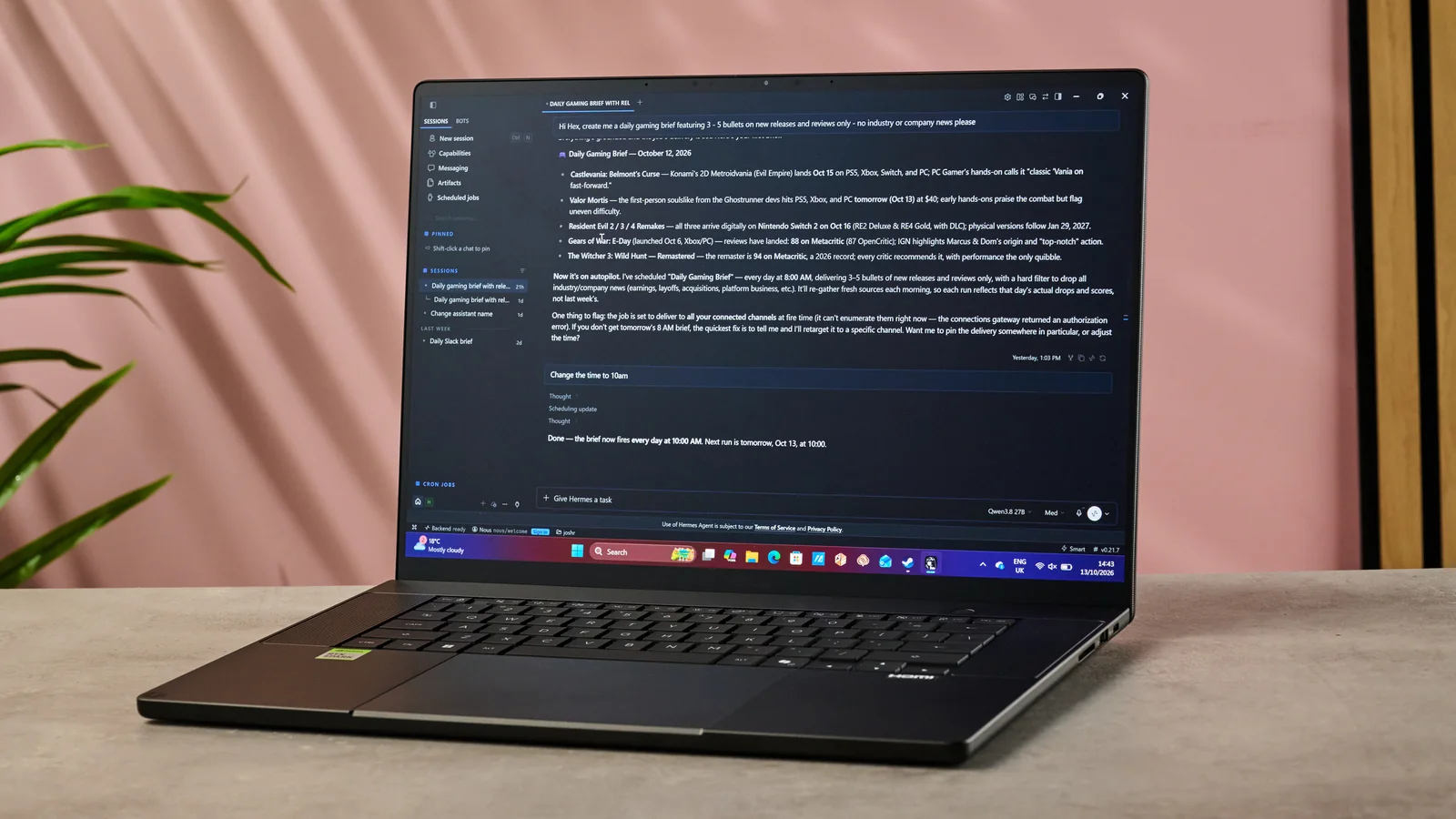
Basic tasks complete quickly, though more complex automated multi-step workflows require refinement.
Agentic tools can be scheduled for daily routines or configured to interact directly with applications.
While local agentic pipelines save time, training them can require an initial investment in prompt engineering and workflow optimization.
Generative image and video models also run efficiently on the local hardware with swift completion times.
Creative applications benefit significantly from the unified architecture, speeding up automated creative workflows.
Standard Photoshop and Premiere Pro benchmarks confirm competitive speeds relative to high-end silicon competitors.
Demanding 4K PSD files with multiple layers and adjustment masks process smoothly.
Software optimizations allow Adobe applications to utilize the RTX Spark's AI acceleration for neural filters and generative fills.
In gaming scenarios, performance sits comparably to mid-range configurations featuring dedicated mobile GPUs, handling modern titles at respectable frame rates.
Optimized games run with exceptional stability at moderate to high settings.
While specialist single-purpose laptops may excel in specific niches, the ProArt P16 succeeds as a multi-threat workstation combining AI hosting, creative throughput, and gaming capacity.
Asus ProArt P16 RTX Spark review: battery test
The laptop provides dependable battery longevity capable of handling heavy-duty tasks on the move.
Standard video playback tests exhaust the battery in just over 11 hours.
Productivity-focused application tests demonstrate an endurance of over 14 hours.
Although efficient, it trails certain competitors that achieve significantly longer runtimes under similar office workloads.
Fast-charging support via 140W power delivery enables rapid replenishment when connected.
The device easily gets through a standard office workday, though intensive tasks like gaming or local AI compilation will drain the battery faster.
Should I buy the Asus ProArt P16 RTX Spark?
You want to game, create and use AI on a single device. The RTX Spark SoC provides ample processing power for diverse workflows.
You want a portable 16-inch device that remains lightweight despite its expansive display.
You require absolute peak performance in a single standalone category, as dedicated systems can outmatch it in pure creative or gaming workloads.
You have a strict budget constraint, given the high entry-level price tag.