The 1941 Enigma Breakthrough
A German Army Enigma transmission from 85 years ago, known as the MVUEH message, has been cracked by an autonomous AI system in two days. MVUEH was sent by the German Army to the SS-Totenkopf Division on July 10, 1941. This uncracked Enigma message was shared with enthusiasts online in 2005, but its secrets had remained concealed until now.
Researchers highlight that what the system managed to do in just two days would take a human researcher weeks or even months. The team is currently examining logs to determine how the AI managed this feat and executed it with such speed.
One of the most notable aspects of the process was that the AI operated entirely on its own. After being asked if it could break any unbroken Enigma machine messages published online, the model selected message Nr. 172, MVUEH, as a target, theorizing a relation to the plaintext of another message.
Software Development and Decryption
Anticipating the repeated place name ROSENOW as a probable plaintext clue, the AI developed Python and C++ software for an Enigma simulator and an Enigma Bombe to test its hypothesis.
The encrypted 82-letter MVUEH cipher appeared as follows: ICRVSORMCCWQTATYEVFXDBZGGSNXWLPSYWZYTCBSWULRTBZCVGODVJUSLSOOMJQJZSXSEBZPEYMDNXJYTC
Once decrypted, the message reads: BTTE UM ANGABE DES MARSQWEGES X BEFINDE MIQ IN X ROSENOW ROSENOW X SOFORT FUNKANTWORT X WASCHBBSCH
An approximate English translation states: Please specify the route of march. I am in Rosenow, Rosenow. Immediate reply by radio.
The original transmission contained a spelling mistake at the beginning, adding complexity to the decoding effort.
Historical Context of Enigma
Efforts to crack wartime ciphers from Enigma and Lorenz machines historically drove the development of some of the earliest general-purpose digital computers.
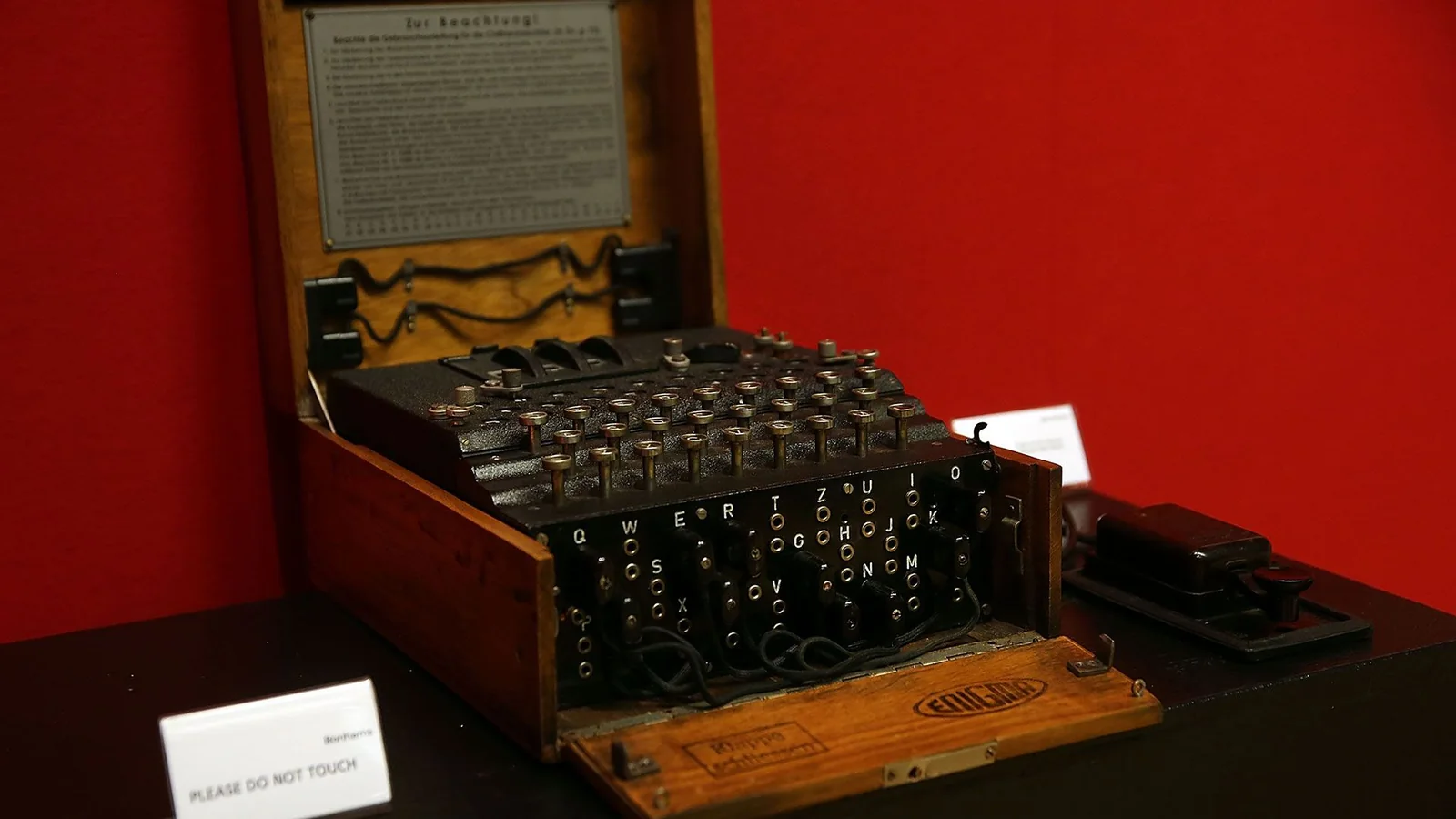
The Enigma machine utilized a 26-key keyboard, a lampboard, three selectable rotors out of a set of five, and a plugboard with up to 10 rerouting wires to obfuscate signals. Rotors advanced with every keypress, ensuring identical letters generated different outputs.
Operation required dialing four specific settings: rotor order, ring setting, rotor starting positions, and plugboard connections, which were altered daily according to a distribution calendar.
This event follows recent demonstrations of advanced language models successfully deciphering historical codes, including a 108-year-old WWI German code encrypted via the ADFGVX method.