Blackstone and the AI Infrastructure Boom
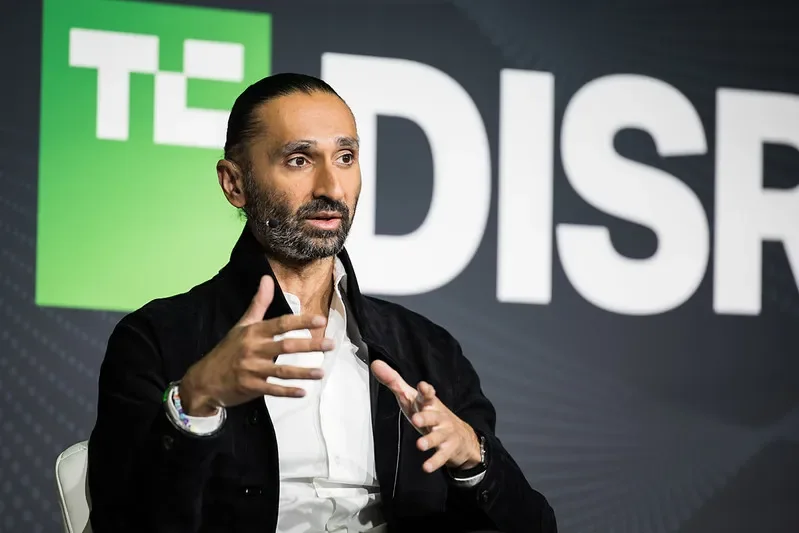
Private equity giant Blackstone is positioning itself at the center of the artificial intelligence boom, according to firm veteran Jas Khaira.
The firm is writing checks via various strategies, ranging from offering massive loans to data centers to investing in frontier AI models and applications.
Earlier this year, the firm launched Blackstone N1 (BXN1), a San Francisco-based central hub for its AI initiatives. The group is led by Khaira, who relocated to be at the epicenter of AI.
Unlike earlier tech cycles such as mobile or SaaS, which allowed companies to reach significant scale with moderate capital, the transition to AI requires staggering amounts of investment. That need for capital is precisely why Blackstone, with its $1.3 trillion in assets under management, could play such a critical role in this tech shift.
Khaira emphasized that Blackstone sets itself apart from traditional venture capitalists through its focus on compute financing and its ability to offer flexible capital structures, ranging from debt to equity.
Financing Neoclouds and Compute
The firm claims to be the largest owner of compute outside of the hyperscalers today, utilizing investments in neoclouds and data centers strategically to support companies.
BXN1 played a key role in several compute-related deals, including Crux AI, a neocloud launched in partnership with Google to commercialize custom TPUs, to which Blackstone committed $5 billion. It also backed chip startup Etched.
Blackstone pioneered a financing structure allowing it to lend massive sums to venture-backed neoclouds by analyzing committed customer contracts and using pledged GPUs as collateral.
The first such deal came in 2023 with CoreWeave. Despite having minimal revenue and profitability at the time, CoreWeave approached Blackstone for a $2.3 billion loan.
CoreWeave borrowed against its collection of Nvidia GPUs, with Nvidia acting as an investor. Blackstone grew comfortable with the loan because CoreWeave held contracts with blue-chip customers like Microsoft.
That transaction quickly became the financing model for how Blackstone and other credit institutions provided billions in follow-on debt to CoreWeave and rival neoclouds.
The risk of these financing agreements is heavily dependent on the creditworthiness of the underlying customers, such as Microsoft or Meta.
Following its success with CoreWeave, Blackstone struck other neocloud financing deals, including co-leading a $10 billion credit facility for Australian GPU provider Firmus.
Market Jitters and Rising Debt Burdens
Large debt burdens accumulated by neocloud operators have raised red flags recently. CoreWeave's debt has ballooned to about $50 billion, leading critics to question the reliance on GPUs as standalone collateral.
Khaira noted that market jitters stem from higher interest rates, hotter-than-expected inflation, and a flood of AI infrastructure debt offerings driving up borrowing costs.
Lenders are charging higher premiums on top of elevated base interest rates, meaning even tech giants with massive balance sheets are paying more to borrow.
Concerns about debt costs have impacted the stock market, with CoreWeave shares dropping and Firmus scrapping its planned IPO at a target valuation of roughly $30 billion.
Khaira acknowledged that the market ultimately decided the valuation was not right for the current high-interest-rate environment.
The market is actively trying to determine the correct pricing for neocloud businesses as interest rates shift upward.
Addressing Credit Crisis Fears
Despite pricing pressures, AI companies continue experiencing a heavy appetite for compute power, driving ongoing data center buildouts.
Khaira downplayed fears that accumulated AI infrastructure debt could trigger a widespread credit crisis, stating that the situation does not resemble the shaky credits of the 2008 financial crisis.
Because the vast majority of data centers are built for hyperscalers, the debt financing them is ultimately backed by highly creditworthy companies.
Enterprise AI Adoption
Beyond funding data centers, Blackstone formed a $1.5 billion joint venture called Ode with Anthropic and Hellman & Friedman to supply forward-deployed engineers to help portfolio companies adopt AI.
Commenting on AI returns, Khaira conceded that tangible gains are uneven, describing technology adoption as moving in a sawtooth pattern that can initially appear like an oversupply of compute.