Prototype Introduction
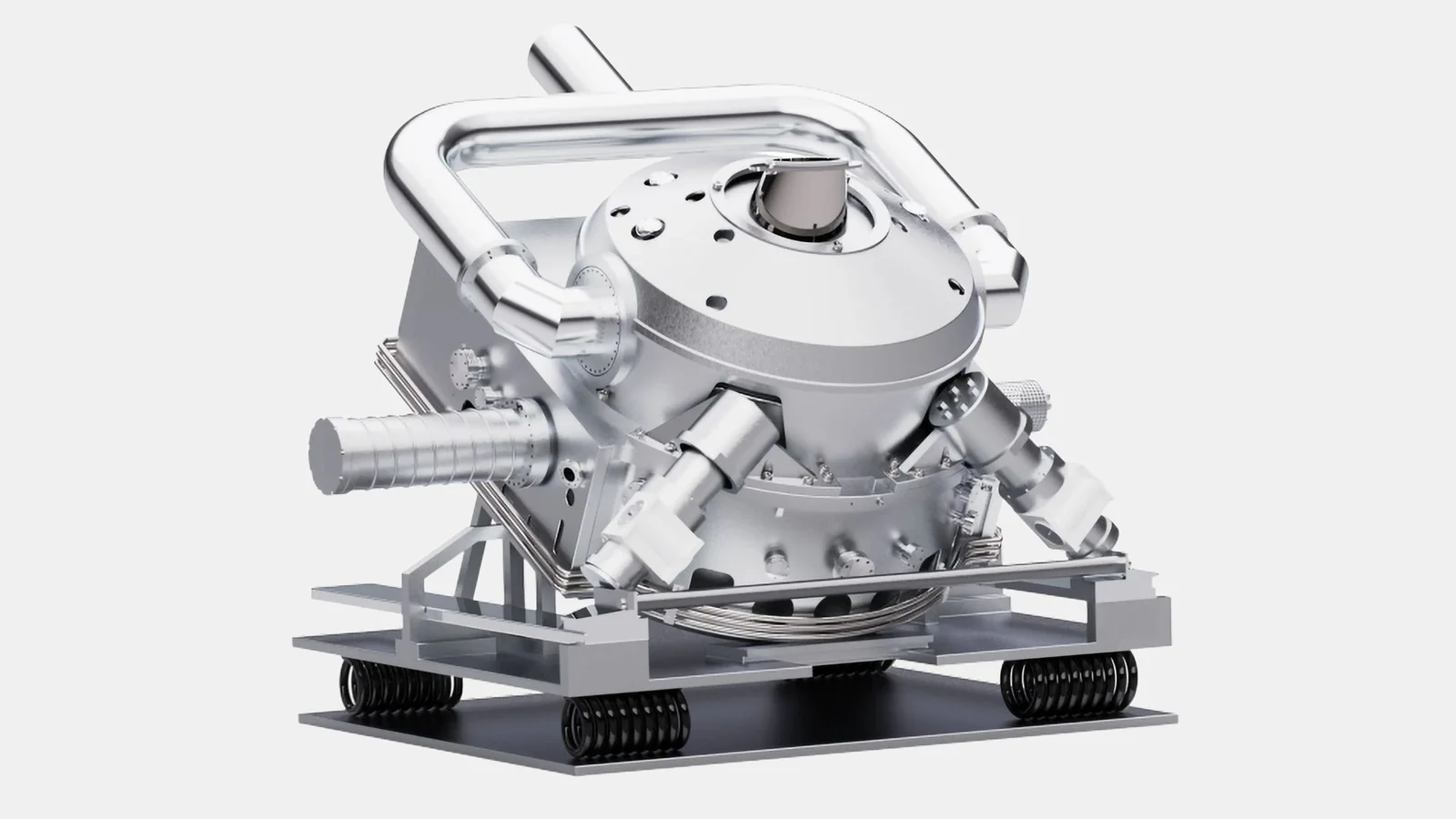
Being unable to procure extreme ultraviolet lithography tools from ASML, China must develop such systems locally, leading to various EUV-related developments. Chinese startup Langdao Silex recently demonstrated a prototype extreme ultraviolet light source with over 15W of output power and 90% domestic components. Commercialization of this technology will reportedly require another three to five years, though a light source alone does not make a complete EUV scanner.
Technical Specifications
Langdao Silex, established in 2024 by alumni of Tsinghua University's Gas Discharge Plasma Laboratory, displayed its prototype at the 26th China International Industry Fair in Shanghai. The FlintNano LPP-OXXO system utilizes laser-produced plasma technology, creating extreme ultraviolet radiation by bombarding metal droplets with high-energy laser pulses. The system features a 1,000W driving laser operating at 1 kHz to 20 kHz with conversion efficiency exceeding 2%.
According to the company, the system can operate continuously for over 100 hours with plasma stability of 3% RMS and EUV output power stability of 5%. These specifications suit semiconductor exposure experiments, though output remains insufficient for high-volume chip production.
Langdao is also developing the higher-power FlintMicro-LPP EUV source, which has completed proof-of-principle validation. However, specific output power and operating lifetime metrics have not been disclosed.
On paper, the output is comparable to early systems developed by Western and Japanese equipment makers, though measurement methodologies differ. Early demonstration equipment used approximately 10W to 11W during early wafer exposure phases, but historical figures involve distinct conditions making direct comparisons difficult.
Comparison to Modern Standards
Because Langdao has not demonstrated the system in active operation, technical details rely on corporate disclosures. While 15W is comparable to early extreme ultraviolet sources, modern lithography equipment utilizes significantly more powerful configurations. Commercial production systems rely on 250W-class sources to achieve necessary manufacturing volumes.
Increasing output requires powerful carbon dioxide lasers, precise droplet generators, debris mitigation systems, and durable collector mirrors to ensure long-term reliability.
Langdao states that 90% of the prototype components are domestically sourced, though the company has not clarified whether this reflects component count or financial value. Company representatives acknowledge that improving operational stability and power output remain key targets for future commercialization.
Future Outlook
Even without a complete lithography scanner, the light source could support photoresist development, mask inspection research, and optics testing.
Developing a complete lithography scanner requires advances in collection and illumination systems, multilayer mirrors, wafer stages, and system integration. Much of this supporting supply chain is still developing domestically.
Historical progress indicates that scaling source power takes considerable time, meaning the Langdao system will likely remain a development tool for the foreseeable future.
Uncertainty regarding measurement points also complicates comparisons, as plasma-level generation differs from usable power delivered at intermediate focus.