Bargain Rig Powers Local AI
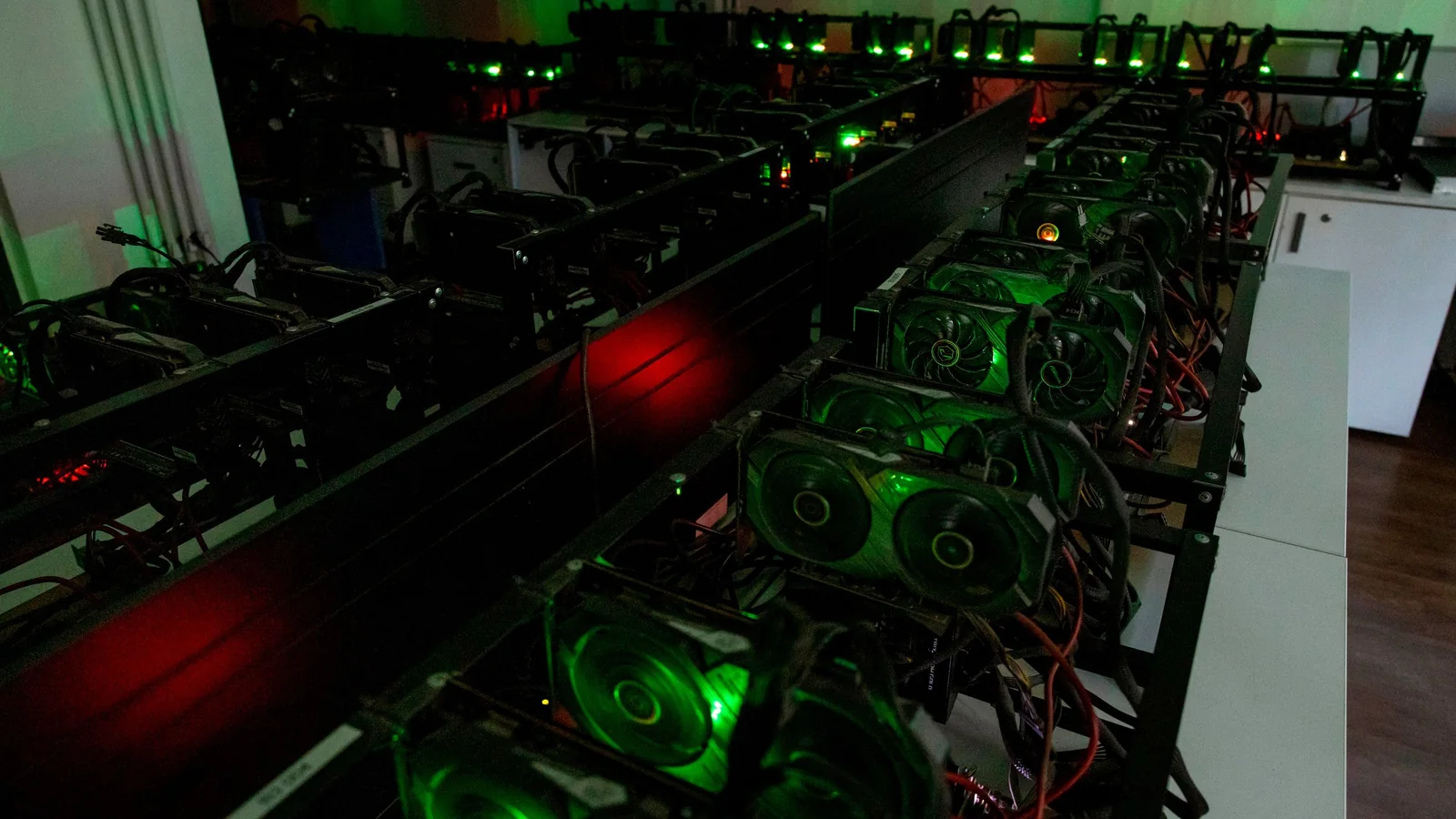
A Reddit user purchased an old crypto mining rig, originally discovered in a garage, for a negotiated 3,000 rubles, or about $35. The rig was rusty, and the buyer had zero idea if it worked prior to purchase. However, on the first try, all nine Nvidia P106-100 GPUs, providing 54GB of VRAM in total, functioned properly. The initial test involved a successful local run with the 35-billion-parameter model Qwen3.6-35B-A3B in Ollama, which operated at over 30 tokens per second.
54gb vram for 35$from r/LocalLLaMA
The rig was discovered in a damp garage that the seller had purchased years earlier, then listed on a classifieds site. The buyer had concerns about whether the hardware would function and offered to test it, but the seller refused, leading to a price reduction without pre-testing. Even though the system worked, performance was initially imbalanced due to a weak Celeron CPU with minimal system memory supporting the setup.
Hardware Specifications and Limitations
The setup was originally intended for cryptocurrency mining using specialized Nvidia P106-100 GPUs, which are Pascal-generation cards featuring 6GB of GDDR5 memory each. These cards have an 8,008 MHz memory clock with a 192-bit bus width, delivering about 192 GB/s of bandwidth per card. Originally introduced around mid-2017, these cards face upcoming driver limitations since CUDA 13.0 removed offline compilation for GPUs below compute capability 7.5. Nvidia notes that driver branch 580 is the final version supporting pre-CC 7.5 GPUs, though security updates are scheduled through October 2028.
The initial test utilized a mixture-of-experts model using Alibaba's Qwen with 35 billion total parameters and 3 billion activated parameters, requiring roughly a 24GB download. The test achieved over 30 tokens per second in Ollama, and could potentially operate faster with multi-token prediction and further software optimizations.
While a dense, non-MoE model such as Qwen3.8-27B is unlikely to run as efficiently on the hardware, the system can handle MoE models that fit entirely into VRAM. Performance is ultimately constrained by the motherboard's PCIe 2.0 x1 slots.
Model Compatibility and Constraints
The system's capacity accommodates certain popular models, such as Qwen3.6-35B-A3B at 8-bit requiring 36.9GB, or Llama 3.3 70B at 4-bit requiring 42.5GB. A 5-bit configuration of the 70B model would consume nearly 50GB, leaving minimal headroom for context. Larger models are largely unworkable, and even the 70B 4-bit Llama would hit a ceiling around 4.5 tokens per second due to memory bandwidth bottlenecks, as each token reads across all cards at approximately 192 GB/s.
Cost and Value Analysis
The purchase came out to roughly 65 cents per gigabyte of VRAM. For comparison, modern high-end hardware like an RTX 5090 offers 32GB of VRAM and significantly higher memory bandwidth. While the mining rig provides 1.7 times the VRAM for a fraction of the cost, each of its individual cards operates with a fraction of modern memory bandwidth. Compute-only P106 cards typically trade at about 50 percent of their GeForce GTX counterparts.
An important operational caveat is electricity consumption, with the nine GPUs carrying an estimated combined TDP of 1,080 watts. However, the buyer noted that power costs are locally inexpensive.
Future Upgrades
Following the successful initial test, the owner plans to transfer the hardware into a new case supporting an i7-7700K CPU and 32GB of RAM. The upgraded case can accommodate up to 12 GPUs, meaning the addition of three more P106 cards could expand the total VRAM pool to 72GB. Repurposing secondhand mining hardware offers enthusiasts an accessible route toward self-hosted AI deployment.



