Deploying GPUs at Roadside Charging Stations
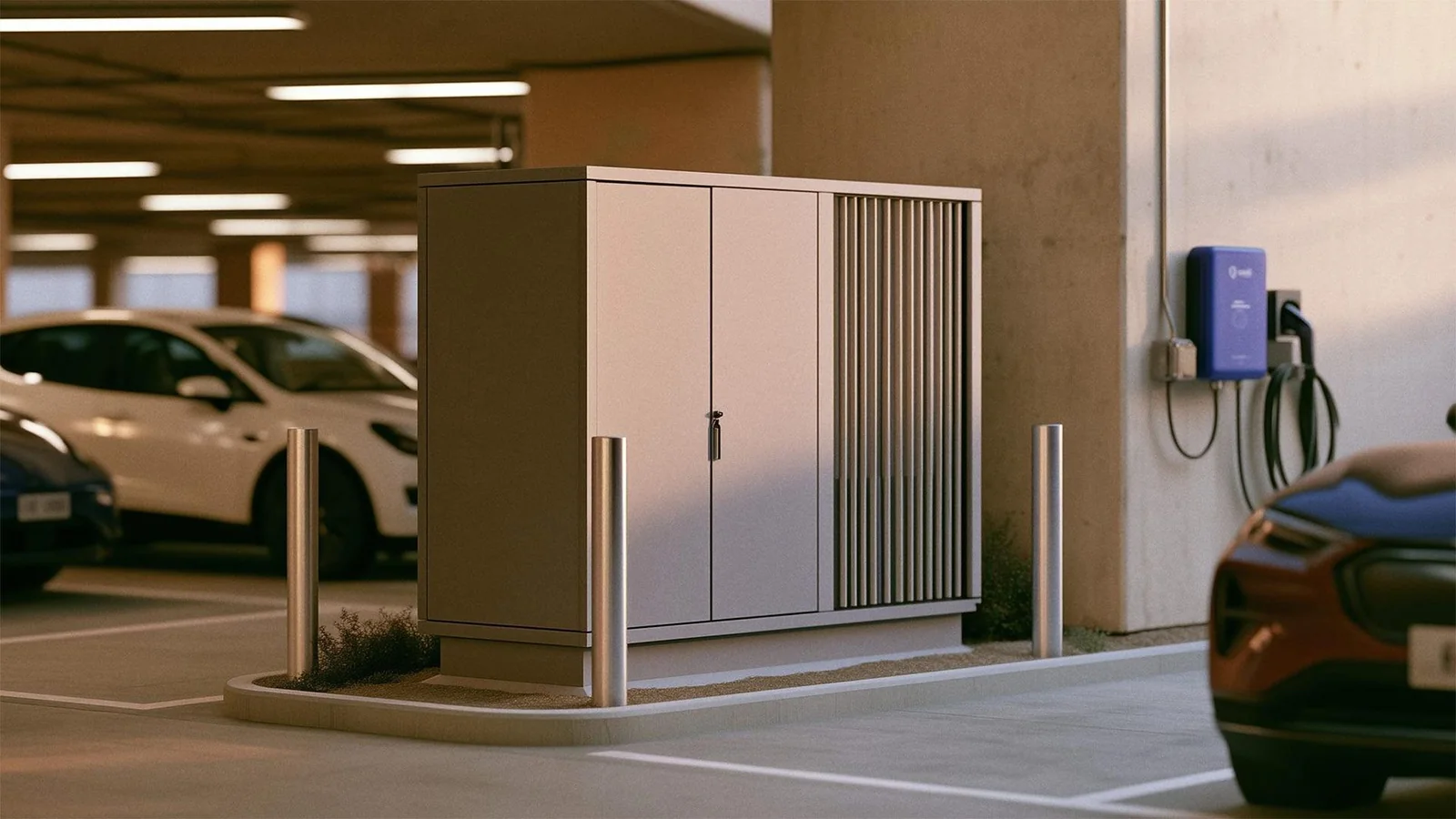
Electric vehicle charging firm Xeal plans to use its existing United States network to build an edge inference compute network powered by idle EV charging capacity. The company operates over 1,600 locations with established electrical infrastructure, aiming to deploy more than 100,000 Nvidia GPUs across these sites. To achieve this, Xeal has developed outdoor enclosures called Latient Pods, each housing up to 48 Nvidia Hopper or Blackwell Ultra GPUs.
According to Xeal leadership, the Latient Pods provide immediate inference compute capacity while traditional data centers remain under construction. Because the charging sites are already permitted, grid-connected, and typically operate at a fraction of their maximum capacity, they can deliver processing power locally with minimal latency and no water hookup requirements.
Nvidia representatives have noted that distributed networks of this type offer an innovative method for bringing low-latency artificial intelligence inference closer to end users while maximizing existing electrical infrastructure.
Latient Pod Specifications
The outdoor cabinets are designed to resemble standard telecommunications infrastructure while integrating heavy-duty computing hardware. Key specifications and features of the Latient Pods include:
Powered by idle electrical capacity from existing EV chargers.
Housing up to 48 Nvidia Hopper or Blackwell Ultra GPUs.
Self-contained independent cooling systems requiring no external water hookups.
Quiet operation below 65 decibels, comparable to a standard household appliance.
Providing ancillary rental revenue for site property owners.
Increasing property value for locations with minimal upfront capital investment.
Covering all associated power utility costs through tenant pass-through arrangements.
Offering potential operational cost savings for electric vehicle charging consumers.
Protected by a NEMA 4 outdoor-rated enclosure built to withstand harsh weather conditions.
Designed for rapid deployment and activation within hours of delivery.
Network Scale and Security Challenges
Given that a single Latient Pod can hold up to 48 graphics processors, reaching the targeted milestone of 100,000 deployed Nvidia GPUs implies that Xeal will either install multiple pods at existing locations or expand its total footprint to nearly 2,100 charging stations.
The company states that placing these computational units across metropolitan areas creates a Metro Edge architecture capable of delivering sub-20 millisecond response times, outperforming traditional centralized data centers.
Distributed computing concepts utilizing vehicles or roadside assets have been proposed previously, including concepts exploring idle vehicular processing capacity.
However, deploying high-value enterprise hardware in unattended public spaces introduces significant physical security challenges. Public charging stations have frequently been targeted by thieves seeking scrap copper from cables, raising questions about the level of physical protection required to safeguard cabinets containing millions of dollars worth of advanced AI accelerators.
Xeal indicates that the first operational Latient Pod is scheduled to go online by the end of the year.