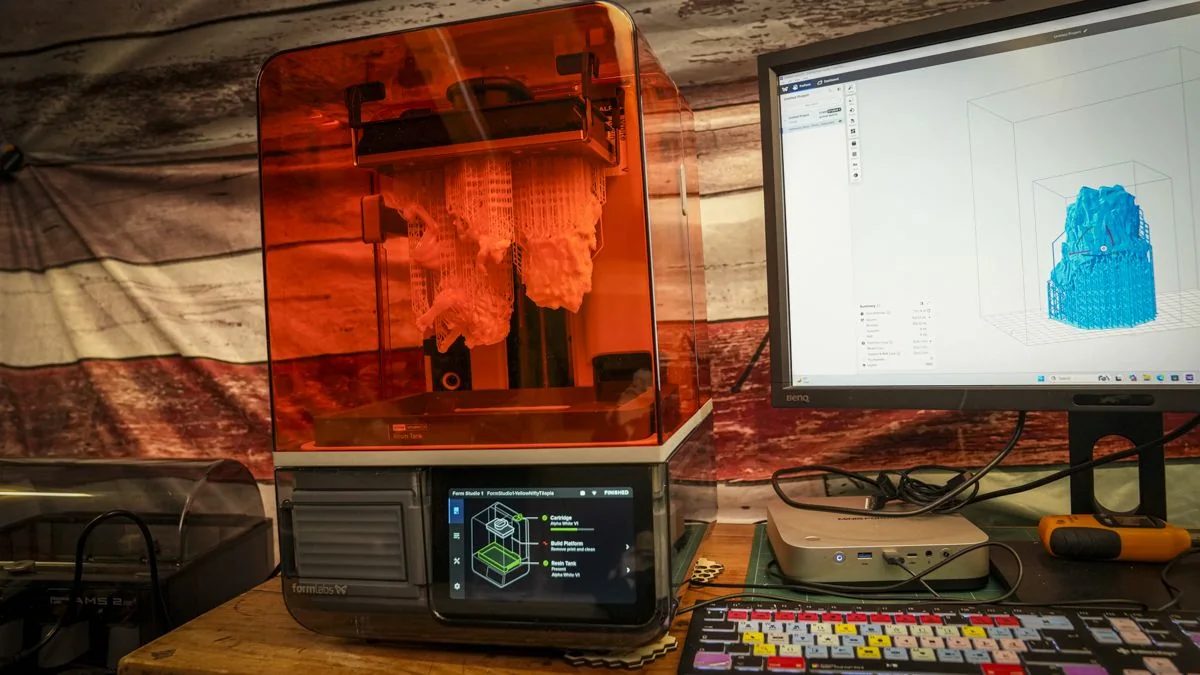
Formlabs has long dominated the professional resin 3D printing market with high-end machines tailored for businesses. With the Form Studio 1, the company steps into the more accessible sector, aimed at advanced enthusiasts.
The machine borrows heavily from the design and quality of the higher-end Form 4, bringing professional aesthetics down to a more approachable market segment.
Priced around $700, it sits above typical budget competitors, but the source review notes that the price difference translates into a substantially superior device.
Despite its lower price point, the Studio 1 retains the professional workflow trusted by medical, engineering, and product design sectors.
It incorporates a drop-in cartridge system that automatically feeds the resin tank while monitoring levels and temperature, alongside compatibility with PreForm software.
The source review observed that the printing process proved unusually clean for a resin device, aided by stackable tanks that simplify short-term storage.
Built-in filtration kept perceived odors relatively low even without the optional VOC extractor, though standard workshop ventilation remains recommended.
The source review concluded that the machine's build quality, workflow, and model fidelity outclass most competing options currently available.
Formlab Form Studio 1: Price and Availability
Expected pricing starts around $699 for the Basic package—which includes the printer, resin tank, and build platform—while the Flex package runs slightly higher with a flexible build platform. Optional additions include the Wash+Cure unit and a VOC Extractor.
Formlab Form Studio 1: Design
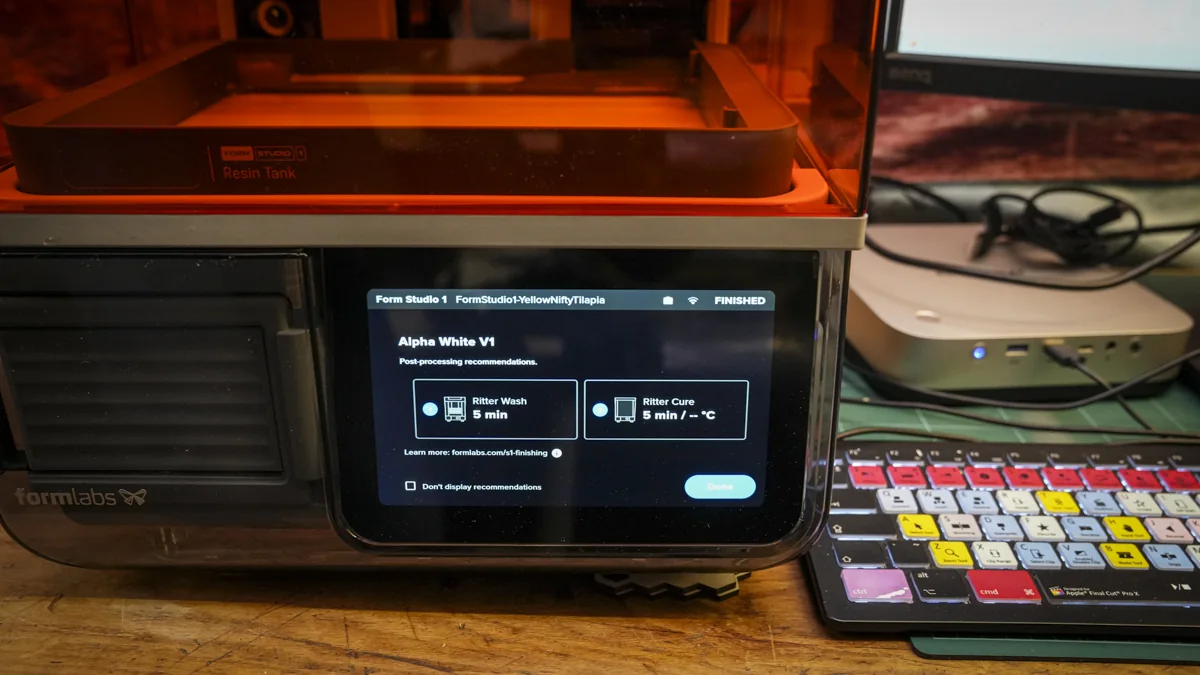
Measuring 342 × 315 × 502 mm with a 200 × 125 × 235 mm build volume, the printer is relatively compact. An orange-tinted flip-up cover shields the interior from ambient UV light.
The distinctive transparent panels reveal internal electronics and status lights, giving the machine a futuristic aesthetic that fits well in any modern workshop.
The front features a large touchscreen for status and settings, while the rear houses the slot-in resin cartridge. The overall physical finish closely mimics professional-grade hardware.
While the reviewer did not personally test the optional external VOC Extractor, it represents a useful addition for managing emissions in enclosed spaces.
Even without the extractor, noticeable odors remained lower than many comparable resin printers, though standard safety precautions near a window are advised.
During testing alongside FFF 3D printers, the Studio 1 remained remarkably quiet, producing only a low, rhythmic background hum from its motors.
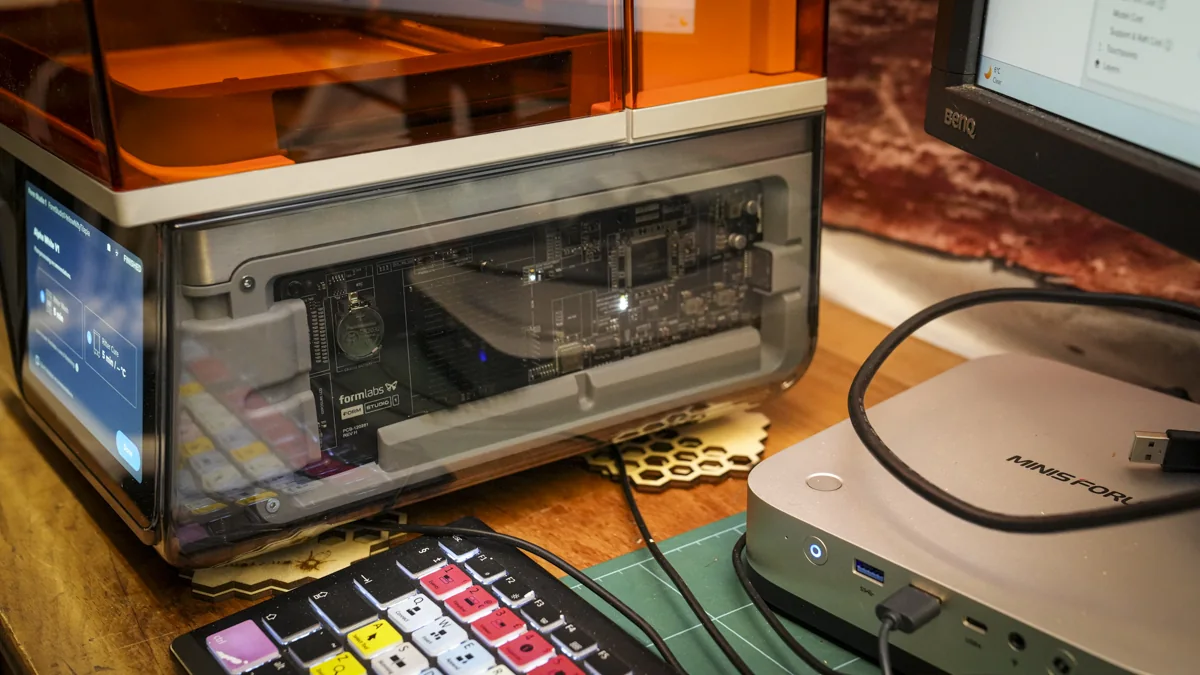
Initial setup took roughly five minutes, requiring users to attach the build platform, insert a resin cartridge, connect to Wi-Fi, and follow on-screen prompts.
A built-in sensor assists with the automated leveling process using an included disc tool, simplifying calibration compared to heavier competing hardware.
Adjustable leveling legs help accommodate uneven workbench surfaces, ensuring a stable operational foundation.
Connecting to the PreForm software on PC or Mac involves entering the printer's IP address displayed on the home screen, though a more automated discovery process would streamline initial pairing.
Both USB and Wi-Fi connectivity are supported, with Wi-Fi offering convenient remote monitoring while printing is underway.
Formlab Form Studio 1: Features
Key specifications include Masked Stereolithography (MSLA) technology, a 35 µm XY resolution, layer heights ranging from 30 to 250 µm, and automated resin handling via Cartridge V2.
The build quality represents a significant step up from sub-$1,000 competitors, closely mirroring the feature set of flagship commercial models.
Driven by Formlabs' Low Force Display (LFD) engine, the printer consistently produces exceptional fine detail.
An integrated heated chamber automatically regulates temperatures between 25 and 45°C depending on the active material, while onboard sensors track resin levels and print forces.
The cartridge system eliminates messy manual pouring. While the Studio 1 limits native resin support to nine specific materials without biocompatible options, it does feature an Open Material Mode.
Tank options vary based on the resin type used, with specific tanks recommended for standard materials versus Tough or Open Material configurations.
Rotating dedicated tanks for each resin type significantly reduces cleaning overhead during active multi-material workflows.
The optional Build Platform Flex greatly simplifies finished part removal, eliminating the need to pry prints from rigid metal plates.
Purchasing the package that includes the flexible build platform is strongly recommended due to its convenience.
PreForm software allows users to import models, orient parts, generate supports, and queue up multiple print jobs across different projects efficiently.
Automated one-click support generation handles most models reliably, while granular manual controls remain available for complex geometries.
Advanced features include model hollowing and drain hole creation to conserve resin and prevent trapped pockets.
The large front touchscreen offers an intuitive interface for managing print jobs directly on the device.
The companion Dashboard centralizes print history, notifications, and material tracking into a single unified workspace.
While pre-supported models from other slicers can be used, running them through PreForm with adjusted exposure settings yields the most reliable results.
Formlab Form Studio 1: Performance
Initial setup established a largely hands-off operational experience that persisted throughout the review period.
Beyond swapping empty cartridges and removing completed prints, the machine required minimal direct intervention.
The reliability of the print process stood out as one of the printer's strongest attributes, combining cleanliness with robust mechanical performance.
The user experience closely mirrors that of the commercial Form 4, making high-end resin printing accessible at a fraction of the cost.
Testing across multiple resin colors yielded zero failed prints, highlighting exceptional process stability.
Swapping cartridges is as simple as flipping a vent, pulling out the old bottle, and snapping in a replacement.
While third-party resins can be used via open modes, sticking with Formlabs' validated materials ensures optimal reliability and ease of use.
The automatic tank refilling system seamlessly tops off resin levels mid-print, while software gauges accurately predict material consumption before jobs begin.
Complex test models, including highly detailed miniature figures, printed successfully with remarkable structural fidelity.
Large multi-part models fit comfortably on the build plate and completed significantly faster than expected without consistency issues.
Functional mechanical parts and complex miniatures alike printed at impressive speeds with absolute dimensional accuracy.
The flexible build plate ensured nearly instantaneous part release, avoiding the struggles typically associated with rigid metal platforms.
While high-speed alpha resins push speeds up to 130mm per hour, standard resins offered respectable completion times even for large geometries.
PreForm's built-in alert and warning system successfully preempted potential printing errors before jobs were sent to the printer.
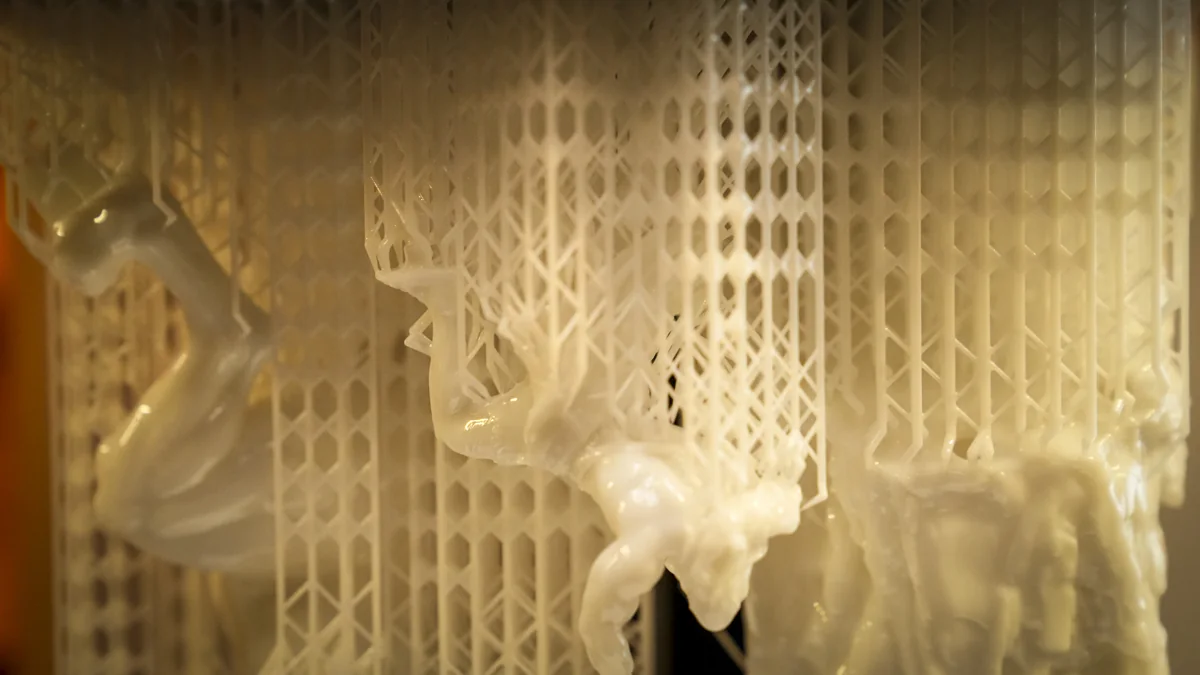
Job queuing capabilities allowed subsequent prints to be prepared while the machine was actively finishing current tasks.
Post-processing still requires standard washing and UV curing steps for uncured resin parts.
Dedicated wash and cure units effectively streamline the post-processing workflow.
Standard isopropyl alcohol washing protocols apply, with duration varying depending on the specific resin utilized.
The Form Studio 1 proves to be a top-tier resin printer capable of producing injection-molded-quality functional parts and miniatures, provided users account for post-processing requirements.
Formlab Form Studio 1: Final verdict
Retailing around $700, the Formlabs Form Studio 1 is poised to disrupt the resin 3D printing market by offering professional-grade performance at an enthusiast price.
The print quality rivals much more expensive commercial machines, making it a compelling option for demanding users.
Streamlined tank management, transparent side panels, and a responsive touchscreen elevate the overall user experience.
While optional accessories and post-processing hardware add to the total cost, the core value proposition remains exceptionally strong.
For users needing high dimensional accuracy and reliable small-batch production, the Studio 1 stands out as a premier choice.
Buy it if...
You need finely detailed resin parts. The print quality and PreForm workflow make it a strong choice for prototypes, models and small production runs.
You want a more controlled resin workflow. The cartridge feed, automatic refilling, touchscreen and job monitoring make everyday use cleaner and simpler than on many hobbyist printers.
Don't buy it if...
You are just starting out or have a tight budget.
Cheaper resin printers can make sense if you are willing to do more of the setup and handling yourself.
You want a printer that needs no post-processing.
Resin parts still require washing, and most materials require curing. The printer reduces the mess; it does not eliminate it.



