AI-Powered Performance Optimization
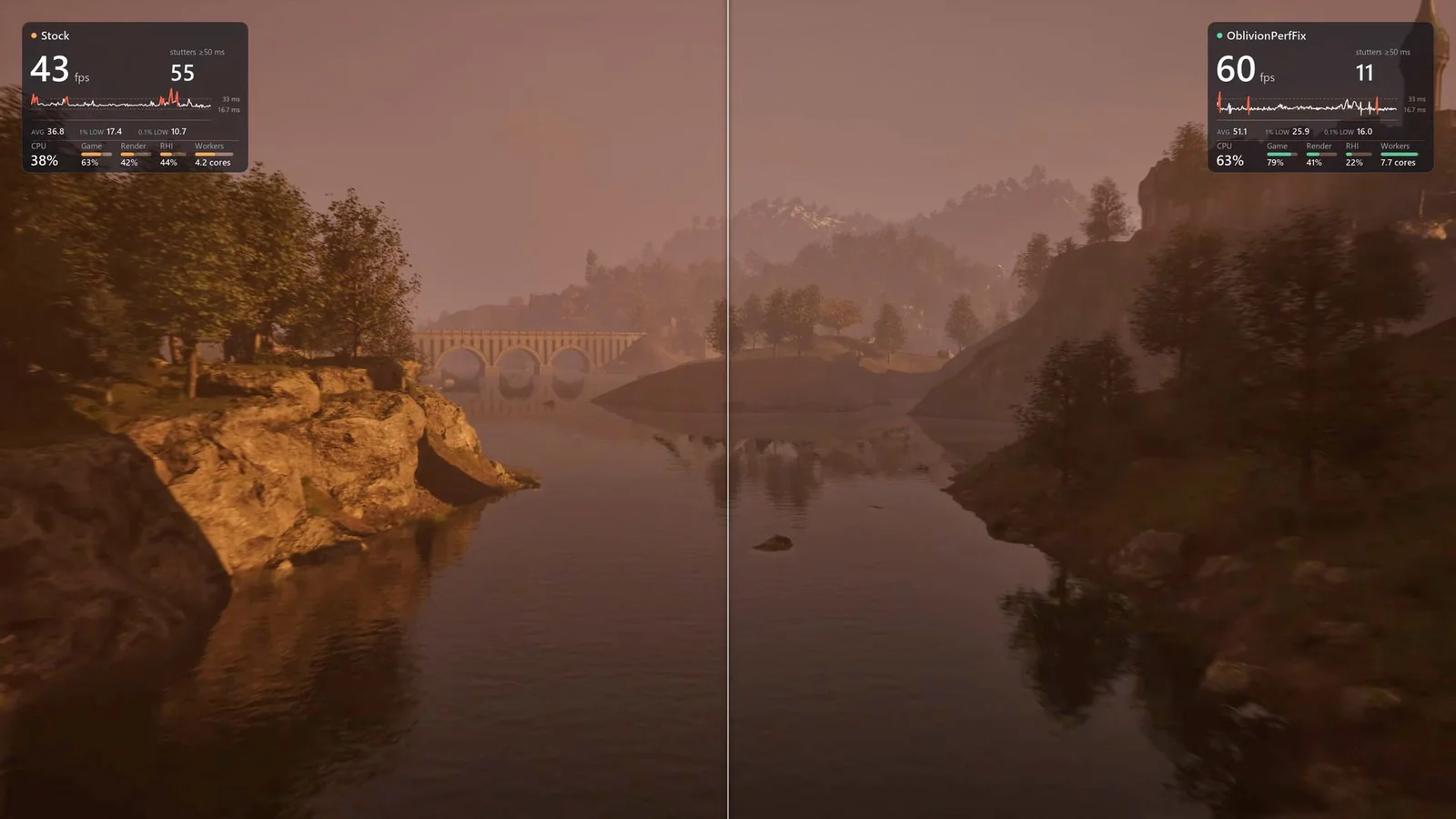
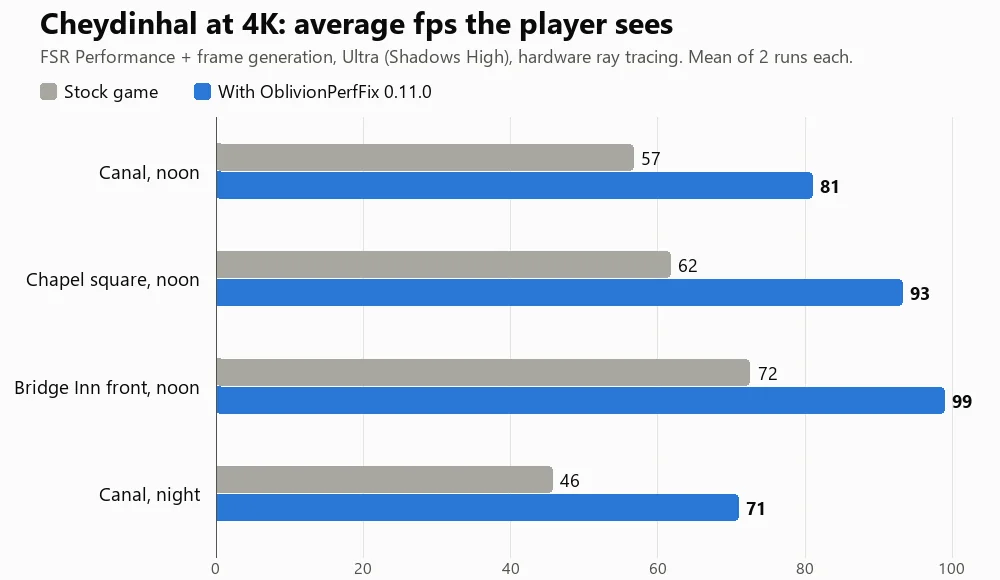
The revelation that there was a ton of performance lying on the table in the remastered The Elder Scrolls Part IV: Oblivion won't be a surprise to people who have played the game, which is notorious for its hitching and stuttering. The reason primarily lies in its poor utilization of hardware, and that's a big part of what LTSharpe and Claude have addressed in the new Oblivion Remastered Performance Fix that changes nothing about the game's visuals yet increases performance by as much as 68% in the worst case.
This mod is a binary code modification for Oblivion Remastered that seeks to improve performance and stability considerably, and according to numerous jubilant and thankful posts on NexusMods, it seems to do exactly that, with one user proclaiming that the performance increase was dramatic and that the overworld stuttering that plagues the game is completely gone.
Reverse-Engineering Without Source Code
Gamer and mod creator LTSharpe has a system with a Ryzen 7 5800X CPU. Frustrated with the verifiably awful performance of the remaster of The Elder Scrolls Part IV: Oblivion, he paid for a subscription to Anthropic's Claude AI agent and started working with the assistant to diagnose and fix the performance problems.
Claude was not merely hallucinating configuration tweaks. The partners, with Claude doing the processing and LTSharpe directing, reverse-engineered the game to the point that they were able to build a repeatable benchmarking framework. That allowed them to systematically diagnose the causes of the performance problems and then test fixes against the real behavior of the game with modified machine code.
Engine-Level Bug Fixes
This work was accomplished without access to the source code, as neither TES4 Oblivion nor the remaster's Unreal Engine is open-source software. According to LTSharpe, over the course of two weeks Claude successfully diagnosed and fixed bugs in not only the Remaster's Unreal Engine code, but also in the underlying Gamebryo original engine, in AMD's frame generation code, and in the Unreal Engine itself, improving performance and avoiding crashes.
The developer acknowledges that the performance tweaks were created with his system specifically in mind and that they may not work well for all configurations. His setup utilizes a Radeon graphics card, and some portion of his fixes were aimed at making sure AMD's FSR upscaling and frame generation remain in effect despite a long-standing game bug that disables them when task-switching out of the game.