Regulatory Scrutiny and Manufacturing
TP-Link’s alleged ties to China have drawn scrutiny from regulators, even though the company says it split from its Chinese parent company back in 2024. With the FCC’s ban on foreign-made consumer routers in place, it has pledged nearly $1 billion in U.S. R&D and manufacturing, and has also signed a letter of intent with Key Tronic to assemble its Wi-Fi 8 routers in Mississippi, hoping to win approval.
Nvidia's RTX Spark platform launched alongside a Microsoft Surface Laptop Ultra. Despite a focus on local AI workloads and inference, the device functions as a gaming machine, though its 3270x2180 display places heavy demands on the Blackwell-based GPU. Custom resolution testing can bolster gaming performance in titles like Control Resonant.
Gaming setups rely on headsets for immersion and comfort. While audiophile-grade options carry high price tags, other elements such as microphone quality and quality-of-life features often make a larger practical difference in gaming use.
Storage and Chipmaking
Tape storage continues to experience demand alongside the AI boom, with shipments increasing by 57% year-on-year in Q1 2026. Companies like IBM, HPE, and Quantum are developing standards beyond LTO-10 with upcoming cartridges offering up to 365TB of native capacity.
China's domestic chipmaking technologies have lagged behind Western counterparts due to limited access to extreme ultraviolet lithography machines, forcing continued reliance on older DUV equipment.
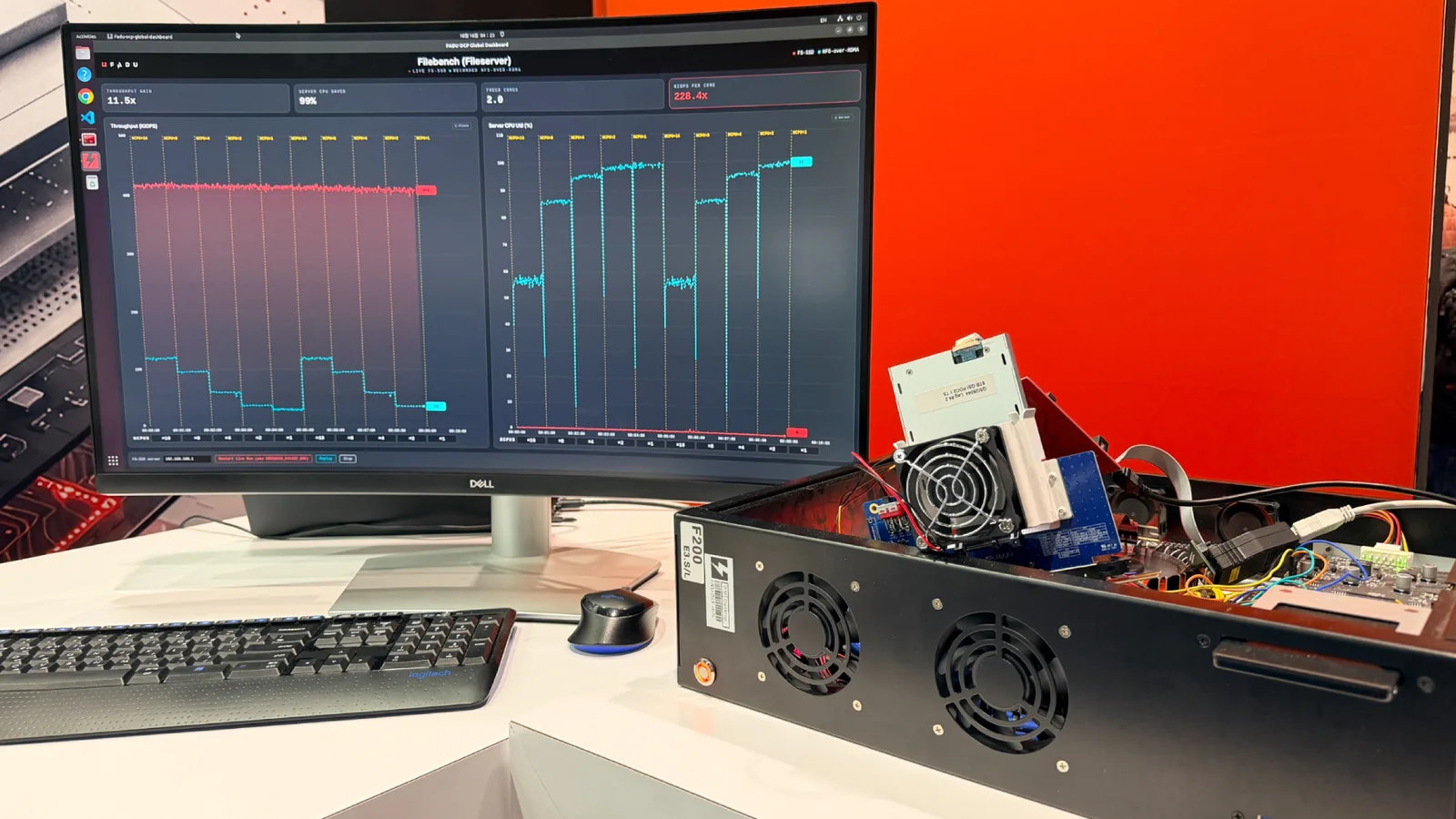
File-Semantic SSDs
SSD controller designer FADU announced its File-Semantic SSD (FS-SSD) architecture in a white paper. The design places the filesystem directly onto the SSD's flash memory to bypass host CPUs, enabling GPUs, DPUs, and NICs to read files directly. Partner samples are slated to ship by Q3 2027.
Deepseek released its V4-Flash-1017 model, scoring well across intelligence and agentic workloads at a lower cost-per-task ratio than competitors, though analysis suggests it is more prone to hallucination than Western closed-source alternatives.
Modern infrastructure depends on open source software, but numerous critical projects remain understaffed. Reports indicate that 11 out of 23 critical pieces of open source infrastructure rely on only one or two maintainers.
Don’t miss out on this Tom’s Hardware Premium. Get a full year of access for just $29, or from $7 per-month. Get daily news analysis, deep dives into specialist topics in the semiconductor industry, as well as access to Bench, the largest benchmarking database around.
To read any of the articles we mention above, as well as unlock Bench, you'll need to purchase a Tom's Hardware Premium subscription. Your support goes a long way in helping us to publish deeper, more insightful articles that might not otherwise be covered.