The Conversion Project
An electronics hobbyist recently demonstrated a method for converting used laptop memory into high-performance desktop modules. By acquiring a SK hynix 2x 16GB DDR5-5600 SODIMM kit for $120, along with blank desktop DDR5 PCBs and heatsinks, the creator built a custom 2x 16GB desktop kit.
The total bill of materials reached approximately $175. The creator noted that the SODIMM sticks utilized SK hynix A-die modules, sharing the same integrated circuits found in premium desktop memory lines.
Reballing and Assembly
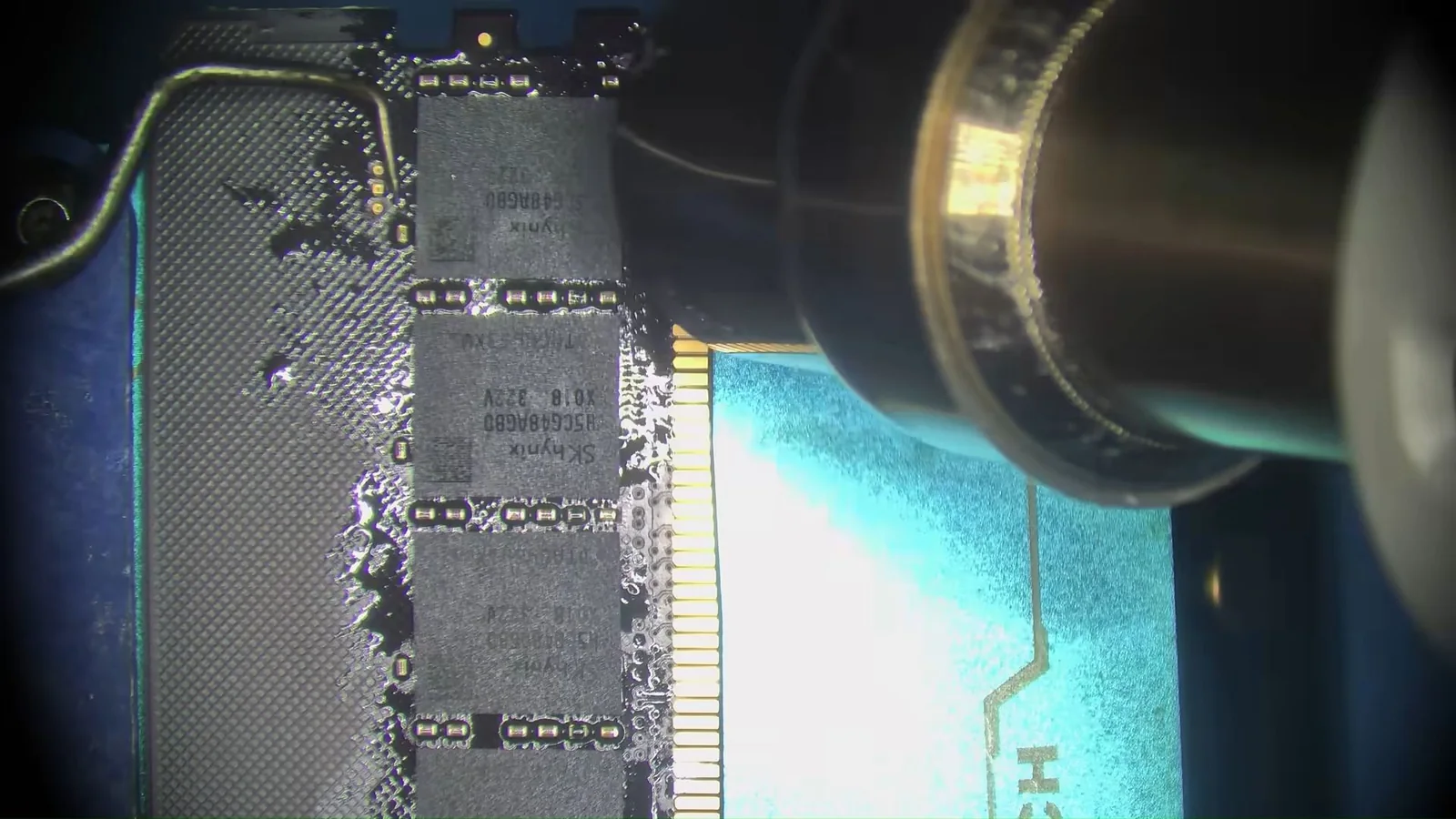
The manufacturing process involved removing the memory ICs from the donor sticks using a hot air station. The chips were cleaned and fitted with 0.45mm leaded solder balls using a DDR5 stencil and a reballing jig. Meanwhile, blank desktop PCBs were prepared with solder applied to the BGA pads.
Using flux and thermal equipment, the original memory ICs were mounted onto the new desktop boards. Precise alignment was verified visually through surface tension behavior during the heating process.
The original SPD and BIOS chips were transferred from the laptop sticks to the new desktop DIMMs. Thermal pads and custom heatsinks completed the physical assembly.
Performance and Overclocking
Initial testing on an Asus ROG Maximus Z790 Apex Encore motherboard correctly identified the modules. Further tuning achieved stable operation at DDR5-7800 CL38 and 1.40V, verified through extended stress testing.
Risks of BGA Rework
While successful, the procedure carries significant risks. Without specialized testing equipment to isolate individual faulty ICs on the PCB, a failed solder joint could render the module unusable.
Finding functional used DDR5 SODIMMs at low prices remains challenging, as retail and secondary market prices for desktop memory kits continue to run significantly higher.
Similar custom memory modification projects have been undertaken by other enthusiasts attempting to bypass high retail costs for high-speed desktop RAM.