Overview and Architecture
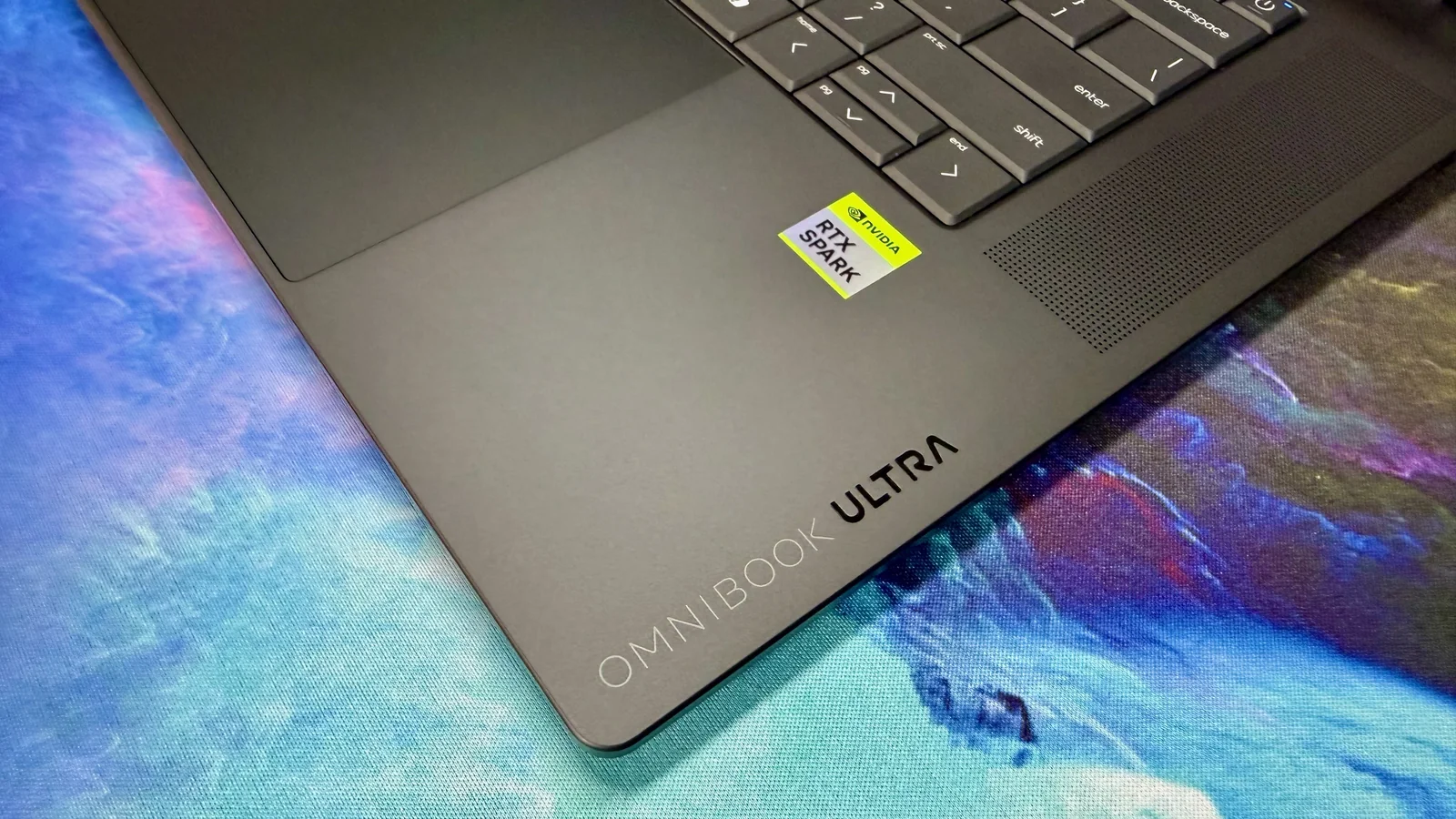
The HP OmniBook Ultra 16 helps introduce Nvidia’s RTX Spark platform of high-powered laptops tailored for creative professionals and AI developers. While gamers may also find appeal in the hardware, these systems are built primarily to handle agentic AI and heavy content creation workloads while offering a compelling alternative for prospective MacBook Pro buyers looking at the Windows ecosystem. Powered by Nvidia’s new RTX Spark N1X system-on-chip—which integrates an Arm-based processor with Blackwell RTX graphics and access to up to 128GB of unified memory—the platform represents a significant shift for high-end laptops.
The OmniBook Ultra 16 houses this powerful hardware inside a sleek and elegant chassis featuring a brand-new thermal architecture and display hinge layout. However, the machine can get hot and loud under demanding workloads, demonstrating the inherent thermal limitations of ultra-thin, high-performance laptop designs.
Pricing and Configurations
Pricing for the RTX Spark laptop lineup is notably steep. The OmniBook Ultra 16 starts at $3,200 for a baseline configuration containing 32GB of RAM and a 1TB SSD. Upgrading to double the memory and storage pushes the price to $5,000, while maxing out the system with 128GB of RAM raises the cost to $6,200.
The evaluated baseline configuration is geared more toward creative endeavors than intensive local AI agent execution, which benefits from larger RAM pools.
Hardware Specifications and Memory Architecture
Nvidia offers two variants of the RTX Spark N1X CPU. The lower-end processor features an 18-core Grace CPU and a Blackwell GPU with 5,120 CUDA cores supporting up to 64GB of RAM. The higher-end version utilized by HP for the OmniBook Ultra 16 includes a 20-core Grace CPU and a 6,144-core GPU with support for up to 128GB of RAM.
As an Arm-based processor, the RTX Spark N1X may present minor Windows-on-Arm compatibility challenges. While many applications feature native Arm support, others must run through Microsoft’s Prism emulation layer, which can occasionally impact application performance.
The unified memory architecture allows the CPU and GPU to share a coherent pool of RAM directly, avoiding traditional bandwidth bottlenecks. Offering memory bandwidth up to 300GB per second, the system uses RAM more efficiently than split x86 configurations. Notably, the memory is soldered directly to the motherboard and cannot be upgraded after purchase.
Users can manually allocate memory distribution through the Nvidia app. On the 32GB review system, the GPU allocation defaults to 12GB and can be scaled up to 16GB, with higher configurations supporting even larger dedicated pools.
Design and Ergonomics
To manage heat output from the RTX Spark N1X, HP designed a unique cooling system. Rather than opening behind the base, the display rests on top of the back edge, mimicking a miniature thermal shelf. This structure maintains a clear exhaust path and houses two cooling fans alongside three internal heat pipes.
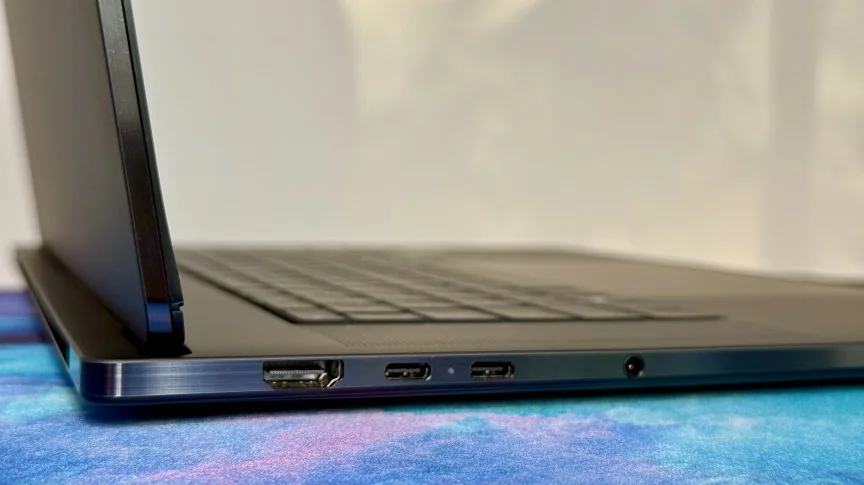
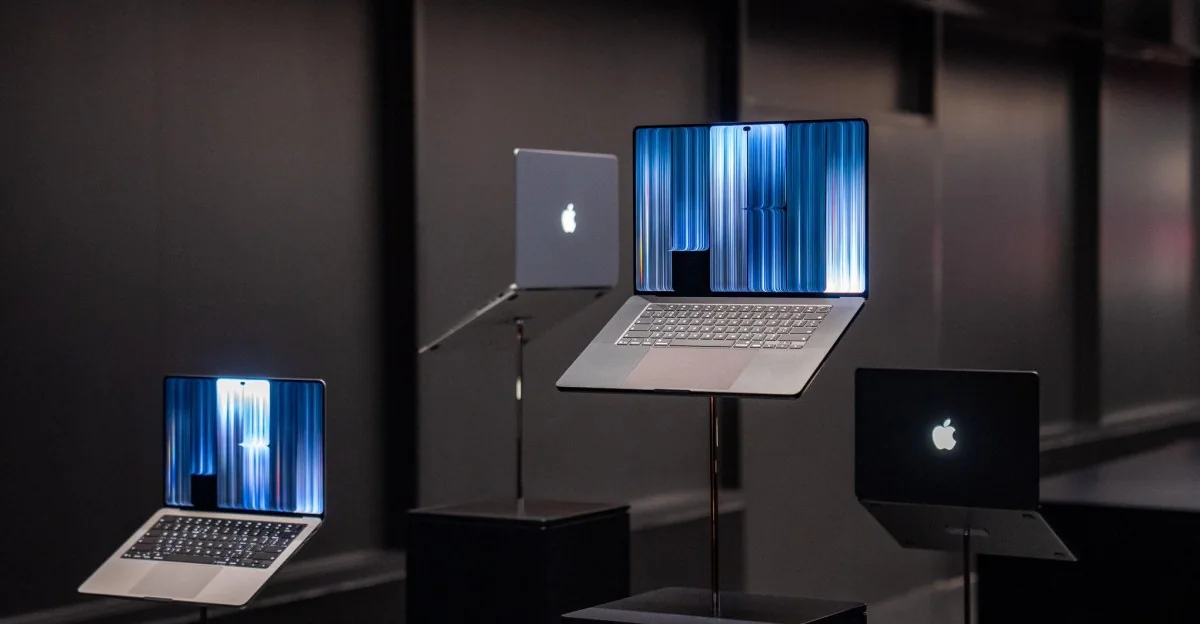
Aside from the distinctive hinge design, the OmniBook Ultra 16 shares a similar aesthetic to smaller models in the lineup. Its rigid, all-aluminum chassis provides a thin profile and premium feel comparable to high-end alternatives like the MacBook Pro.
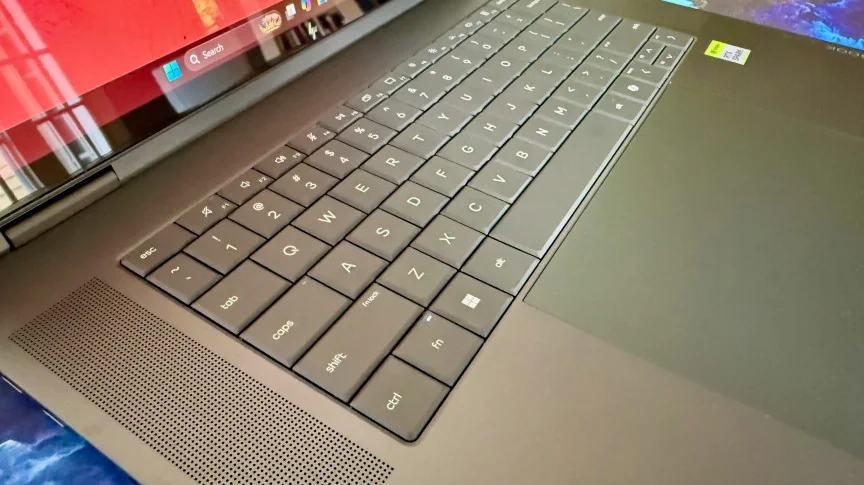
Additional design highlights include a vibrant 3K OLED touch display and a spacious touchpad with a lively haptic response. The keyboard offers a plush yet solid tactile typing experience, though data-heavy professionals might lament the absence of a dedicated number pad.
Performance and Benchmark Results
Early evaluations comparing the OmniBook Ultra 16 against competing RTX Spark laptops reveal consistent multi-core performance across the platform.
In Geekbench 6 and Cinebench 2024 evaluations, the RTX Spark laptops finished behind the latest Apple M5 Pro and M5 Max MacBook Pro configurations in both single- and multi-core trials.
When tested against Qualcomm Snapdragon X2 Elite laptops, the RTX Spark systems achieved comparable multi-core scores in Geekbench 6 and edged ahead in Cinebench 2024, though single-core performance lagged slightly behind the Snapdragon alternatives.
The platform excelled in graphics- and AI-focused evaluations. On native Arm 3DMark tests like Steel Nomad and Solar Bay, the RTX Spark laptops outperformed the M5 Pro system and other Windows competitors. Furthermore, they surpassed both MacBook Pro models by significant margins on Procyon’s Stable Diffusion XL inference benchmark.
Gaming evaluations showed the RTX Spark N1X GPU capable of respectable 1080p frame rates, averaging 96 fps on Guardians of the Galaxy and 99 fps on Shadow of the Tomb Raider. While trailing dedicated, lower-cost gaming laptops equipped with RTX 5050 or 5060 cards, performance exceeded that of Intel's integrated Arc B390 graphics.
Battery life fell short of manufacturer claims. The laptop ran for slightly over 11 hours during testing, placing it ahead of some competing Windows portables but far behind Apple's 20-hour longevity on equivalent tasks.
Ultimately, the HP OmniBook Ultra 16 shines in multi-core processing and local AI inferencing, though its single-core speeds and battery endurance are merely average.