Lunar Supercomputing Mission
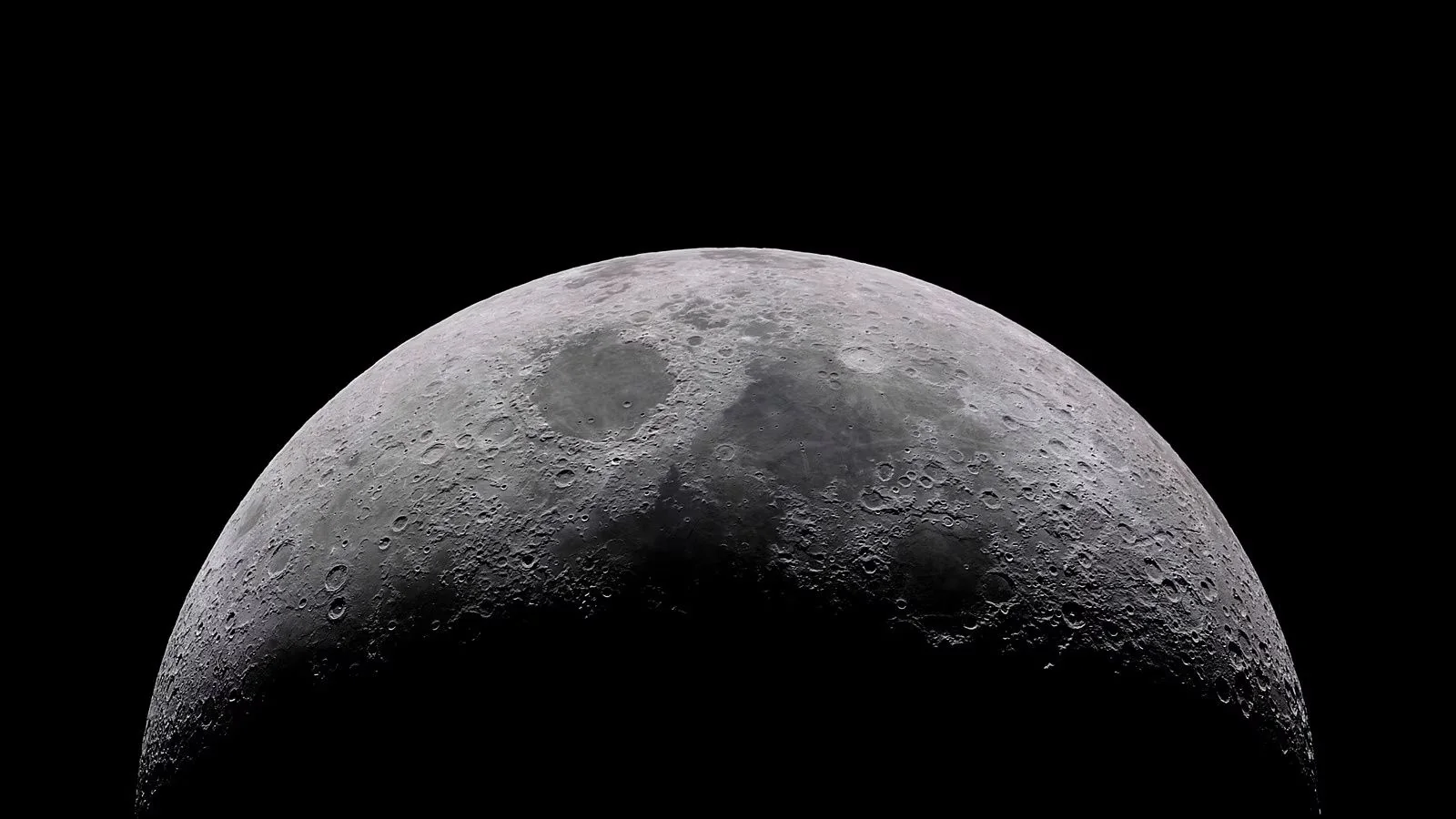
A fanless compute module will head to the Moon for supercomputer benchmarking, AI testing, and additional experimentation by NASA and Deloitte, as detailed in a Hewlett Packard Enterprise release. The company’s Spaceborne Computer-4 will run what HPE calls the first high performance computing benchmarks on the surface of the Moon, riding on an Astrolab FLIP rover to the lunar south pole. The launch is slated for late 2026 under NASA’s Commercial Lunar Payload Services initiative for a Moon Base program mission, in conjunction with a Voyager Technologies Griffin-1 lander.
Named benchmarks include High Performance Conjugate Gradients, a supercomputing metric that complements High Performance LINPACK. AI testing will involve large language model retrieval-augmented generation, vision inference, LiDAR processing, and an AI services container for AI app deployment. The large language models will deliver insights, analyze visual data, and support autonomous monitoring, while the LiDAR processing involves mapping, navigation, terrain analysis, and infrastructure development.
Scott Wiest, HPE’s vice president, fellow and global sales chief technologist, said the next chapter of lunar exploration will depend on the ability to turn data into insights at the point of discovery. HPE says no other company or organization has conducted such benchmarks on the Moon, with a presumption that no other parties’ planned high performance computing missions will get there first. HPE also assembled a software suite that handles the link to Earth-side systems and the secure delivery of results.
Hardware Design and Specifications
HPE’s lightweight, self-contained, and fanless advanced compute module is built for space environments, bringing artificial intelligence and high performance computing to the lunar edge. The computer blade is about 10 inches long and about 4 inches wide, about the size of a typical graphics card, and is made from two component cards, as HPE senior director Norm Follett explained on the company’s Technology Now podcast.
It includes 1TB of Kioxia storage, a low-power CPU, and a small GPU. The chassis is designed to shed heat into a rover plate, and the overall design is made for the Moon rather than being an off-the-shelf solution like International Space Station units. Currently, HPE’s description of the unit lacks hard details on performance targets, power budgets, or chip vendors, but the eventual benchmark results will yield some information.
The original Spaceborne Computer launched in August 2017 on SpaceX’s CRS-12 to the International Space Station. It also ran High Performance LINPACK with High Performance Conjugate Gradients, surpassing one teraflop, according to HPE. It was rack-installed and water-cooled; the fanless Computer-4 is quite miniaturized in comparison to the 124-pound original Spaceborne Computer. Spaceborne Computer-2, also on the space station, is made of HPE Edgeline and ProLiant systems with Kioxia solid-state drives.
Payload Experiments
NASA will use the opportunity to run its Federated Learning for Unbounded and Intelligent Decentralization artificial intelligence neural network, trained on data from the Earth, the Moon, and the International Space Station, coordinating three distinct models. The agency will also test a tuned large language model for semantic processing for handling onboard documents. Deloitte will test its Silent Shield, a new system to detect cyber intrusions with near-real-time predictive analytics. Testing ideally occurs onboard, as the link to Earth is slow with low levels of bandwidth, Follett explained.
The launch is planned for the fourth quarter of 2026, using a SpaceX Falcon Heavy launch vehicle. It will take several days for the lander to reach the Moon and its surface. The FLIP rover is designed to operate for one lunar day, or about 14 Earth days, before attempting to survive the night via hibernation, Follett said, making for a relatively tight benchmarking window.