Introduction
Intel Foundry made available its Intel 14A process design kit (PDK) version 0.9, an important milestone in the development of this next-generation manufacturing technology. The company states that the production node is reaching performance and yield maturity expected at this stage of development, with results backed by silicon validation. Intel plans to release PDK 1.0 in the first quarter of 2027, validating the technology's readiness for high-volume manufacturing.
PDK and Silicon Validation
A process design kit contains transistor models, design rules, and other information that enables chip designers to develop products for a particular manufacturing process using electronic design automation tools. The accuracy and quality of the PDK are crucial for modeling how chips will perform once manufactured. The release of PDK 0.9 is particularly important because it provides customers with a representation of Intel 14A based on actual silicon measurements rather than theoretical models.
Intel notes that PDK 0.9 lets customers develop designs intended to enter risk production around the time the process is certified. This can reduce the number of silicon revisions between initial tapeout and mass production. Intel expects to begin mass production using its 14A process technology in 2028, following risk production for its own products in the second half of 2027.
From a customer perspective, the PDK 0.9 gives customers the confidence to design products on Intel 14A, as the technology is reaching industry-standard performance and yield maturity supported by silicon-backed validation, according to Ben Sell, corporate vice president of front-end technology development at Intel Foundry.
Architectural Enhancements
Intel 14A builds on foundations introduced with Intel 18A while incorporating several substantial enhancements. These include second-generation RibbonFET gate-all-around transistors, PowerDirect backside power delivery, and Turbo Cells designed to accelerate timing-critical paths in processors. The latest announcement does not provide updated figures regarding transistor performance or density.
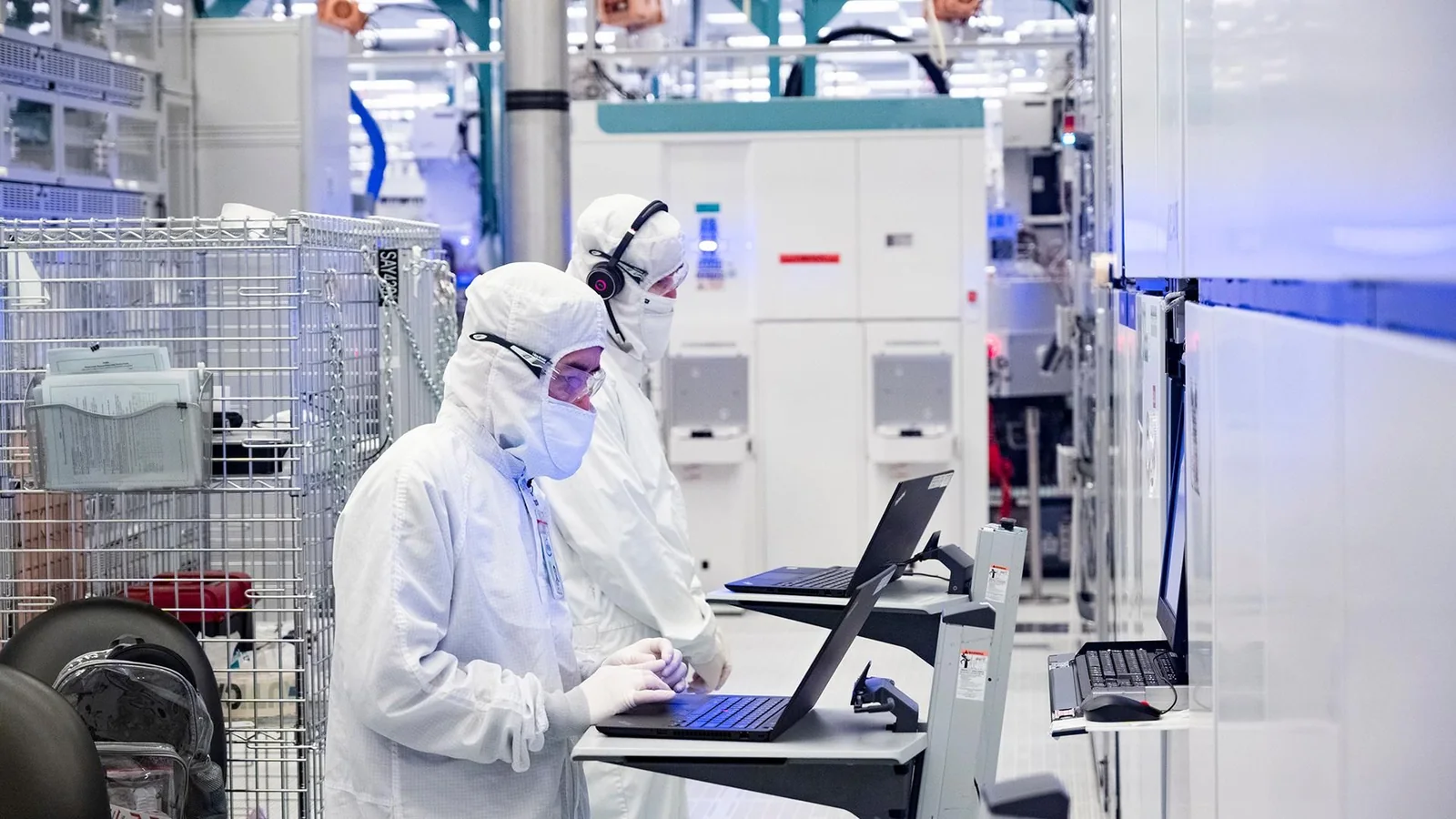
Beyond transistor and interconnect improvements, Intel is applying manufacturing experience gained during 12 months of Intel 18A production to accelerate the maturation of 14A. The company has increased investments in inline defect detection, modeling, and simulation to identify potential manufacturing problems earlier in the development cycle.
Supplier Collaboration
Another important change concerns Intel's relationships with equipment and materials suppliers. The company has revised its collaboration model to involve technology development teams and external suppliers earlier in the process development cycle. The goal is to address manufacturing defects and improve equipment capabilities before mass production begins.
This has required evolving the collaboration model with equipment and material suppliers and engaging technology development leaders earlier to drive improvements in defects and equipment capabilities, Sell said.
A benefit of early collaboration is that equipment suppliers may incorporate Intel's requirements into their standard products and development roadmaps. This could give Intel an advantage over competitors that must adapt manufacturing processes to standard equipment or develop solutions from scratch.
Historically, Intel frequently set the direction for semiconductor manufacturing technologies. By engaging equipment and materials suppliers earlier, Intel could regain some of its historical influence over the development of industry-standard manufacturing solutions.
Ecosystem Expansion
Intel continues to expand the design ecosystem for its 14A technology. Cadence and Intel established a design-technology co-optimization collaboration focused on AI-driven design tools and intellectual property, while Keysight, Siemens, and Synopsys announced design-tool certifications for the process.
Intel has not identified customers that have committed to manufacturing products using the technology or disclosed specific manufacturing agreements. Attracting external customers remains important because development costs of modern leading-edge processes require high-volume production.
Looking ahead, Intel intends to continue improving performance, yields, and manufacturing cycle times for 14A. The company also plans additional process enhancements and performance refinements for 14A-E and 14A-P nodes after the initial technology becomes available.
The next major milestone is the Intel 14A PDK 1.0, expected in the first quarter of 2027, according to Ali Farhang, corporate vice president and general manager of Intel Foundry's design technology platform organization.