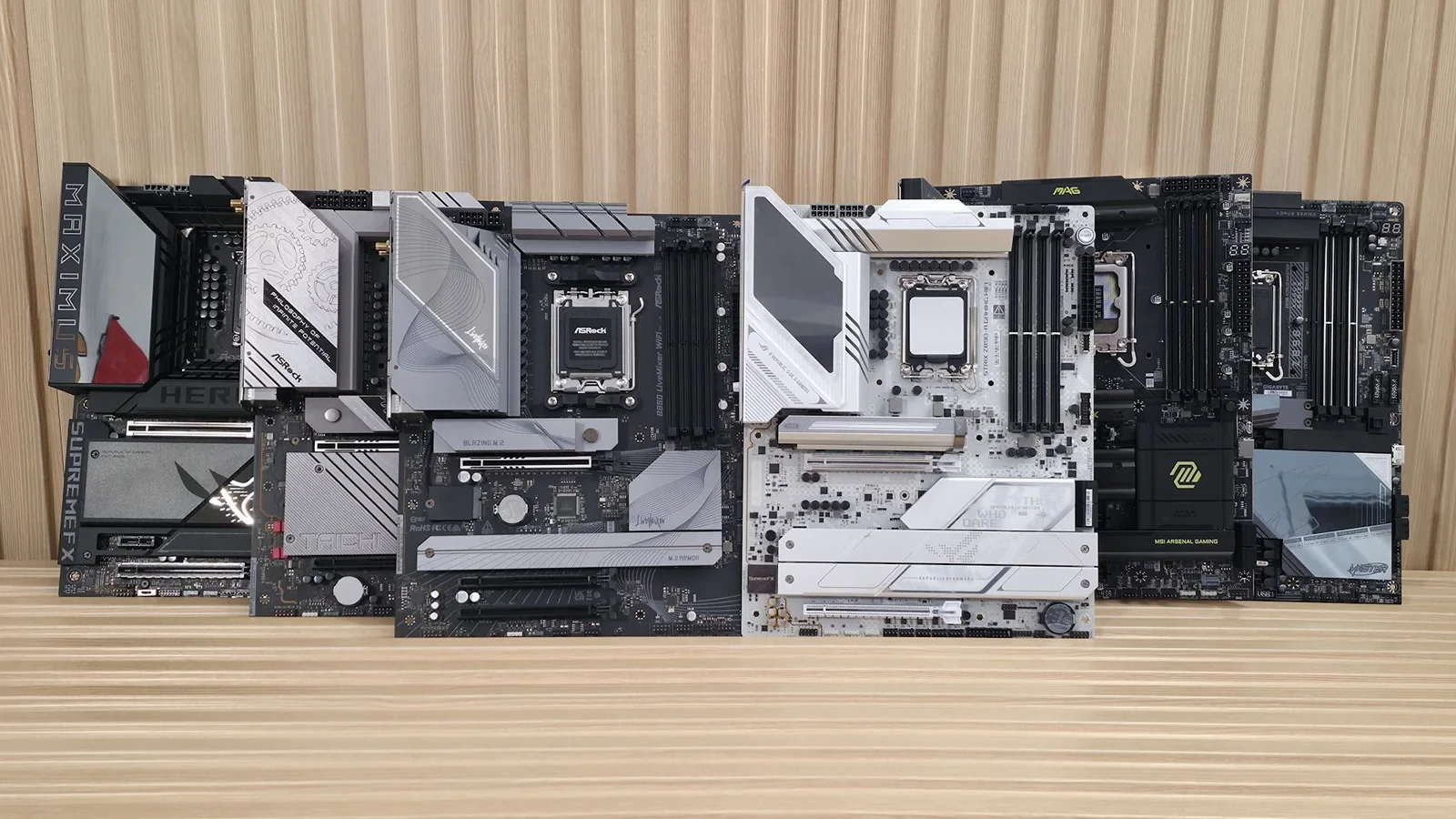
Platform Overview
Intel’s new Nova Lake-S CPUs are rumored to be on track to start mass production in Q4 2026, with a launch expected in Q1 2027. Unlike previous launches, we’re expected to see mid-range SKUs first, followed later in 2027 by flagship-class models that allegedly use two compute tiles and feature up to 52 cores.
Regardless of core counts, Nova Lake will require a new motherboard. The LGA 1851 socket is reaching the end of its lifecycle, necessitating the new LGA 1954 socket to accommodate increased I/O and power requirements. This platform also marks Intel’s first implementation of big last-level cache (bLLC) architecture.
While official configurations remain limited, platform details have begun to emerge. The lineup is expected to include the enthusiast-class Z990 and Z970, the mainstream B960, and workstation-focused W980 and Q970 chipsets.
Chipset Specifications
The Z990 remains the flagship, offering expanded PCIe lane counts, a DMI Gen5 x4 link, and 12 Gen5 lanes directly from the chipset. The Z970 serves as a secondary enthusiast option, sharing silicon with the B960; it supports CPU multiplier overclocking but omits BCLK adjustment and features fewer total ports and lanes.
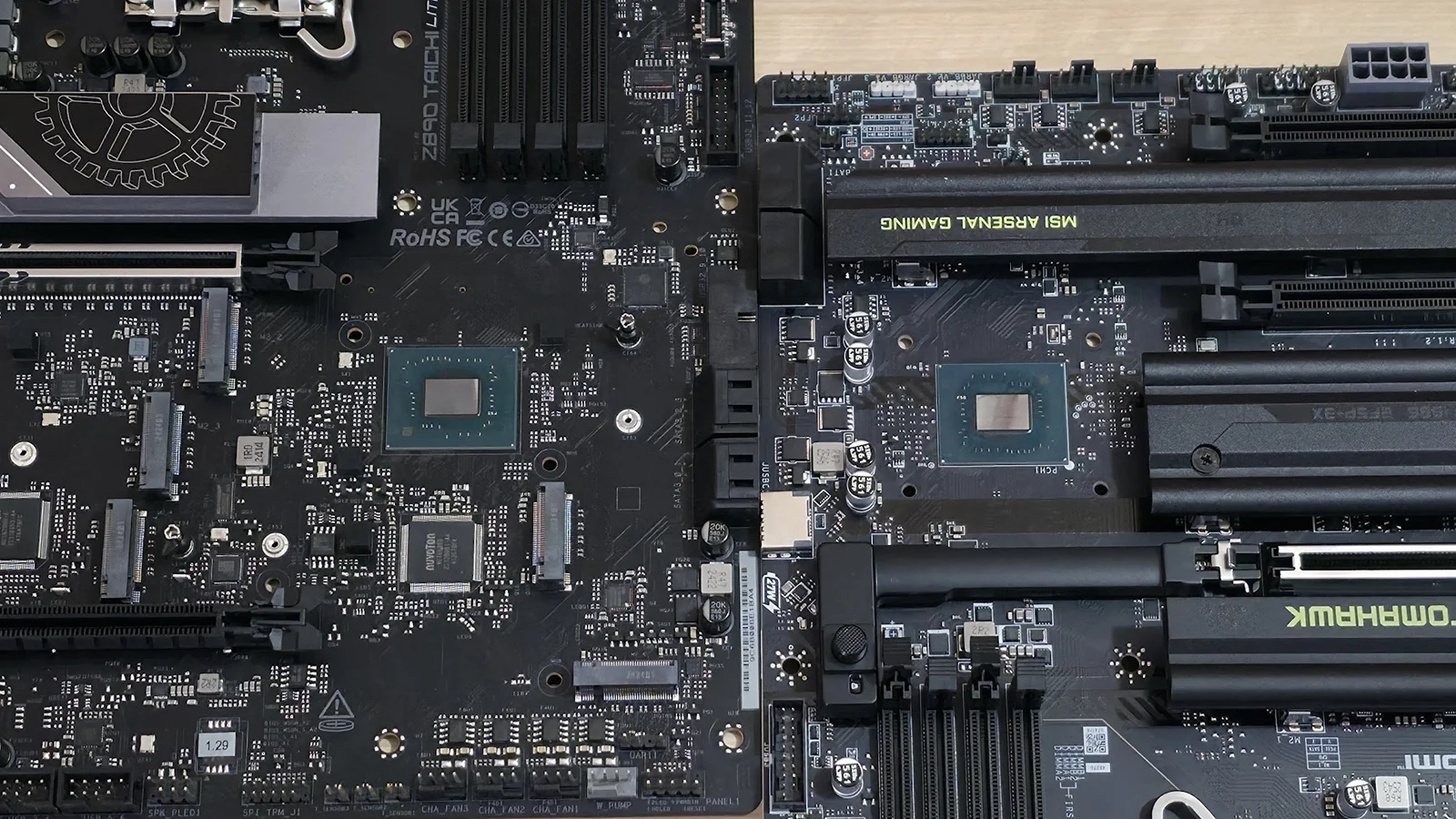
The chipset package, codenamed “Nova Point,” is physically smaller than the Z890, with a die-on-package area of 72.5 mm², roughly 22% smaller than its predecessor. However, base power consumption increases to 7.9 Watts, with a maximum of 14 Watts under load.
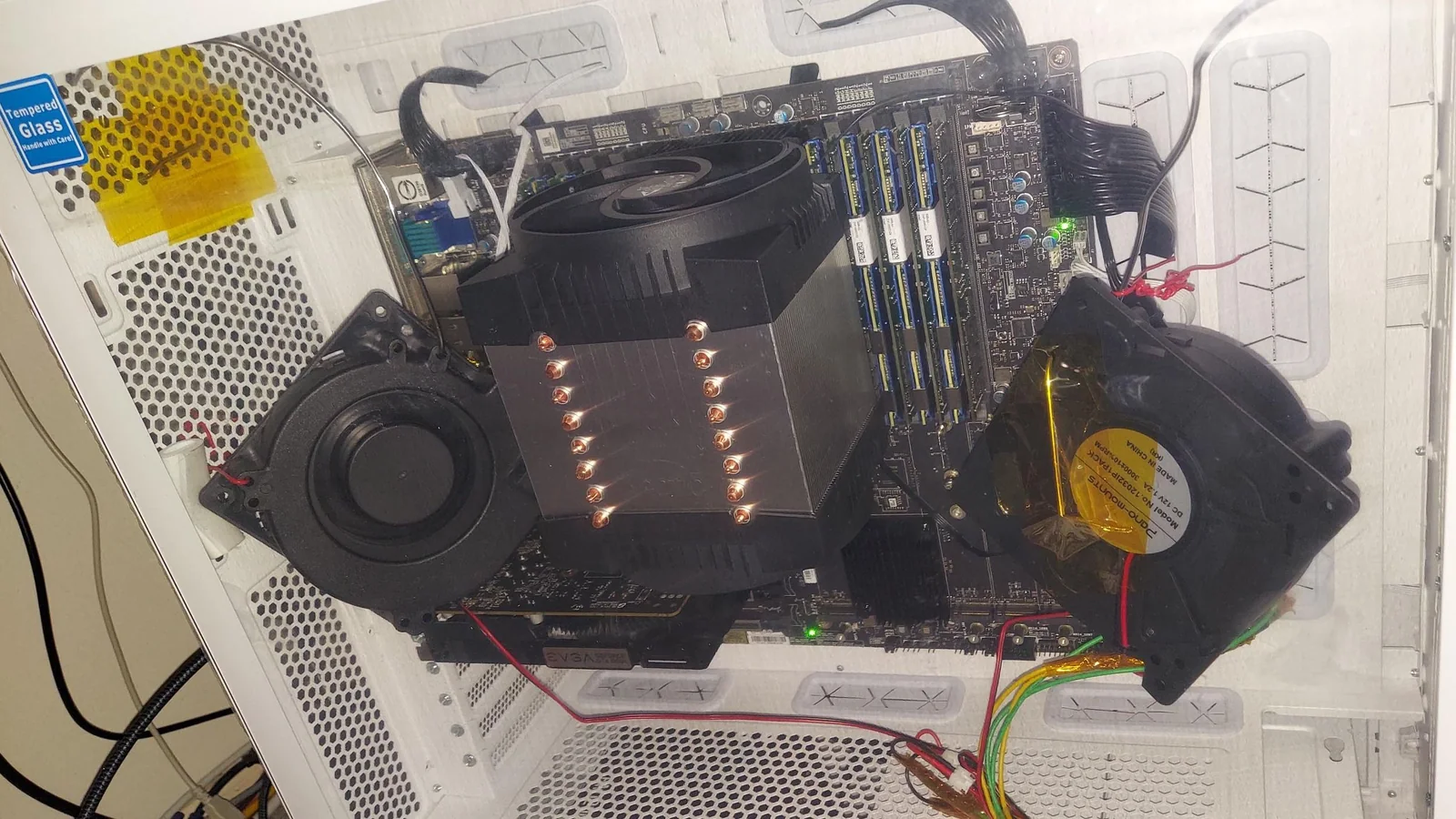
This increase in power density suggests that active cooling may be required for high-end chipsets like the Z990 and Z970 to maintain signal integrity for the increased bandwidth provided to connected components like PCIe slots and M.2 drives.
Memory and Connectivity
The platform base memory speed is expected to be DDR5-8000. While users can utilize slower existing DDR5 memory, doing so may create a performance ceiling. The platform's high cost of entry is expected to be driven by these memory requirements and the premium nature of the new boards.
Nova Lake CPUs are rumored to offer 36 PCIe Gen5 lanes, divided between graphics, storage, Thunderbolt 5 controllers, and the DMI. With an additional 12 dedicated PCIe 5.0 lanes from the chipset, manufacturers can support multiple PCIe 5.0 NVMe slots without bandwidth sharing, a significant improvement over the Z890 platform.
Thunderbolt 5 (TB5) support will become more prevalent, typically utilizing the Intel JHL9580 controller. This provides 80 Gbps bidirectional speeds, or up to 120 Gbps in single-direction boost mode, alongside support for DisplayPort 2.1 and USB PD 3.1.
TB5 speeds hit 80 Gbps (bidirectional) or up to a wicked-fast 120 Gbps in single-direction boost mode. TB5 also supports DisplayPort 2.1, USB4, and USB PD 3.1. This provides significant advantages for high-speed external storage.
Networking
Networking options will likely include 2.5GbE and 5GbE on most boards, with premium models featuring dual Ethernet or 10GbE via controllers such as the Marvell AQtion AQC113C. Wi-Fi 7 will be standard on most SKUs, with support for both 160 MHz and 320 MHz bandwidth configurations.
Expected Wi-Fi 7 controllers include chips from MediaTek, Intel, and Realtek. Users should note that utilizing the full potential of Wi-Fi 7 requires a compatible router.
What motherboards can we expect to see?
Leaks from database entries and shipping records suggest a wide range of upcoming models from partners like Gigabyte and ASRock. While Asus and MSI have not yet disclosed their lineups, a full range of form factors and price points is anticipated for the launch.
Gigabyte is expected to continue its Aorus line, including Xtreme, Master, Pro, and Elite variants, alongside potential rear-connect Stealth options and 2-DIMM topology boards for high-density memory support.
ASRock's initial lineup is expected to span from the flagship Taichi series to the budget-oriented Pro RS and Challenger models, with various Steel Legend Wi-Fi variants also planned.
Asus is expected to maintain its traditional product tiers, including ROG Maximus, ROG Strix, ProArt, TUF, and Prime, likely integrating AI-assisted performance and cooling management features.
MSI is anticipated to offer its standard range, including the MEG Godlike and Ace series, as well as MPG Carbon/Edge and MAG Tomahawk models, with potential small-form-factor options.
While official pricing is unavailable, the increased complexity of PCIe 5.0 support and general market factors suggest that motherboard prices may trend upward for the new platform.
Final thoughts
Upgrading to the Nova Lake platform will require a significant investment in new hardware. While the platform supports existing DDR5 memory, users may see performance trade-offs compared to the platform's base DDR5-8000 speeds.
Nova Point-based motherboards represent a meaningful evolution for Intel, introducing the LGA 1954 socket, expanded PCIe 5.0 connectivity, and Thunderbolt 5 support. Official details are expected to be unveiled at CES 2027.
For users with currently capable systems, waiting for official performance benchmarks and pricing remains the recommended strategy. However, those requiring maximum PCIe 5.0 storage capacity and the fastest external connectivity will find this platform specifically tailored to their needs.