Khadas Mind Pro: 30-second review
Having reviewed earlier iterations of the compact hardware line, observers will note that the manufacturer has retained much of the same ultra-small form factor and innovative modular design while introducing Intel’s latest Core Ultra processor and Arc integrated graphics.
The result is an exceptionally powerful mini PC that feels just as capable as many considerably larger desktop systems, especially when it comes to everyday productivity as well as creative applications.
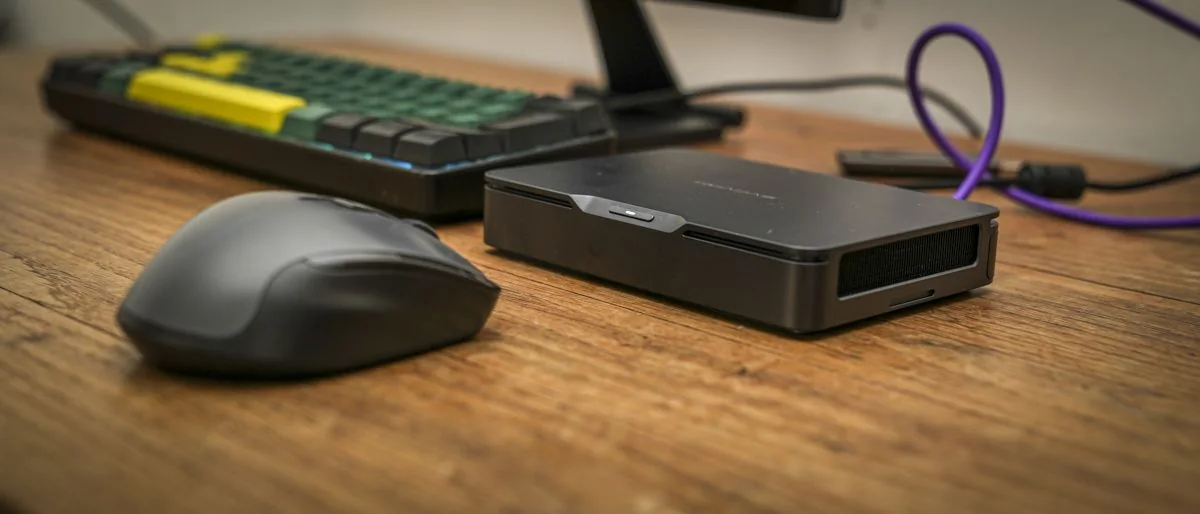
It once again features premium metal construction, measuring just 146 × 105 × 28mm, making it small enough to slip into a bag and carry between locations. What makes this particularly useful is the integrated 7.98Wh standby battery, which allows the machine to maintain a Windows session while moving between destinations, much like using a laptop.
The source reviewer was able to leave applications open, disconnect the computer, throw the Khadas Mind Pro into a backpack, travel, and then reconnect to a monitor, mouse, and keyboard without needing to reopen applications or restart workflows. This functionality is boosted by the option of modular accessories such as the Dock and GPU modules.
Performance is equally impressive thanks to an Intel Core Ultra X7 358H combined with 64GB of RAM and integrated Arc B390 graphics. This hardware configuration handles Microsoft Office, Photoshop, and Lightroom extremely well, and even video editing suites proved usable with 4K footage.
Gaming was another surprise, with demanding titles running at medium-quality settings. Although extended play introduced occasional frame drops, the cooling fans remained relatively quiet under load.
The machine also has considerable AI potential, featuring a dedicated NPU and 64GB of shared memory. Initial local AI testing showed that it can handle practical local tasks, though selecting the right LLM manager and configuring models takes some technical setup.
A primary critique involves connectivity. With only two Thunderbolt 4 ports, it is easy to run out of high-speed connections when using a USB-C monitor, power supply, and external storage simultaneously, making the optional Mind Dock an essential purchase for desktop setups.
Ultimately, the Mind Pro represents an impressive example of innovation in the mini PC space. While expensive and requiring additional investment to unlock its full modular potential, its processing power and portability make it highly desirable.
Khadas Mind Pro: Price and availability
The Khadas Mind Pro features high-tier specifications including the Core Ultra X7 358H, 64GB RAM, and a 2TB SSD configuration. Alongside the base mini PC, users can purchase optional modules such as the Mind Dock, Mind xPlay, and Mind Graphics, which add considerably to the overall cost.
Khadas Mind Pro: Specs
CPU: Intel Core Ultra X7 358H, 16 cores / 16 threads Graphics: Intel Arc B390 integrated graphics NPU: Intel AI Boost NPU 5, up to 50 TOPS RAM: 64GB LPDDR5X, 8533MT/s Storage: 2TB PCIe 4.0 M.2 2230 SSD Additional storage: M.2 2230 NVMe expansion slot Rear Ports: 2 x Thunderbolt 4, 2× USB-A 3.2 Gen 2, HDMI 2.1 FRL Expansion: Khadas Mind Link proprietary modular interface Connectivity: Wi-Fi 7, Bluetooth 6.0 Audio: Audio output via supported display, USB and compatible expansion accessories. Battery: 7.98Wh internal standby battery Dimensions: 146 × 105 × 28mm Weight: 562g Operating System: Windows 11 Home Power: 100W USB-C power adapter Optional Accessories: Mind Dock, Mind xPlay and Mind Graphics 2
Khadas Mind Pro: Design
Unpacking the device, the metal casing and detailed plastic base instantly reinforce its premium price point. The detailing and shiny logo on top establish a distinctly upscale aesthetic.
The overall build is solid, offering a great size and weight for a high-performance machine of this category.
Around the casing, there are four USB 3.2 Gen 2 Type-A ports and a 3.5mm stereo headphone jack. On the left side of the casing is an SD 4.0 memory card slot, while the back houses two USB4 Type-C ports, a USB 2.0 port, two HDMI 2.1 ports, two 2.5Gb RJ45 sockets, an additional USB 3.2 Gen 2 Type-A port, and the DC-in port.
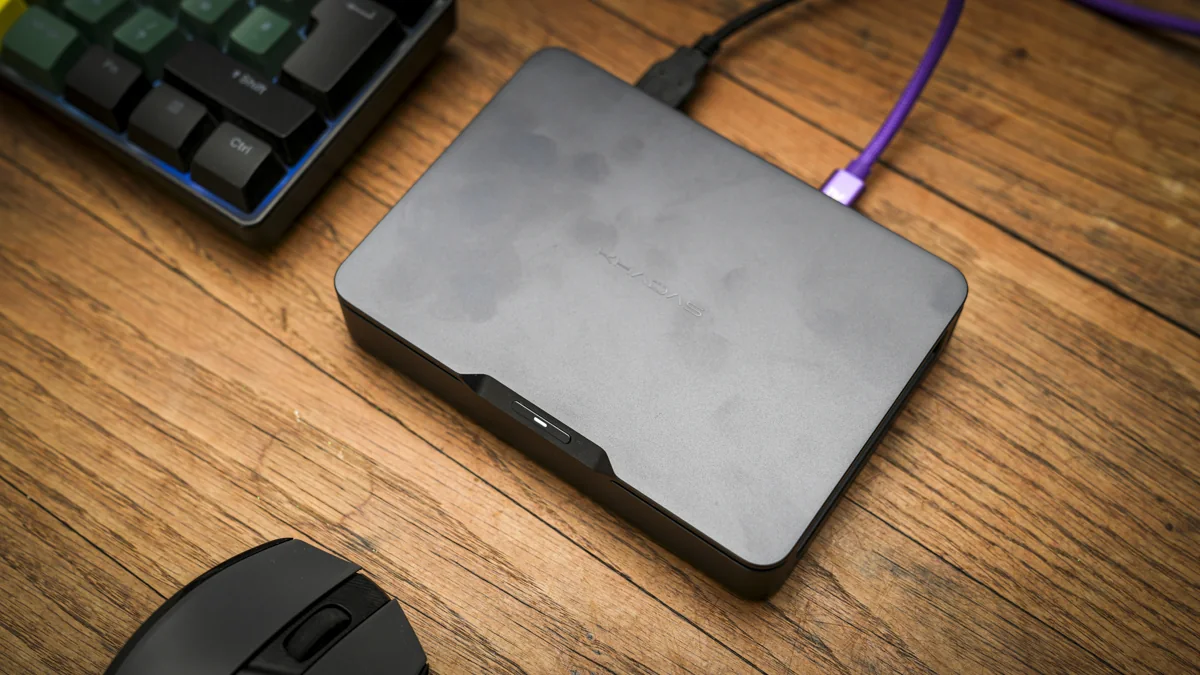
Reviewers note that the manufacturer has successfully retained the ethos of earlier models, combining exceptionally small size with processing power and innovative modular design.
The form factor remains incredibly minimalist, and it is the modular expansion ecosystem that truly differentiates this hardware from standard mini PCs on the market.
The metal casing gives the device a solid, premium feel with understated styling.
The front features a power button mounted into a subtle cutaway, keeping all primary connectivity options lined up neatly at the rear.
Compact dimensions make it ideal for limited desk space or frequent travel. Users can unplug peripherals, place the unit in a bag, and resume active Windows sessions immediately at a secondary destination.
The system architecture relies on a core unit that pairs with modular office accessories, such as the Mind Graphics eGPU module and the Mind Dock All-In-One Docking Station for demanding workloads.
For lighter home tasks, users can pair the unit with portable display and keyboard accessories to achieve laptop-like functionality in a modular framework.
Portability is made possible by an integrated 7.98Wh standby battery, which is designed to maintain the machine's working state during disconnections rather than act as a primary untethered power source.
Regarding rear ports, the inclusion of two Thunderbolt 4 ports, an HDMI 2.1 connection, and two USB-A ports matches premium laptops, though creative professionals may find the port count restrictive.
With a Thunderbolt monitor and power connected, high-speed external storage requires adapters, as the remaining USB-A connections operate at a slower 10Gbps maximum transfer rate compared to Thunderbolt 4's 40Gbps bandwidth.
For anyone intending to use the device as a primary desktop computer, the optional Mind Dock is practically essential.
An active cooling system handles thermal output; fans become audible during intensive tasks but remain relatively well controlled.
Intensive creative tasks will cause the metal chassis to become warm to the touch, which is expected given the dense concentration of processing hardware.
The stunning industrial design and clever standby battery offer great utility, though limited port selection necessitates additional modular purchases.
Khadas Mind Pro: Features
The Khadas Mind Pro builds on previous modular designs by combining high-end processing silicon with a proprietary expansion interface and an integrated standby battery.
At the heart of the system is Intel’s Core Ultra X7 358H processor, supported by Intel Arc B390 integrated graphics, a dedicated AI Boost NPU, 64GB of LPDDR5X memory, and a 2TB PCIe 4.0 SSD.
The modular Mind Link connection interface allows the machine to adapt across different environments using specialized expansion modules.
Available modules include the Mind Dock for desktop connectivity and portable display configurations for mobile setups.
An external graphics module is also offered to boost processing power for creative applications, gaming, and local AI workloads.
Even without optional expansion modules attached, the core unit provides substantial raw processing power out of the box.
The internal backup battery enables seamless transitions between locations without requiring full system shutdowns.
Traditional mini PCs require saving work and shutting down before transport, whereas this machine bridges the workflow gap traditionally filled only by heavier laptops.
Users can disconnect power, pack the unit away, and instantly resume open applications upon arrival at a secondary workspace.
Testing confirms that active software sessions remain intact and ready for immediate use upon reconnection.
The internal 2TB SSD provides ample space for applications, though extensive video projects are typically managed via external storage.
Unplugging external drives while active apps access footage requires caution, mirroring standard laptop operational constraints.
Short video editing workflows run smoothly with footage stored directly on the internal drive, permitting uninterrupted editing across locations.
Companion software settings allow the internal battery to keep the machine operational for short intervals when unplugged from AC power.
Under maximum power settings handling office and photo editing tasks, the system maintained operation for several minutes before prompting low-battery warnings.
Adjusting power profiles extends this brief window, ensuring work state preservation without unexpected data loss.
Khadas Mind Pro: Performance
Benchmark testing records strong storage and compute figures, including CrystalDiskMark read speeds over 5,200 MB/s, solid Geekbench multi-core results, and competitive PCMark scores.
Initial setup follows standard Windows 11 installation procedures, taking roughly 15 minutes before reaching the desktop environment.
Proprietary companion software provides direct control over power management profiles and hardware features.
Even as a standalone unit without modular docks or external GPUs, performance remains remarkably high for its size.
Office multitasking runs fluidly, maintaining responsiveness even when running Word, Excel, PowerPoint, and multiple browser windows simultaneously alongside photo editing suites.
A dedicated Intel NPU handles local AI acceleration tasks, supporting cloud-based features and local model integration.
Testing with Adobe creative applications demonstrates robust execution capabilities without relying on external hardware boosts.
Lightroom Classic handles large photo catalogs and batch exports smoothly, aided by fast internal solid-state storage speeds.
Photoshop performance remains strong when processing high-resolution image files from professional cameras, loading batches of assets quickly.
The combination of 64GB RAM and integrated Arc graphics makes the system a viable option for mobile professional photographers.
The ability to transition between office docks and home monitors with active project files intact delivers a laptop-like experience within an exceptionally compact footprint.
Display connections occupying primary Thunderbolt ports can constrain high-speed external storage workflows unless expansion docks are utilized.
External docks provide necessary bandwidth upgrades for data-heavy video and photography workflows.
Video editing tasks in Premiere Pro handle 4K timelines reasonably well for short projects.
DaVinci Resolve performs similarly, though complex timelines and rendering tasks reveal the limitations of integrated graphics.
External graphics modules can alleviate rendering bottlenecks during heavy video production projects, albeit at an added financial cost.
Gaming tests with modern titles confirm that the integrated Arc graphics can handle moderate gaming successfully.
Medium graphics settings yield playable frame rates, showcasing impressive graphical capacity for such a small system.
Local AI testing utilizing model managers demonstrates practical utility for text generation and file organization workloads.
While 64GB of RAM provides adequate headroom for running medium-sized models locally, workflow stability depends heavily on proper software configuration.
Running multiple large models concurrently can max out available memory and impact system stability.
Sequential model execution and proper task management yield reliable results for automated file organization tasks.
Restarting server software between model switches ensures consistent execution without software conflicts.
Batch processing tasks highlight manageable token generation speeds despite complex workflow transitions.
Resource monitoring reveals high CPU utilization and heavy memory consumption during intensive local AI operations.
Synthetic AI benchmarks reflect competitive scores, validating the machine's capability when paired with optimized software management.
Overall, local AI execution on a compact chassis without an external GPU highlights impressive versatility for developers and power users.
Dedicated AI processing workloads will nonetheless benefit from external GPU upgrades.
Khadas Mind Pro: Final verdict
The Khadas Mind Pro is an exceptionally compact and powerful mini PC suited for professionals and creatives requiring multi-location desktop performance.
Its modular design allows the raw base unit to function independently or expand via optional docks and graphics modules.
Standalone performance handles office and studio workflows effectively, with scaling options available for demanding production tasks.
Multi-monitor and peripheral setups adapt easily to home and office environments.
Solid metal construction and standby battery support ensure high portability between workspaces.
Minor limitations include port constraints and integrated graphics ceilings, offset by strong overall processing capabilities.
Though priced at a premium, it provides a compelling alternative to traditional laptops and desktops for mobile professionals.
Buy it if...
You want a powerful, portable mini PC
The Mind Pro combines impressive performance, compact metal construction, and an integrated standby battery, making it easy to transport between workspaces.
You like the idea of a modular workstation.
The Mind Dock expands connectivity, while the Mind Graphics external GPU boosts performance for demanding creative workloads.
Don't buy it if...
You need plenty of ports without buying accessories.
Connectivity is limited, especially when using USB-C for both power and a display. The optional Mind Dock starts to feel like an essential purchase.
You need serious graphics performance out of the box.
The integrated GPU handles lighter workloads, but demanding video editing, gaming and AI tasks will benefit from an external GPU.