Modding Classic Games with DLSS 5
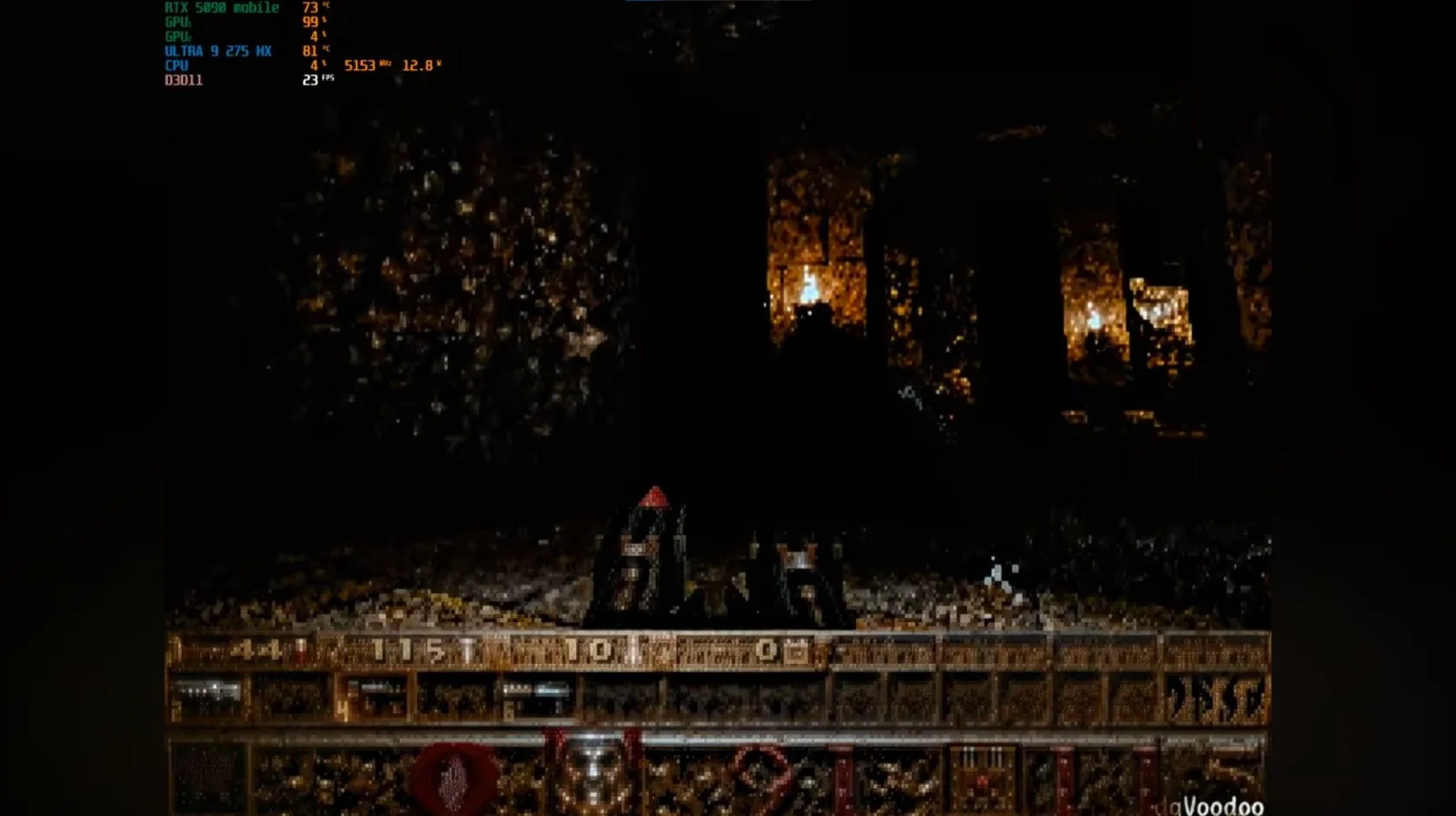
A DLSS 5 experimenter is testing the original Quake game. It is running as a post-process rather than being natively integrated into the game engine, utilizing 4x Multipass to enhance the effect, though the visual results are poor.
Valery Kryzhanovsky has posted multiple videos running DLSS 5 on games it was never designed for, nor built with AI upscaling and image enhancements in mind. Previous projects included running DLSS 5 on 2D titles like Duke Nukem and Pac-Man.
Injection via ReShade and DOSBox
However, this time a video was uploaded featuring the 1996 Quake, widely considered the first true 3D first-person shooter. The game is not running the leaked DLSS 5 build natively, but rather as a post-process using ReShade through RenoDX to adjust parameters and inject the effect onto the DOSBox rendered frame. This produces an emulated version of Quake with an AI filter running the DLSS 5 algorithm over it four times in real time.
Analysis of the Results
Prior to DLSS popularity, Nvidia released an RTX demo running Quake II with ray tracing in the engine to improve lighting. That demo featured realistic lighting and reflections, but DLSS is an upscaling technology rather than ray tracing. Furthermore, DLSS 5 is not integrated into Quake's engine, explaining the poor visual output. The leaked build is noted as being undertrained, and the application significantly darkens the scene due to the sparse distribution of torches and highlights.
The experiment might yield better outcomes if DLSS 5 were integrated directly into the engine, comparable to how ray tracing was previously modded into Quake's engine.
Nvidia previously announced improvements to its DLSS 5 model, achieving higher performance efficiency and a reduced memory footprint to increase potential frame rates.



