Extreme Laptop Liquid Cooling Mod
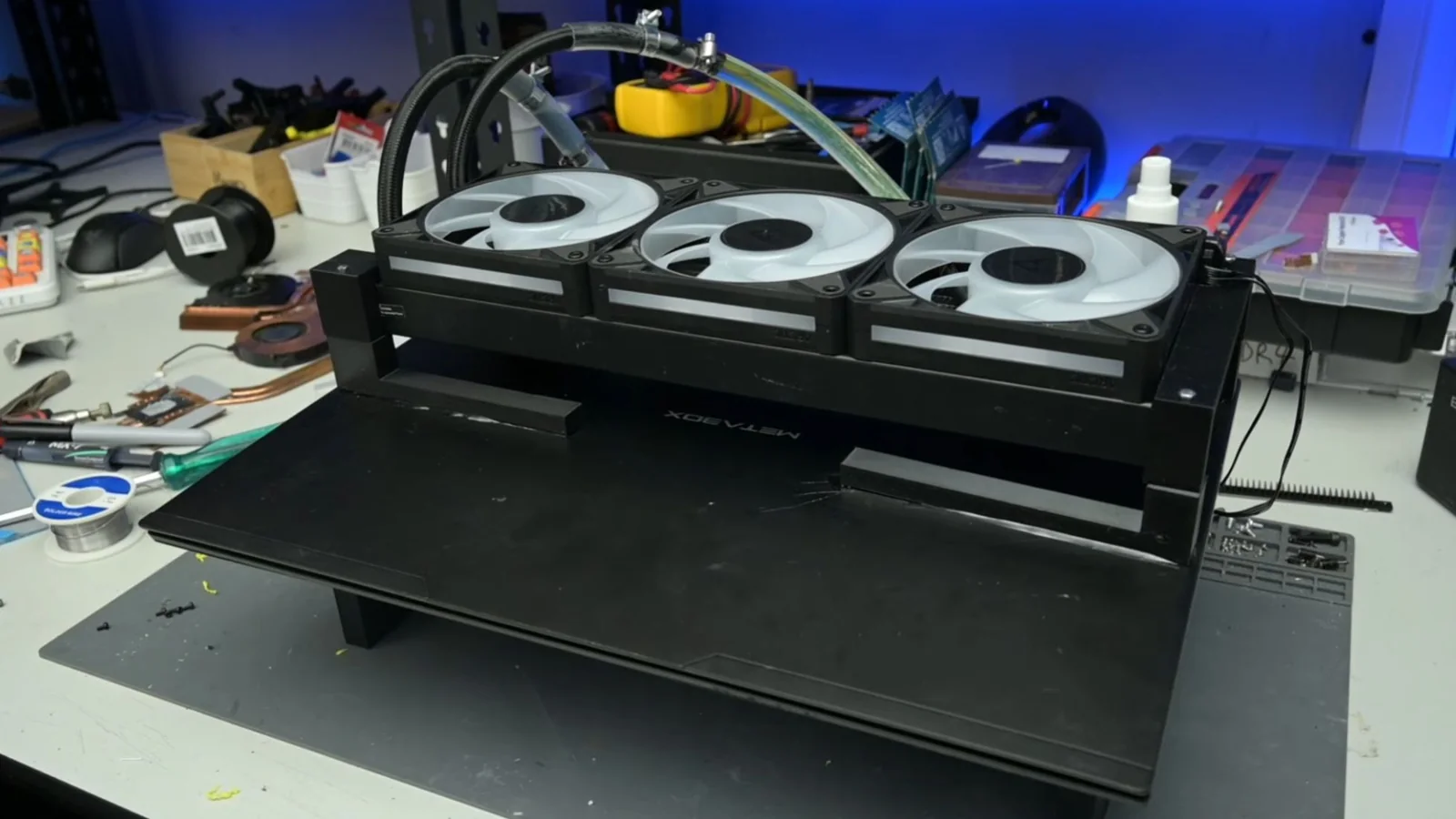
YouTube hardware modder TrashBench attached custom waterblocks, a water pump, and a 360mm AIO radiator to a Metabox laptop equipped with an Nvidia GTX 1060 and an Intel Core i7-8750H. This extreme modification dropped temperatures by a remarkable 60 degrees Celsius on both the CPU and GPU during stress tests, while yielding an average 14% performance increase after overclocking.
The project utilized a modified 360mm all-in-one liquid cooler adapted for the Metabox P950EP, an Australian laptop model rebranded from Clevo's Taiwanese OEM designs.
Initial plans to use the stock AIO pump alongside an additional CPU waterblock were abandoned after determining the pump lacked sufficient pressure. A standalone pump was integrated into the loop instead, requiring a separate waterblock.
Custom 3D-Printed Mounting and Assembly
Waterblocks were secured using custom 3D-printed holders screwed into the mounting points previously occupied by the stock heatpipe and blower cooler assembly. Additional 3D-printed brackets positioned the radiator behind the laptop screen, secured with a two-part epoxy adhesive due to tight spatial tolerances between the display panel and the outer shell.
Epoxy and thermal pads were also employed to attach custom heatsinks to the system's RAM modules and VRMs, leveling components to ensure adequate thermal contact and making the modifications permanent.
Flexible clear tubing connected the blocks, pump, and radiator using screw hose clamps. Leak testing confirmed system integrity before final electrical integration.
Because the laptop operates on 19 volts while the pump and fans require 12 volts, a DC-DC step-down converter was soldered to the original blower fan electrical contacts. A manual toggle switch mounted to a 3D-printed bottom shell plate was added to control power to the cooling loop.
Thermal Performance and Overclocking Results
A 3D-printed riser was screwed to the bottom of the chassis to support the modified layout. Under full load, the CPU and GPU maintained temperatures well below 40 degrees Celsius, representing an average 60-degree reduction compared to factory cooling performance.
The massive thermal headroom enabled further hardware overclocking. In Forza Horizon 5, frame rates increased from an initial 75 FPS to 77 FPS, eventually reaching 83 FPS following applied overclocks.



