Oracle Cloud Infrastructure Adds Vera CPUs
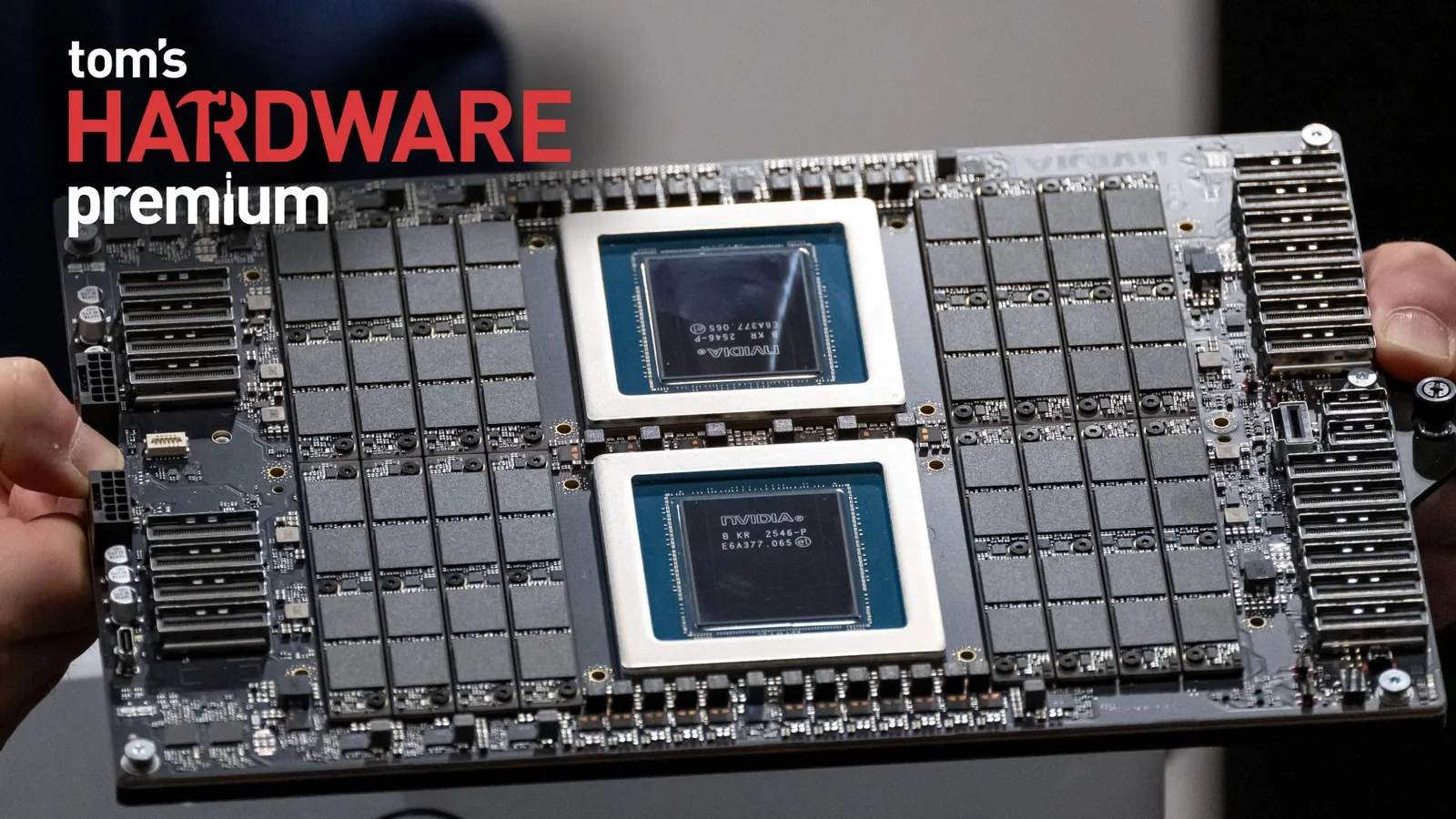
Nvidia and Oracle have announced general availability of Nvidia’s Vera Rubin NVL72 rack and Vera CPUs on Oracle Cloud Infrastructure Superclusters. The announcement follows Google Cloud introducing general availability for Vera Rubin, marking a significant milestone for Nvidia's server processors. Oracle’s deployment notably includes standalone Vera instances on its Superclusters.
Neoclouds have embraced Vera over recent weeks, with instances underway at Nscale, CoreWeave, and Nebius. However, a standalone deployment at a major hyperscaler like Oracle represents a broader shift in the market.
Although hyperscalers rely heavily on x86 architectures, OCI Superclusters previously offered Ampere Altra for Arm-based instances. This marks Nvidia’s first standalone CPU push into the hyperscale data center, placing Vera alongside traditional x86 competition independently of GPU compute.
Architectural Approach
Vera is not designed to single-handedly displace the existing x86 market guard. Nvidia leadership noted that diverse workloads cannot be served by a single SKU, but the processor paves the way for hyperscalers to expand architecture options in future generations.
While AMD and Intel maintain advantages in single-socket density—with upcoming processors packing hundreds of threads into a single socket—Vera introduces distinct topological advantages tailored to modern computing demands, including agentic AI workloads.
Memory Bandwidth Advantages
Memory bandwidth is a primary asset for the architecture. Nvidia specifies a memory system capability of 1.2 TB/s of bandwidth, a performance lead visible outside of theoretical metrics.
In industry-standard memory testing using the Stream benchmark, Nvidia’s use of LPDDR5X-9600 alongside a monolithic die and distributed mesh caching more than doubles the bandwidth available on competing dual-socket systems paired with high-speed MRDIMMs.
This high bandwidth benefits demanding data loops and large database queries. While competitors rely on centralized memory control and system-level caches, Vera distributes caching in a mesh across the die to maximize throughput.
Software Performance and Python
Python performance remains another critical vector for enterprise and AI workloads, as foundational frameworks and software libraries rely heavily on the language.
Vera demonstrates strong execution in Python environments, frequently outpacing processors that appear more powerful on paper across standard harnesses and foundational AI libraries.
General Data Center Workloads
Oracle introducing Vera standalone instances shifts attention toward general enterprise capabilities. Many demanding workloads function as standard data center tasks operating under high concurrency.
Database query benchmarks, such as SQLite performance, highlight how Nvidia’s second-gen Scalable Coherency Fabric accelerates tasks heavily bound by system-wide data movement.
This positions Vera as a versatile option for general data center use rather than merely a companion processor required for accessing proprietary graphics accelerators.
Real-world adoption will ultimately determine the long-term success of the architecture in production environments, though early performance indicators show promise across both specialized and general workloads.
Alongside standalone CPUs, Oracle plans to offer Nvidia’s HGX NVL8 platform, pairing eight Rubin GPUs with dual Intel Xeon 6 hosts equipped with extensive DDR5 memory.
Technical test setups and comprehensive benchmark results will be detailed in upcoming hardware evaluations.