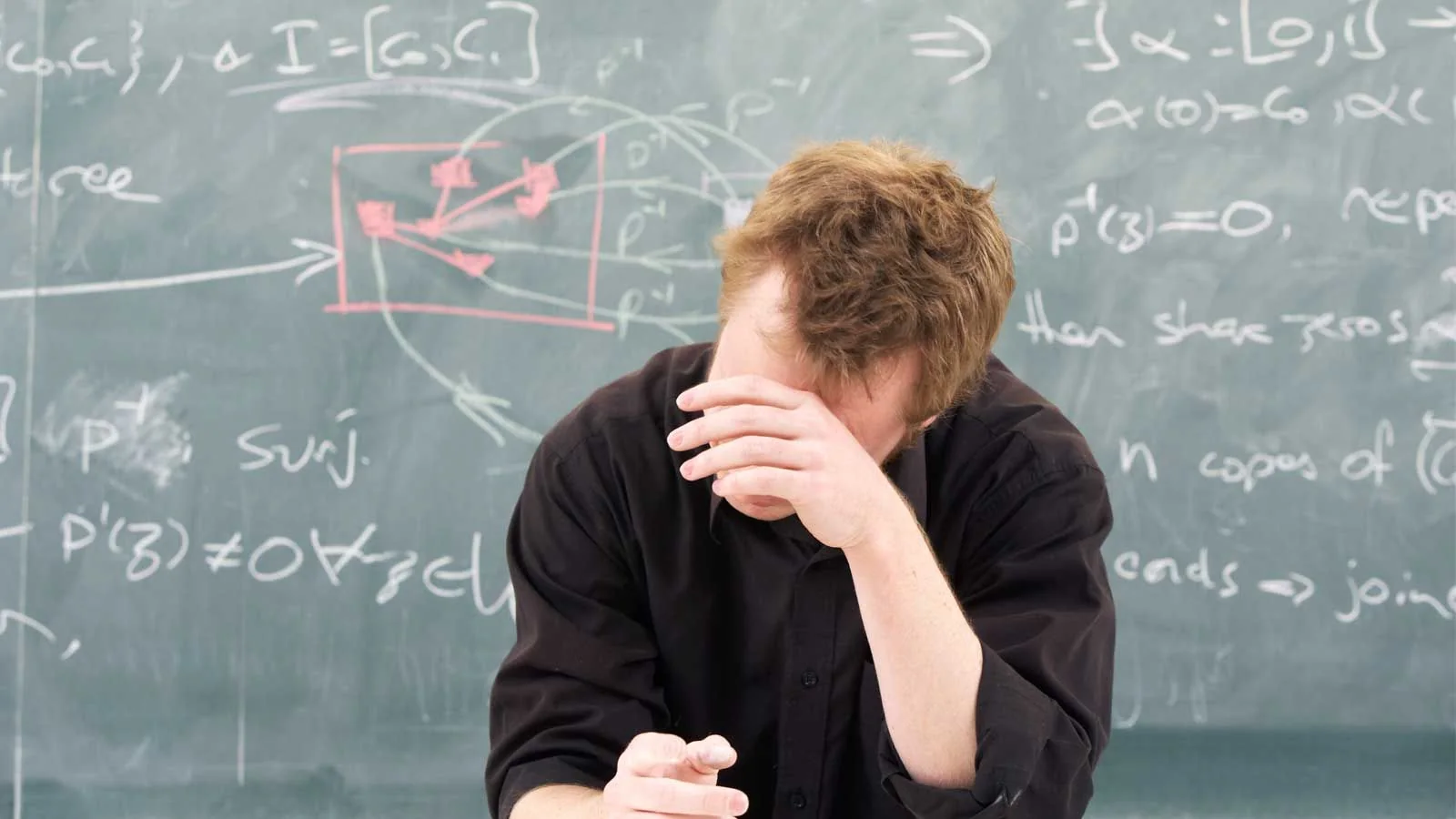
The Mathematics Uproar
OpenAI shared over 400 results for longstanding mathematical formulas that have troubled humans for decades; now researchers say it could take years for humans to validate and prove all the AI-driven work. But while analysts try to check the work of the unnamed OpenAI internal frontier model that found these alleged solutions, mathematicians argue this kind of AI-powered research and release threatens the field itself.
There is the concern that by leaping from a prompt to a solution without a clear working process in between, there is little benefit to these solutions. Mathematicians and the field itself may not be able to build on the results, as they do not know how they were achieved, nor has the development of such solutions produced new fields of mathematical understanding.
There are suggestions that the growing confluence of mathematical and cybersecurity capabilities of frontier AI could bring into question the sanctity of cryptography. Alongside raising serious concerns for national security and modern digital systems, it could also put digital assets at risk.
Verification Challenges
The official count for OpenAI's math solution release was 722 manuscripts, but with only 300 of the results formalized—digitizing human-readable formulas so they can be computer-verified—it is difficult to know what constitutes legitimate research. Some researchers found nonsense explanations within the reports, formulas that do not make sense, and research that has already been completed by others.
The burden of proving the veracity of OpenAI and its model's claims rests on the mathematical community. OpenAI did not release the name of the model used to generate these results, nor the prompts that generated them, despite recommendations from the Advisory Group on Mathematicians and Artificial Intelligence.
OpenAI has published changelogs for its GitHub repository of the results, making it clearer where mistakes were made. However, with several retractions and corrections already issued, it appears the results were not thoroughly checked before release.
It is this pace of releases and the lack of caution in the field that have left many mathematicians concerned about the direction of automated research.
Impact on Academic Careers
Artificial intelligence is impacting multiple industries, but researchers in mathematics are particularly concerned about the impact on the collaborative nature of the field and how it might discourage future mathematicians.
NYU mathematics professor Tristan Buckmaster stated that OpenAI's release had upended the work of early-career mathematicians, suggesting it had wiped out active research programs. Alongside their own research being invalidated by some of OpenAI's solutions, he noted fears that researchers might become hesitant to explore advanced tools or discuss their work publicly.
Northwestern University mathematics professor Bryna Kra highlighted how collaborative mathematics is dependent on sharing ideas, data, and formulas, expressing concern that OpenAI has made mathematicians more secretive and reduced their ability to work together.
University of California mathematics professor Terence Tao noted on social media that fewer seminars, workshops, and collaborations are being generated from these results compared to traditional breakthroughs, arguing that mathematics may need to elevate community building over raw solutions.
Researchers have described an atmosphere of anxiety where ongoing projects could be invalidated overnight, undermining job applications, grant proposals, and early academic careers. Developing core mathematical capabilities takes years, and rapid AI outputs risk making the endeavor seem precarious.
With rumors of further releases from OpenAI and other labs, morale in several mathematical fields remains low.
Implications for Cryptography
Because mathematics underpins key components of the digital world, rapid changes in its development can have a domino effect on cryptography and digital security.
@kmad @matthew_pines I think we might lose public key cryptography.October 8, 2026
Johns Hopkins University associate professor Matthew Green stated on social media that the congruence of mathematical developments and cybersecurity capabilities could eventually result in AI capable of defeating standard encryption.
While this raises concerns for fields relying on encryption to protect sensitive data, experts note it could also introduce vulnerabilities to digital assets and blockchain systems.
Not all experts agree that this outcome is inevitable. Cryptographer Adam Back dismissed the claims as speculative, arguing that accelerated mathematical capabilities do not automatically translate to an ability to defeat established cryptographic hardness problems.
@matthew_d_green @kmad @matthew_pines Dubious. Do you think P=NP? Some problems are fundamentally higher complexity, and accelerating mathematically capability doesn't change that any more than gravity. Plus for what bitcoin cares about, even if all algebraic were hardness problems lost, we have hash-based SHRINCS.October 8, 2026
Ethereum creator Vitalik Buterin also urged calm, stating that users should not panic over wallet security. However, he acknowledged that advanced AI could eventually pose a significant theoretical threat to cryptocurrency security structures.
While cryptography is not immediately invalidated by current AI models, the developments signal potential long-term challenges for how mathematical and security research is conducted.
Researchers continue to adjust to the shifting landscape as technology companies pursue automated solutions across various academic disciplines.



