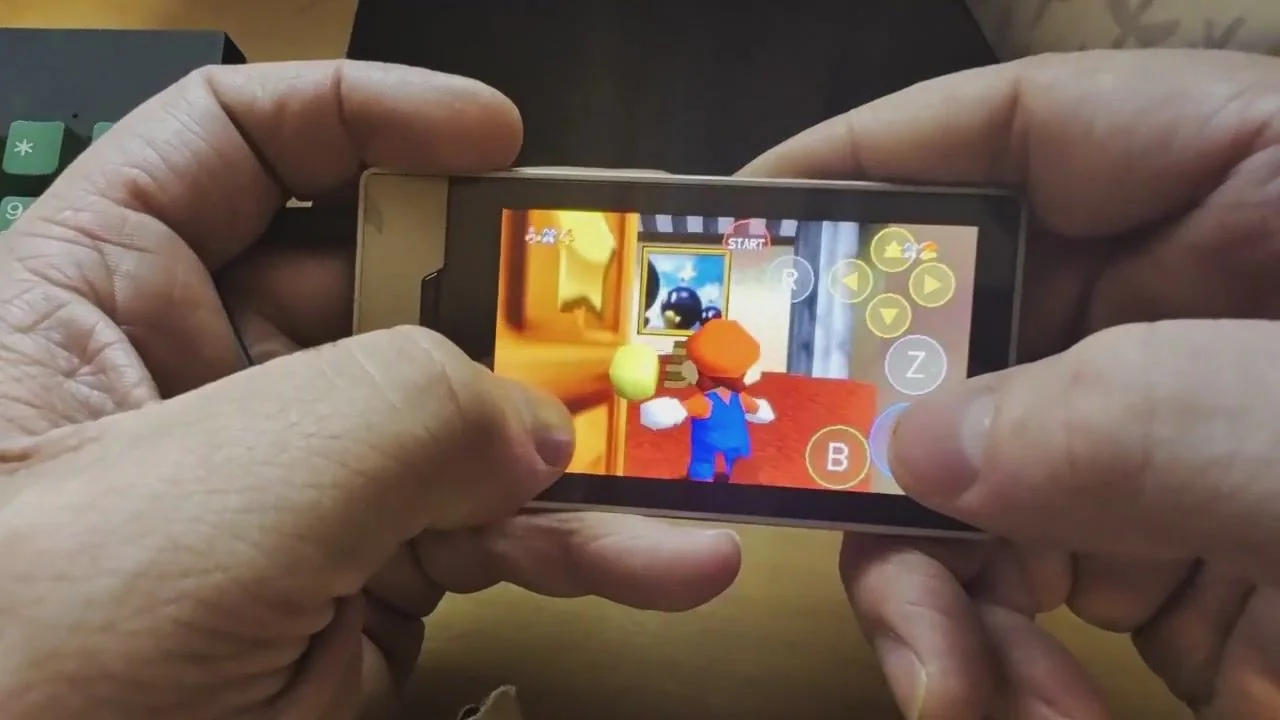
Running Super Mario 64 on 2009 Hardware
The Nintendo 64 classic Super Mario 64 has been brought to the Microsoft Zune HD via a project that runs natively on the device's hardware through the unofficial OpenZDK kit. A touchscreen controller overlay is drawn over the game video, allowing it to play at near full speed with sound, touch controls, and saves. The Zune HD, a 2009-era media player that competed with Apple’s iPod, houses Nvidia Tegra hardware, with this project built upon sm64ex, a fork of the unofficial decompiled Super Mario 64 PC port.
Released originally with a 3.3-inch OLED touchscreen, the Zune HD relied on the Nvidia Tegra APX 2600 chip for its multimedia processing capabilities. The device ran a Windows CE-based operating system, with third-party software leveraging Microsoft’s XNA framework. Although Microsoft halted production of the Zune line in 2011, community exploits eventually enabled the OpenZDK toolkit for homebrew development.
Technical Implementation and Rendering
The port executes native ARM code on top of the Zune HD operating system using OpenZDK without modifying the core firmware. It utilizes an OpenGL ES 2 renderer derived from Fast3D, incorporating prebuilt shader variants and Nvidia cgc tools since the Zune graphics driver lacks native GLSL shader compilation support. Furthermore, blending operations are compiled directly into the fragment shaders because the GPU lacks fixed-function blending hardware.
Game logic executes at 30 ticks per second, accompanied by occasional performance lag when the hardware struggles to keep pace. The game renders at a 480x272 resolution in landscape orientation. Audio synthesis runs on a separate, higher-priority thread to prevent frame rate drops from disrupting sound playback. The touch overlay provides a virtual analog stick alongside standard inputs, offering adjustable customizability for button style and opacity.
Build Process and Requirements
The project depends on the community Super Mario 64 C-source decompilation completed in 2019. Because asset data is not included, building the executable requires supplying a legally dumped ROM. The build sequence reads the ROM on a PC during compilation, and the output binaries are transferred to the device via USB. The build environment runs inside Docker on Linux, and the current port applies 14 patches to a pinned version of sm64ex, tested specifically on firmware version 4.5.
Broader Porting Ecosystem
The comprehensive PC port debuted in May 2020, spawning forks like sm64ex that introduce advanced features such as mouse look and customizable cheats. While Nintendo historically targeted distributed binaries and gameplay videos of the PC port, community enthusiasts have successfully adapted the game to numerous unconventional platforms, including the 3DS, Wii U, PlayStation 2, PS Vita, Dreamcast, Nintendo DS, web browsers, and now the Zune HD.
This undertaking highlights the untapped potential of the Zune HD hardware had Microsoft adopted a more open development approach. While hardware ports are frequent, the frequency of such projects continues to rise alongside modern development assistants, with the repository's initial commit noting collaborative AI assistance.



