The ultimate parent company and holder of Tachyum intellectual property is Cayman Islands-based Tachyum Ltd., which controls U.S.-based Tachyum Inc., which in turn controls Slovakia-based Tachyum s.r.o. responsible for developing the Prodigy universal processor. While Tachyum Inc. and Tachyum s.r.o. can be declared insolvent and liquidated, Tachyum Ltd. can theoretically continue operations and establish new entities.
Bankruptcy Proceedings in Slovakia
Tachyum, the company behind the universal Prodigy processor, has filed for bankruptcy in Bratislava, Slovakia. The filing follows a court order initiating bankruptcy proceedings after the company repeatedly missed its development and production milestones.
Despite eight years of development, Tachyum has yet to demonstrate working Prodigy silicon. Tachyum introduced Prodigy in 2018, targeting a 2019 tape-out and 2020 commercial availability. The company repeatedly postponed the processor's launch to 2021, 2022, 2023, 2024, and eventually 2025.
Processor Redesigns and Specifications
Prodigy's specifications changed considerably during development. The original 64-core design evolved into a 128-core processor manufactured on a 5nm-class process, then a 192-core chip with 16 DDR5 memory channels. In late 2025, Tachyum announced a chiplet-based architecture with 1,024 cores, 24 DDR5 memory channels, and a TDP of 1,600W using TSMC's 2nm-class node, which would have delayed commercial availability until 2030 or beyond.
Tachyum Slovakia filed for bankruptcy on October 22, 2026, without waiting for a petition from creditors seeking to recover unpaid debts. The Bratislava III Municipal Court subsequently initiated bankruptcy proceedings after determining that the petition met legal requirements.
Asset Liquidation and Intellectual Property
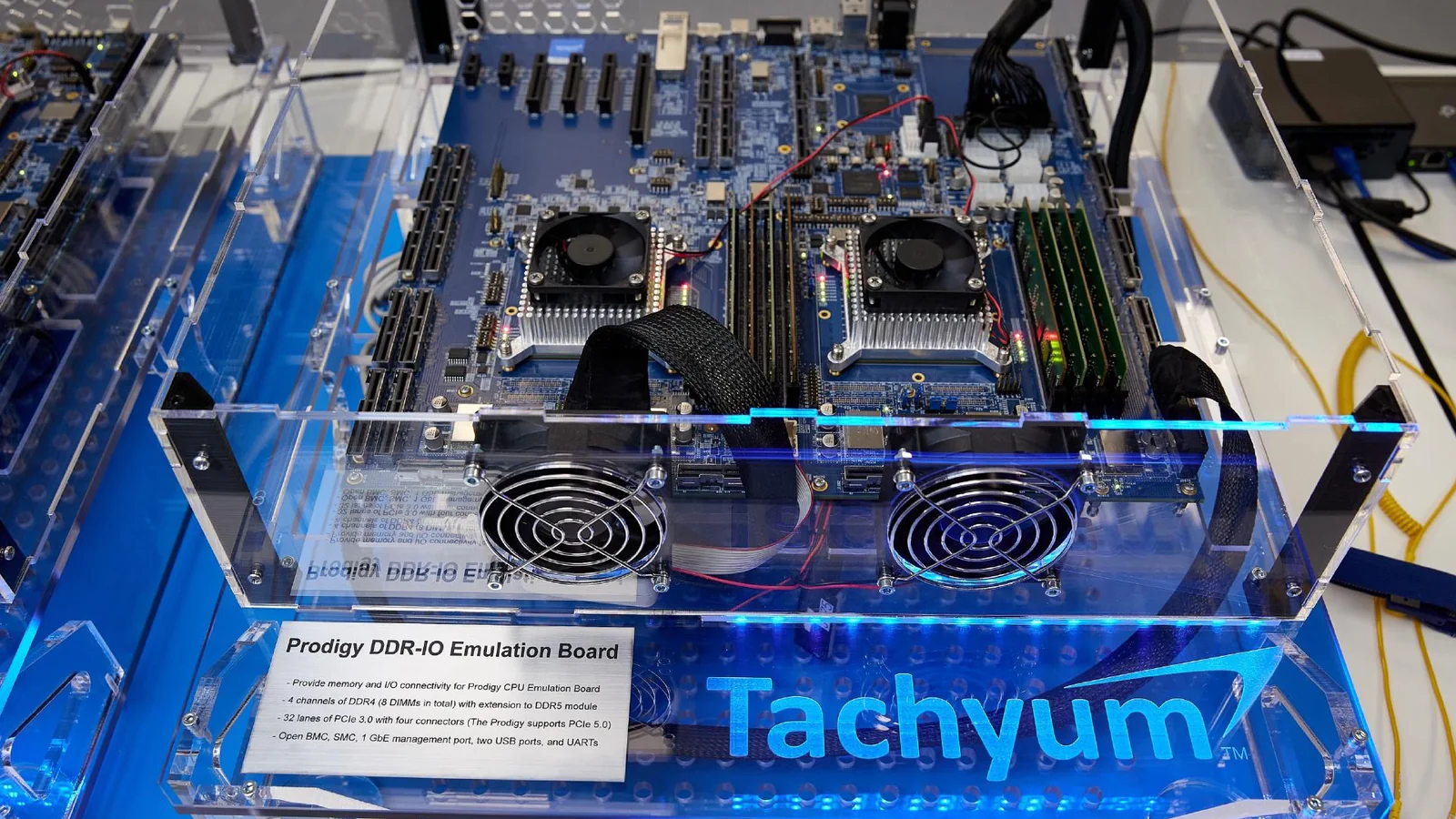
If the court formally declares Tachyum bankrupt, a court-appointed trustee will take control of company assets, which could be sold to repay creditors. These assets may include intellectual property related to the Prodigy processor, patents, and development hardware. Unless Tachyum secures additional financing or a buyer, work on Prodigy could effectively end.
Bankruptcy proceedings against the Slovak entity do not necessarily mean affiliated companies elsewhere will cease operations. Furthermore, the company's IP could survive under new ownership if transferred to another entity. Nevertheless, the bankruptcy filing casts serious doubt on Tachyum's ability to bring the long-delayed processor to market.
Tachyum's owners could potentially use bankruptcy proceedings to shed debts, acquire intellectual property through another legal entity, and resume Prodigy development.
Although most development activities are concentrated in Slovakia, Tachyum Slovakia is a subsidiary of U.S.-based Tachyum Inc. If the American parent company owns the Prodigy IP while the Slovak subsidiary employs engineers and accumulates debts, bankruptcy could enable the group to eliminate liabilities without losing valuable technological assets.
The future of Prodigy depends on who actually owns the intellectual property and whether the American parent company continues to exist or gets liquidated.