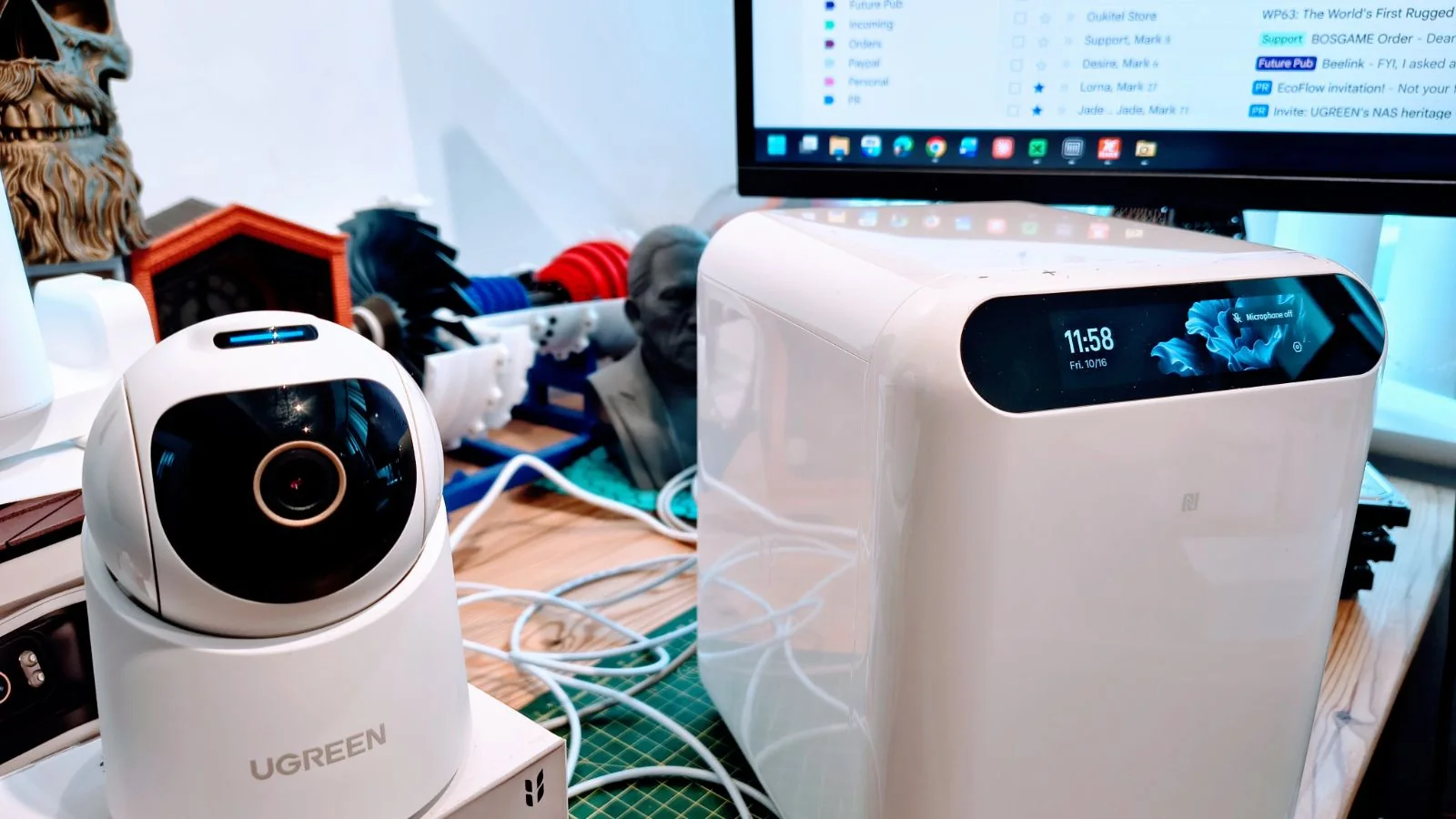
This article provides a hands-on overview of the Ugreen HomeAgent HA100, as the hardware is not yet widely available in retail channels.
The HomeAgent series represents a new direction for Ugreen, combining a basic NAS hardware platform with local AI capabilities designed to manage various agentic tasks without constant internet reliance.
Initially available via pre-order and Kickstarter, with a retail release planned for early 2027, the series includes three models: the HomeAgent HA100 (previewed here), the HA100 Pro for enhanced AI performance, and the MasterAgent MA100, which offers maximum local AI power.
Alongside the HomeAgent devices, Ugreen has developed a collection of peripheral devices, including three AI-connected cameras, a smart speaker, and a connected color E-Paper picture frame, with plans for future expansion.
These systems aim to address the fragmentation often experienced by smart home users who combine components from various brands. The HomeAgent integrates control and AI components into a single unit, designed to function even without an internet connection.
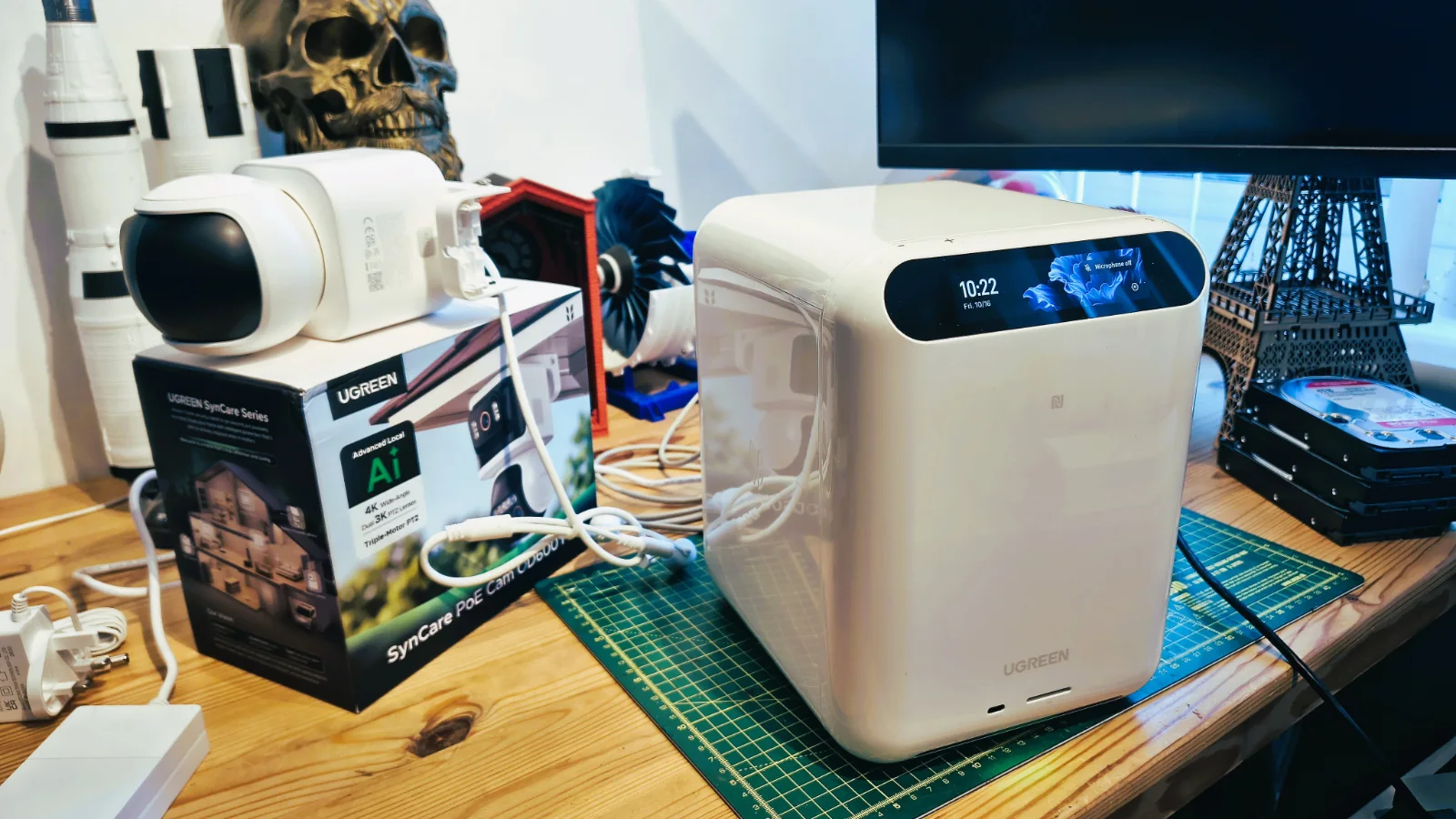
The Ugreen HomeAgent consolidates smart home technology and control, adding AI components that operate offline, all within an attractive white enclosure.
The integrated AI is intended to manage the NAS and connected peripherals autonomously, alerting users only when issues exceed its capabilities.
Pricing and Availability
The HA100 is priced from $799.
It is available for pre-order, with shipping expected in February 2027.
The device can be acquired through Kickstarter.
The HA100's pre-launch early-bird price is $799, a significant reduction from its $1,599 MSRP. Higher-tier models, the HA100 Pro and MA100, are priced at $2,699 (MSRP $5,399) and $9,999 (MSRP $19,999) respectively at their early-bird tiers.
The HA100 configuration includes three HDD bays and 16GB of RAM, along with an AI accelerator, making direct comparisons to Ugreen's standard DXP and iDCX series NAS devices challenging.
The source review suggests that if the primary need is a traditional NAS, this product line might not be ideal; however, it could be highly appealing for those focused on AI applications.
The high-end MA100, featuring four drive bays and an NVIDIA accelerator, is noted for its potential value at its Kickstarter price, especially when compared to similar high-performance AI systems.
The source reviewer notes that no other NAS brand currently offers a product quite like the HomeAgent series, though some overlap exists with other AI-focused platforms.
Physical Design
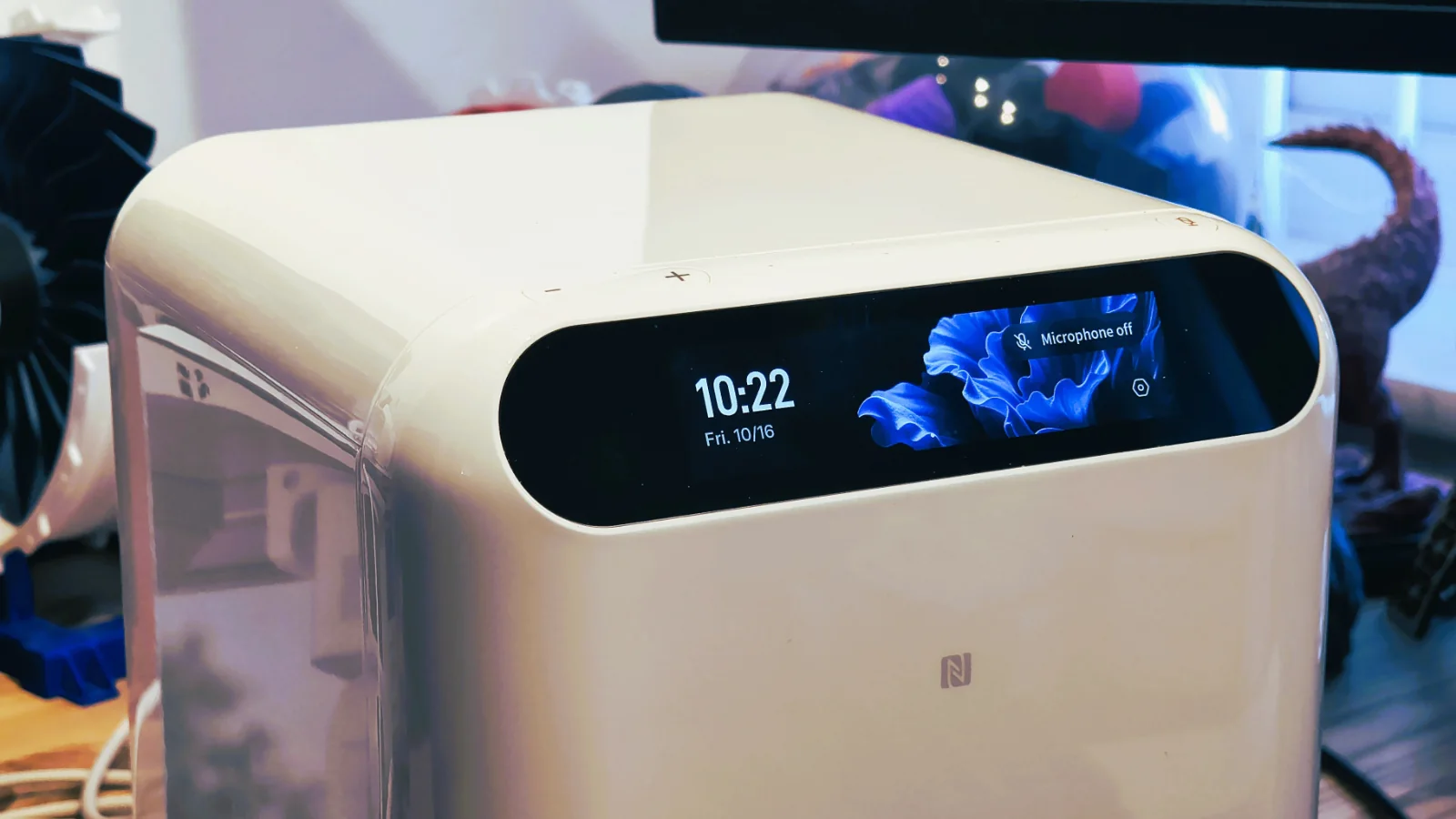
The HA100 is notably larger than typical four-bay NAS units, standing approximately 218mm high and 251mm deep, presenting as a substantial, shiny white box.
A wide OLED panel on the top front serves as a touch-sensitive menu and displays useful information.
A volume rocker and microphone mute button are located nearby, suggesting voice interaction with the device's AI.
The front panel also includes a USB-C port (3.2 Gen 1, 5Gbps) and an SD card slot (SD 3.0 spec), with an LED indicator for status.
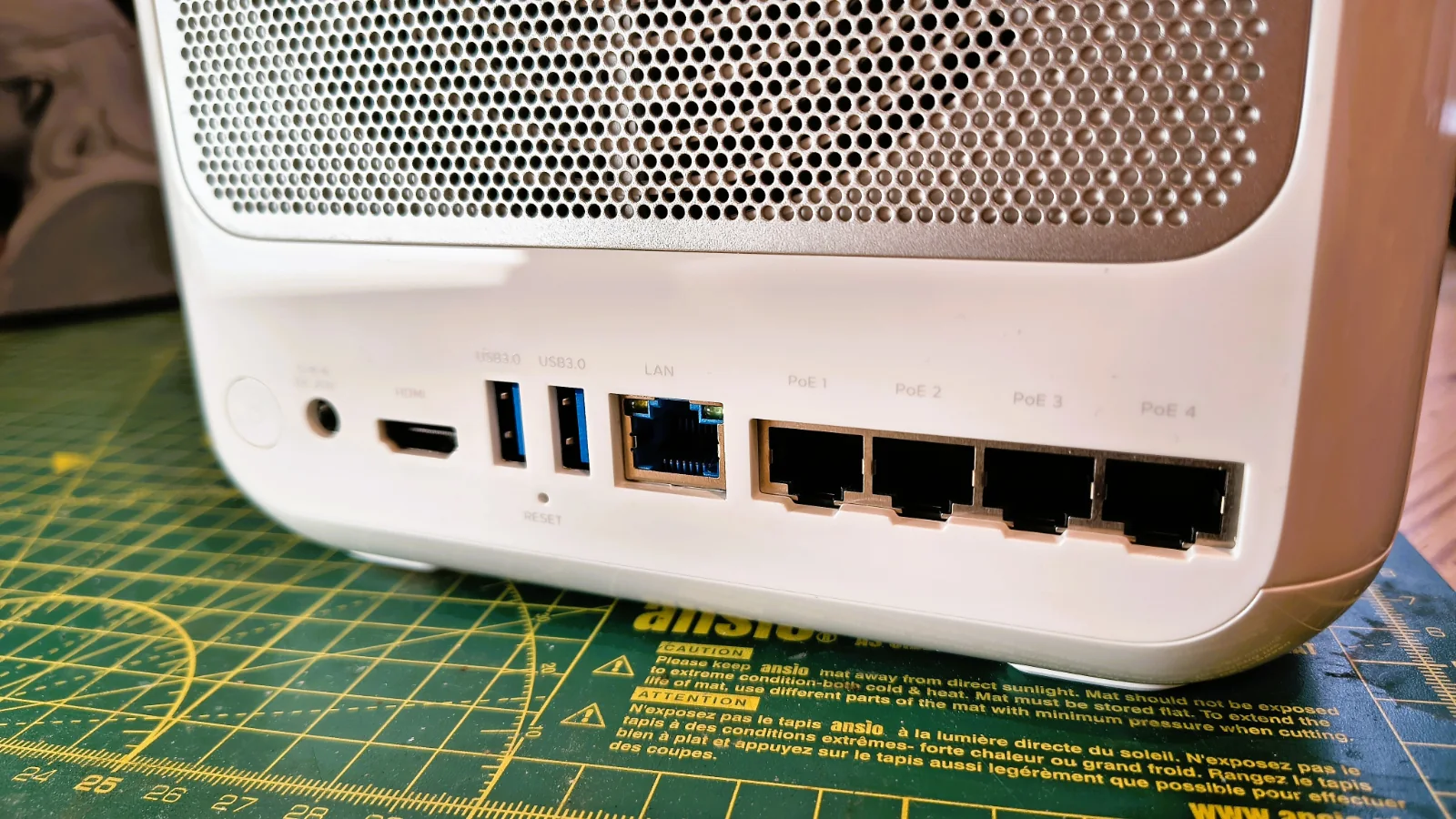
The rear panel features two USB-A ports (5Gbps), a single 2.5GbE RJ45 LAN port, and a four-port PoE 10/100Mbps switch, which is crucial for powering surveillance cameras directly.
Drive Bays and Expansion
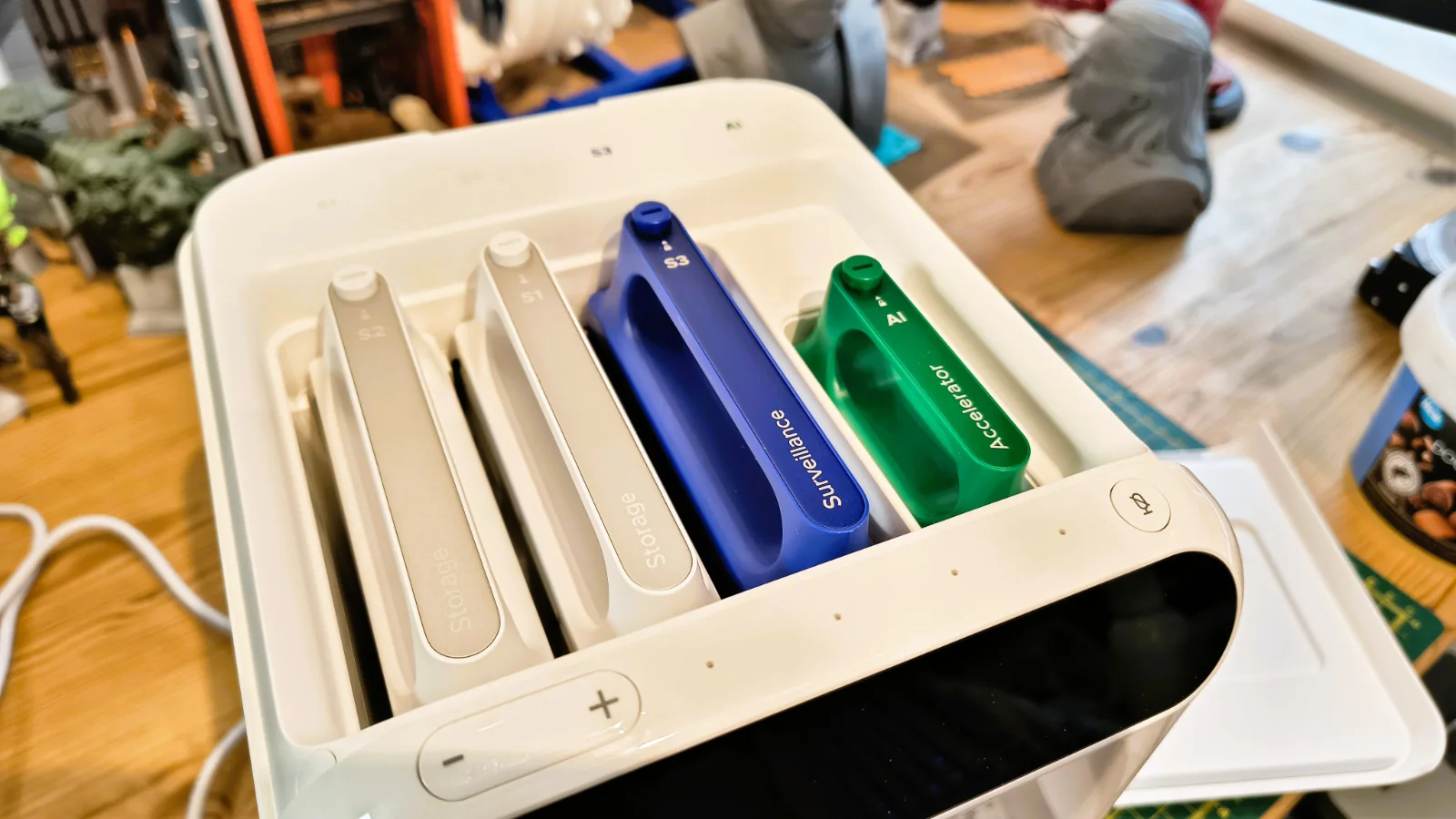
The HA100 features a unique top-loading design with a magnetically attached cover, revealing four bays.
Three bays are for hard drives, and one is dedicated to an AI accelerator. The drive bays are lockable and color-coded, accommodating 3.5-inch media with tool-less cradles or 2.5-inch HDDs with screws.
Uniquely, two HDD bays are designated for NAS storage, while a third, colored purple, is intended for a surveillance-specific drive, indicating Ugreen's envisioned use case.
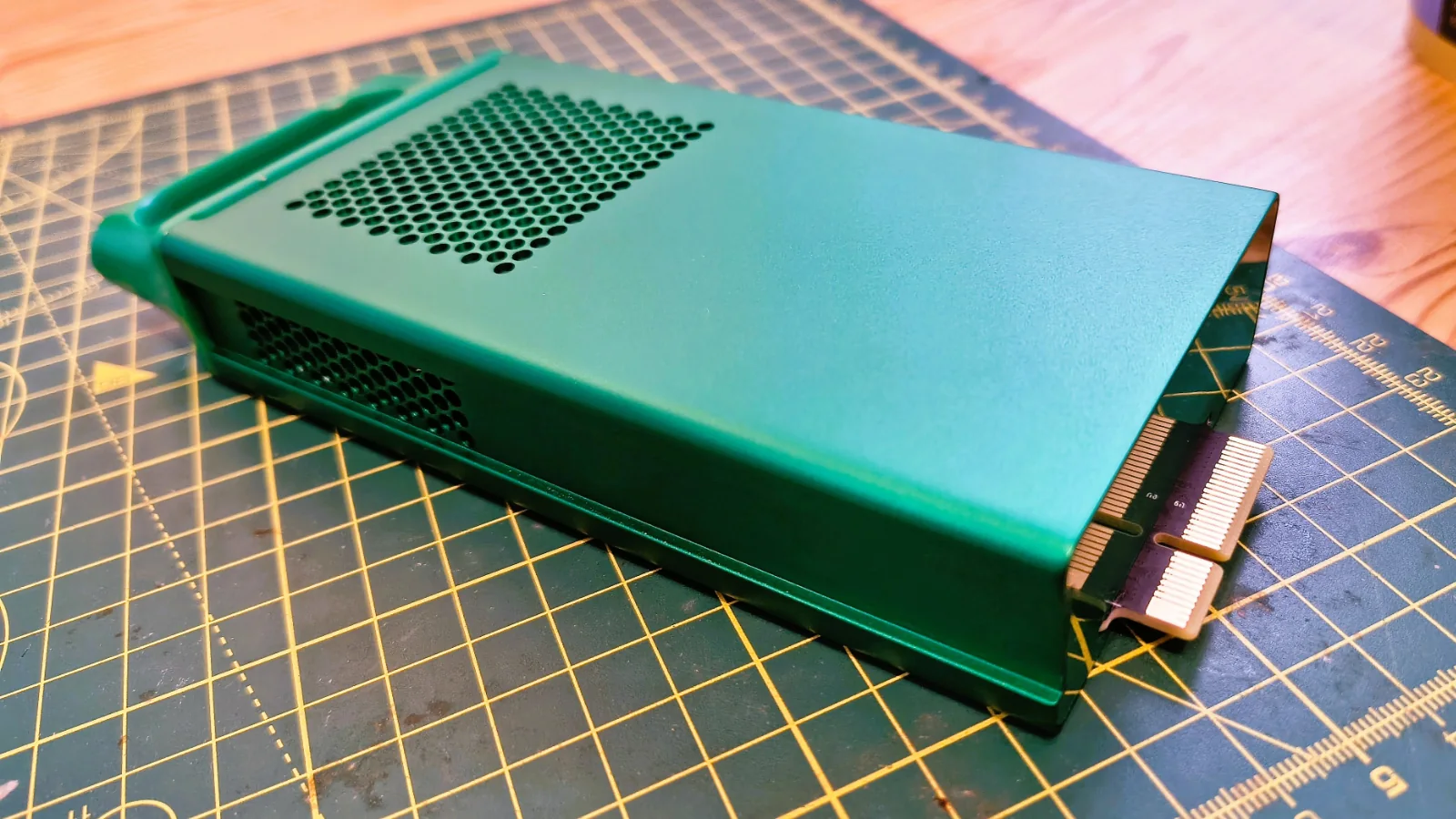
An M.2 NVMe PCIe Gen 3 x1 slot is accessible via a removable panel on the underside, recommended for high-performance AI models or caching.
The source reviewer notes that the HA100 deviates significantly from conventional NAS designs in interesting ways.
Processor and AI Accelerators
Despite Ugreen's recent use of mobile Intel platforms in many NAS designs, the HomeAgent series exclusively employs ARM SoCs.
Curiously, the three models (HA100, HA100 Pro, and MA100) utilize different ARM SoCs, leading to a lack of architectural consistency.
The HA100 is powered by a Rockchip RK3588, an Armv8.2-A platform with four Cortex-A76 and four Cortex-A55 cores, similar to those found in phones or tablets.
The HA100 Pro features a 12-core CIX P1 CP8180 Armv9.2-A platform, while the MA100 uses a fourteen-core NVIDIA Jetson Thor T5000.
GPU power also scales across the models, from the Arm Mali-G610 MC4 on the HA100 to the 2,560-core NVIDIA Blackwell GPU on the MA100, explaining the MA100's higher cost but creating a non-linear performance progression.
When the CPU, GPU, and NPU collaborate on AI tasks, the HA100 delivers an advertised total AI performance of 26 TOPS (6 TOPS from the platform, 20 TOPS from the T20 accelerator).
While 26 TOPS is sufficient for some LLM models, it is not enough to run a solution like CoPilot locally. The Pro model offers a more robust 205 TOPS, and the MA100 achieves up to 2,070 FP4 sparse TFLOPS.
This represents approximately 10x and then 1000x scaling in AI performance across the series, which are not incremental jumps.
Consequently, the HA100 appears somewhat underpowered for demanding AI tasks, though its entry-level pricing makes it an attractive option for those new to local AI.
Upgrade Path Concerns
The source reviewer expresses confusion regarding the lack of an upgrade path for HA100 or HA100 Pro owners, as the systems are not interchangeable despite removable accelerators. The MA100 is also the only model with four drive bays.
The source reviewer notes that a DXP or iDX NAS equipped with a low-profile RTX 460 video card could potentially generate 242 TOPS of AI processing, making it more powerful than the HA100 Pro, raising questions about the HomeAgent's value proposition.
Comparisons to other high-end AI systems highlight that the MA100 lacks advanced networking features like dual 10GbE LAN ports and Nvidia ConnectX-7 SmartNICs found in some competitors.
Without an accelerator upgrade path for the MA100, its long-term viability against evolving AI hardware is uncertain.
For the HA100, the modest T20 accelerator consumes most free PCIe lanes, leaving only a single lane for the M.2 slot once other ports are accounted for.
The source reviewer suggests that given the price, the HA100 should have featured a more robust architecture, such as dual M.2 Gen 3 x4 slots or a single Gen4 x4 slot, as the Gen3 x1 speed (1000MB/s) is matched by external devices.
The source reviewer's 'gut reaction' is that all systems should have shared the same enclosure, the HA100 should have been more powerful, and a clearer upgrade path, at least from HA100 to HA100 Pro, should have been considered.
Software Development Status
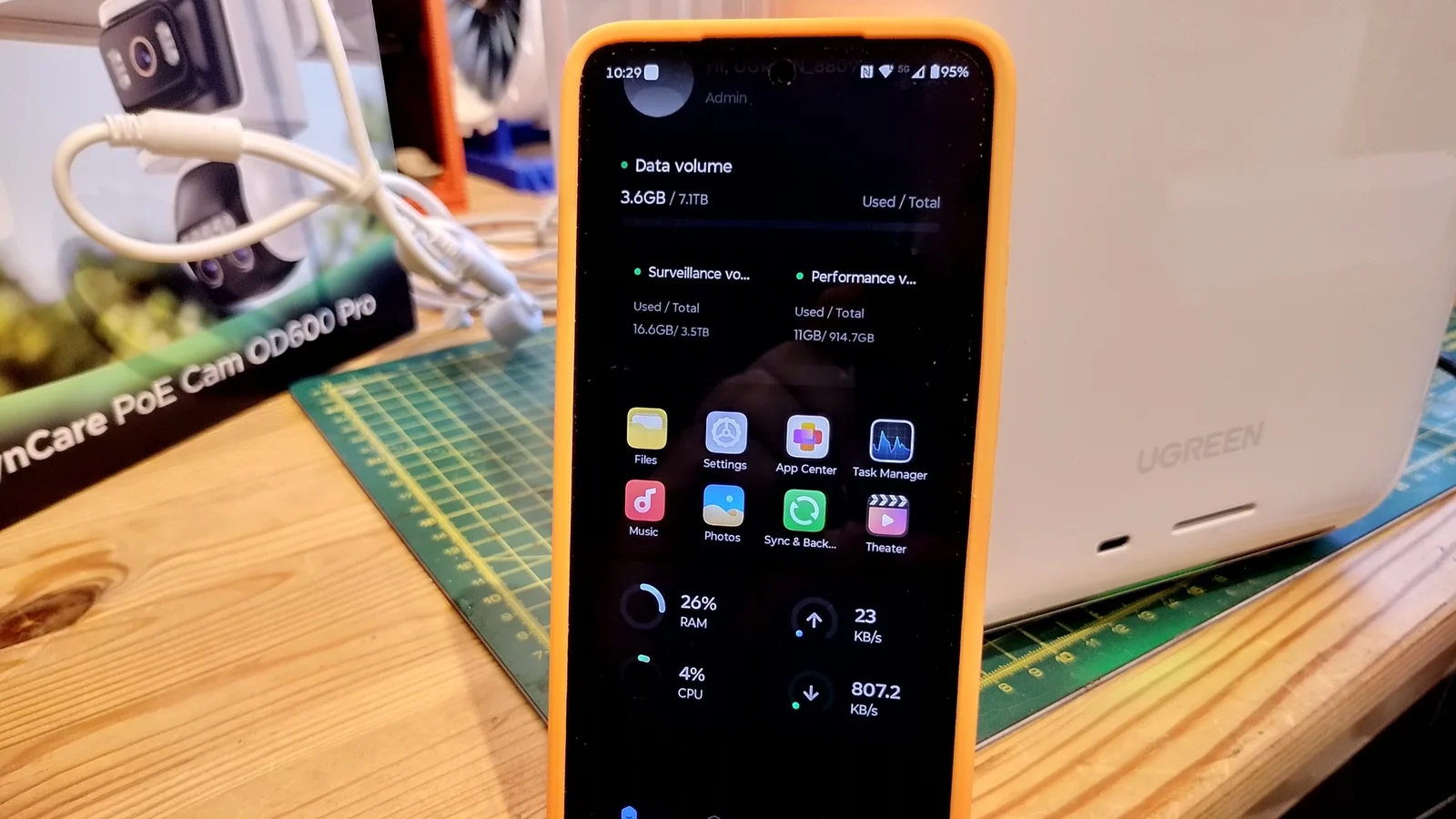
While the hardware for the HomeAgent series is largely finalized, the software side is still in active development, despite being built on the mature UGOS Pro platform used in other Ugreen NAS devices.
The HomeAgent HA100 runs a Beta version of UGOS Pro (1.20.0.0127), which differs significantly from the current stable release on other Ugreen NAS models.
It is anticipated that the HomeAgent's specific functionalities will be integrated into a unified UGOS Pro release closer to its retail launch.
A notable difference is the current lack of a web interface for the HomeAgent, with Ugreen promising its inclusion in a future update.
While the mobile app provides full control, the web interface is generally preferred for NAS management.
The NAS features of the HomeAgent are largely consistent with previous Ugreen NAS models, allowing app installation, drive management, and data backups. With only two data drives, RAID 0 or 1 configurations are supported.
The app selection is similar to standard Ugreen NAS, with additional special function apps for the T20 accelerator and an IoT Gateway, enhancing existing UGOS Pro apps.
The Model Manager app is central to the system's AI function, running a local LLM (Qwen 3.5 4B) via Docker.
The 4B model is a suitable fit for the HA100's hardware, consuming minimal RAM and leaving ample resources for the operating system and camera analysis.
The model includes modular features for recognizing people, pets, or packages, working in conjunction with the Surveillance Centre and new camera peripherals.
It also integrates with Smart Home functionality to control devices like lights and read sensor data.
The HomeAgent and some peripherals, such as SynCare cameras and the Smart Speaker, enable verbal interaction with an AI assistant named Uliya.
However, the source reviewer found the AI assistant's conversational capabilities to be limited, despite the HA100's processing speed.
While Uliya can provide alerts for approaching individuals or package deliveries, it often struggles with more complex queries.
The AI component of the basic system is more agentic-focused than conversational, unlike more sophisticated LLMs that higher-tier models might run.
Users can integrate cloud-based AI models like OpenAI (ChatGPT), Qwen, MiniMax, DeepSeek, GLM, and Kimi using API keys.
However, using cloud models contradicts Ugreen's stated purpose of providing a local, internet-independent AI.
At its current development stage, the local Qwen 3.5 4B model is considered rather underwhelming, requiring significant engineering effort for broader interaction and scenario handling.
The Smart Home app also requires substantial development, currently connecting only to Ugreen peripherals or Matter-compliant devices.
This poses a challenge for users with older, non-Matter home automation hardware.
The current implementation requires Matter QR codes or pairing numbers, necessitating expansion to support older Google, Amazon, Tapo, SmartLife, and Hue equipment.
While future updates are expected to broaden compatibility, the ecosystem is currently limited to Matter hardware or Ugreen peripherals for building automations and interacting with Uliya.
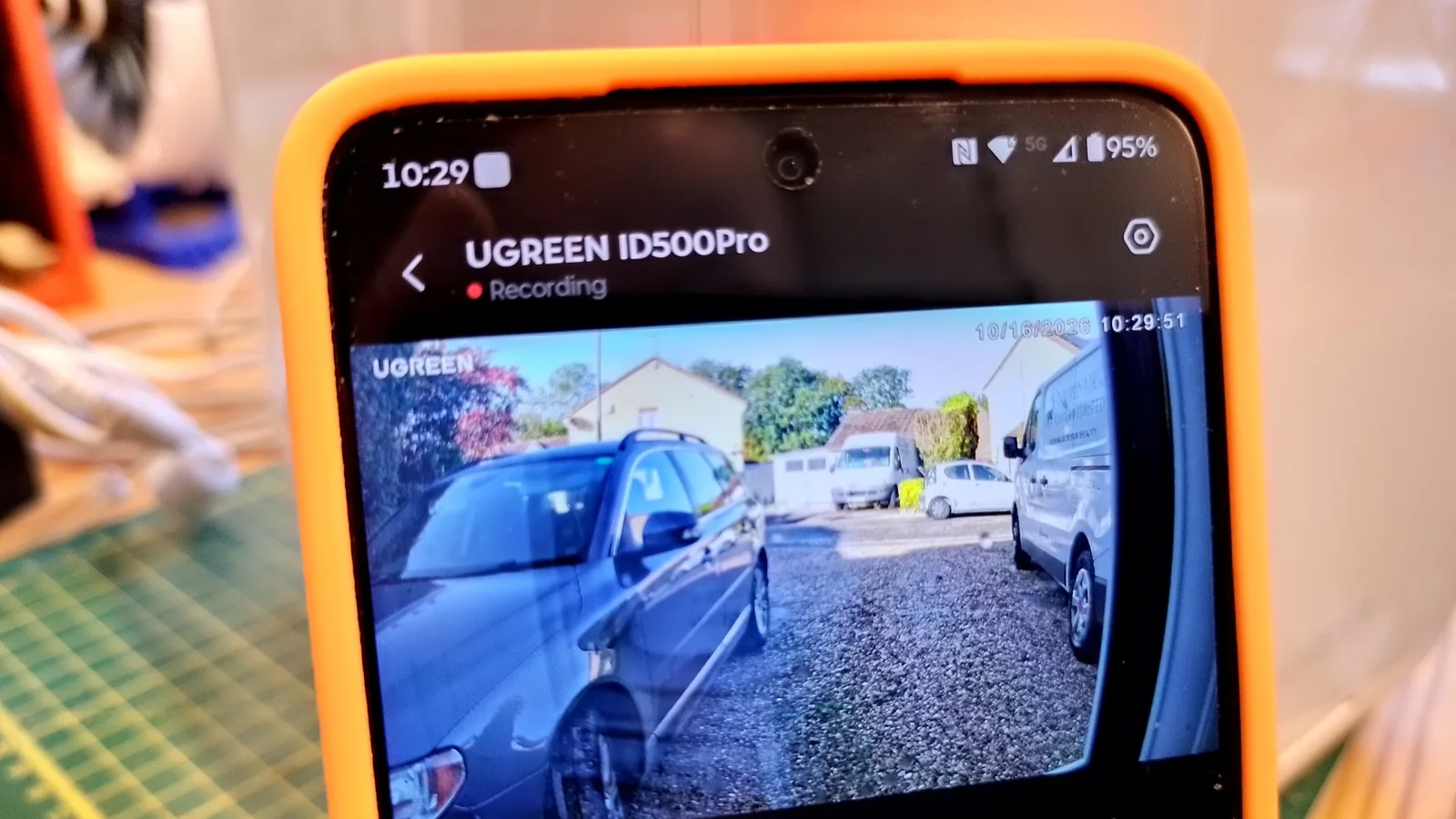
Ugreen provided two peripherals for assessment: the SynCare ID500 Pro (indoor) and OD600 Pro (outdoor) cameras.
The ID500 Pro, a 4K camera with pan-tilt tracking, is bundled with the HA100 and HA100 Pro during the Kickstarter offering.
It can automatically track movement and identify people, vehicles, pets, and packages, recording events on the HomeAgent.
A minor issue noted was IR reflection off glass when placed in a window at night, blinding its night vision.
The OD600 Pro, an outdoor camera with dual cameras, is powered via PoE and connects directly to the HomeAgent's PoE switch. A more advanced OD800 Pro offers solar power and Wi-Fi for cable-free installation.
The source reviewer expressed disappointment that the PoE ports are 10/100Mbps rather than Gigabit or 2.5GbE.
The OD600 Pro and OD800 Pro are considered good value at their launch prices, though they currently only work with the HomeAgent.
The HomeAgent's underlying UGOS Pro platform benefits from years of development, making it more mature than Ugreen's initial NAS launches.
Updates for the HomeAgent-specific features are frequent, indicating ongoing improvements, but significant sophistication is needed rapidly before its retail release.
The HomeAgent is currently a work in progress, much like UGOS Pro was in its early stages.
Early Verdict
The source reviewer believes it is too early to fully assess the HA100's potential, as much of its software is incomplete.
However, given the significant evolution of UGOS Pro since its initial launch, similar rapid development is expected for the HomeAgent's functionalities by its retail debut.
A key concern is the use of three distinct, incompatible hardware platforms across the HomeAgent series, each with a unique processor and accelerator.
The HA100 uses a Rockchip RK3588, the HA100 Pro an CIX-CP8180(P1), and the MA100 an NVIDIA Jetson Thor T5000.
This platform diversity eliminates any upgrade path between models, meaning users must purchase an entirely new machine for increased AI power, rather than simply upgrading an accelerator module.
The source reviewer also expresses reservations about a home-use NAS with a potential $20,000 price tag for the high-end model, questioning its long-term market viability.
Ugreen's NAS products have been praised for disrupting a previously stagnant market.
The HomeAgent represents Ugreen's most ambitious venture, integrating NAS with AI in a novel way. While NAS users understand its utility, AI still faces challenges regarding defined use cases and user perception.
The HA100 aims to elevate NAS with AI capabilities, but its success hinges on overcoming these challenges. Early access tickets are available for those interested in this evolving product.
The HomeAgent hardware can be viewed as either a new hybrid appliance combining local AI and information for efficiency, or as a precursor to all future NAS devices incorporating AI logic.
Either way, the NAS market is poised for significant changes with this new direction.