Design and Market Evolution
When Bose originally released its $299 Ultra Open Earbuds, they stood out as innovative pioneers in the clip-on earbud market. Since that initial launch, this distinct category resembling clip-on earrings has expanded rapidly, with numerous budget-friendly alternatives appearing across online retailers at much lower price points.
The second-generation iteration maintains a familiar aesthetic while delivering notable enhancements in acoustic performance, microphone capabilities, and longevity, positioning them near the top of the open-ear segment. However, their $299 retail price places them significantly higher than most competing models on the market.
Hardware and Ergonomics
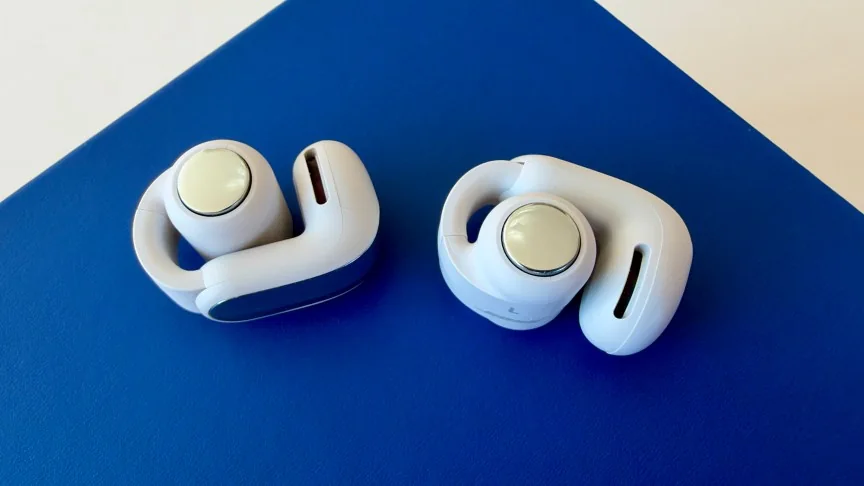
Externally, the earbuds retain the recognizable cuff-clip structure that gained popularity for its comfort. The flexible silicone connecting joint features a softer formulation, and the metallic caps display a more reflective finish.
Physical playback controls remain integrated into the top barrel behind the ear, ensuring straightforward operation by touch alone.
The redesigned charging case incorporates a flat, rubberized bottom to prevent sliding on smooth surfaces, alongside a relocated USB-C port and Bluetooth pairing button. The refined hinge mechanism and newly added wireless charging capability contribute to an overall more premium feel.
Offered in multiple color options, the earbuds carry an IPX4 splashproof rating and extend battery endurance to approximately 9 hours, though active spatial audio modes will shorten this duration.
While the secure open design suits activities like running or cycling, the manufacturer also offers purpose-built sport variants with enhanced dust resistance for rigorous fitness routines.
Sound Quality and Performance
Redesigned acoustic drivers allow the new generation to achieve higher maximum volumes with deeper low frequencies and cleaner overall audio reproduction. Support for spatial tracking technologies further broadens the soundstage options.
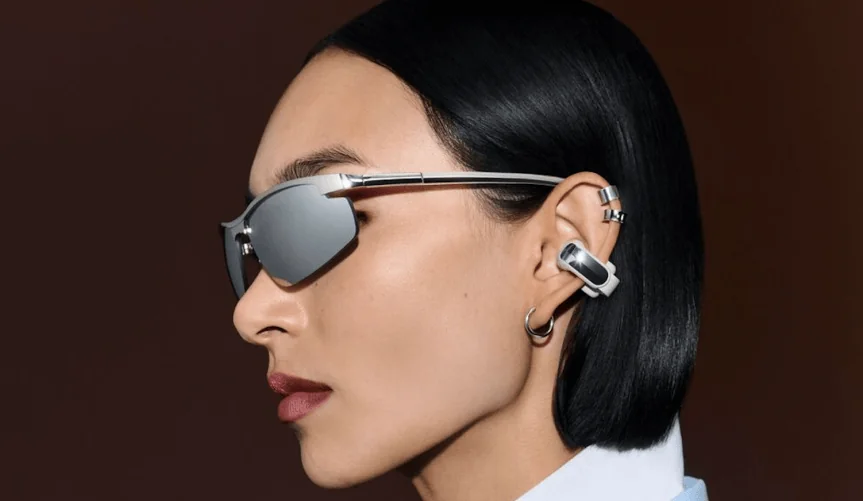
Achieving optimal audio output depends heavily on positioning the clip correctly along the outer cartilage of the ear to align the driver appropriately relative to the ear canal.
Companion mobile applications for iOS and Android provide visual fitting guides as well as a basic equalizer interface for personalized sound adjustments.
Addressing the primary criticism of the predecessor, maximum output levels have been significantly increased to better compete against environmental background noise without sacrificing clarity.
Evaluations indicate that drivers maintain composure at high listening levels with minimal distortion, producing a noticeably larger and more dynamic soundstage than previous iterations.
When compared against alternative open designs, the model delivers a bolder presentation that ranks among the best-sounding hardware in its class.
Certain competing products integrate active noise cancellation features, though open architectures inherently balance environmental awareness differently.
A primary advantage remains the exceptional physical stability during movement, though lower-priced alternatives offer more budget-friendly entry points.
Acoustic output surpasses several rival open-ear gadgets, providing richer bass response and cleaner treble performance.
Proprietary directional audio technology successfully limits sound propagation during moderate listening sessions, though elevated volumes in quiet surroundings will result in some audible leakage.
Connectivity and Call Quality
Equipped with Bluetooth 5.4 and integrated voice-pickup sensors, the earbuds incorporate AI-driven noise-isolation software designed to separate speech from ambient environmental sound.
While historical models offered merely adequate call clarity, this generation exhibits noticeable improvements in microphone reliability.
Practical street evaluations show effective background suppression in busy urban environments, yielding clear vocal reproduction despite occasional minor muffling.
Certain competing headsets maintain an edge in specific telephony benchmarks, yet the overall voice feature set remains robust for daily communication needs.
Upcoming firmware support is projected to introduce additional platform integrations, including expanded voice assistant options and shortcut configurations.
Conclusions
Refinements in sound reproduction, battery longevity, and case design make this second-generation release a clear technological step forward. Nevertheless, increased competition from economical alternatives makes the high retail cost a significant consideration.
Alternative options within the manufacturer's lineup provide lighter builds and lower price points for budget-conscious buyers.
Ultimately, the hardware delivers exceptional open-ear audio and reliable communication features, though prospective buyers may benefit from waiting for promotional discounts.
Score breakdown
Scored out of 10Price & Release Date
Bose Ultra Open Earbuds (2nd Gen)