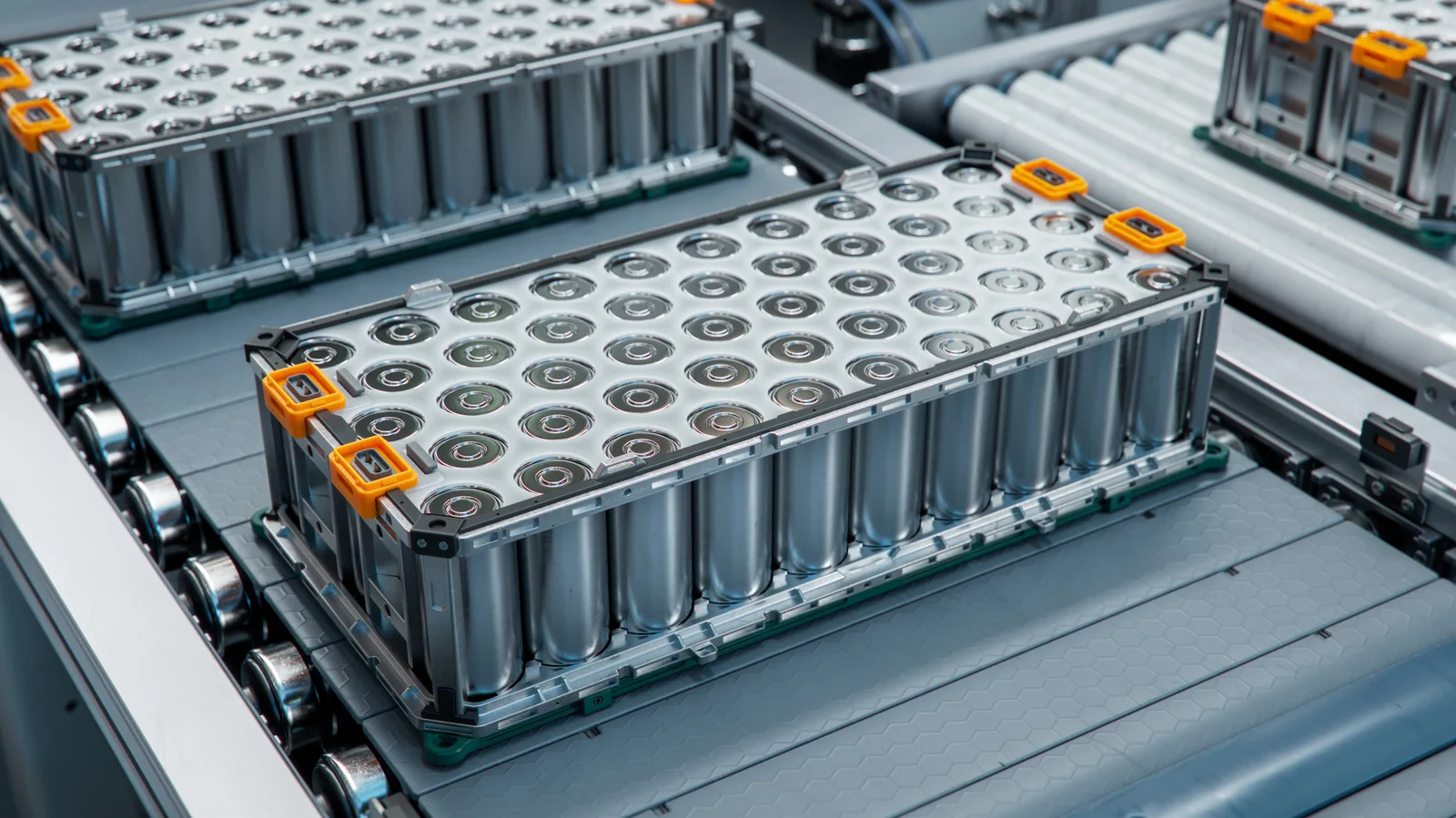
These experimental EV batteries can eject themselves during a fire
A Chinese prototype throws a battery pack clear of the car in under a second.
Picture the scene: You're sitting in a parking lot. There's a nondescript SUV parked across from you. Nothing of note is going on. Then, all of a sudden, the floor of that SUV bursts out sideways, and its entire battery pack skids across the ground and comes to a stop, well away from the SUV.
That scenario describes an ejectable EV battery pack system that Chinese researchers have been working on. Clips of the strategy in testing have made the rounds online, demonstrating a plan built to sense a battery fire as it starts and fling the pack clear of its vehicle in about one second.
This feature is still very much in its infancy, with the team behind the test having admitted as much. Stellantis' US arm recently published a patent application for a quick-release system that drops a burning pack, and Hyundai and Kia have jointly held a patent on a similar idea since 2024.
How the ejection system works
The ejection prototype reportedly uses a gas generator much like the one that inflates an airbag. When the battery management system detects that a fire is about to start, the generator pushes the pack out sideways. It then comes to rest around 10 to 20 feet from the vehicle.
A staff member on the project stated that the hardware grew out of research into side-loading battery swaps. According to that staffer, the system is supposed to stay locked in dense urban areas and anywhere pedestrians and different sorts of traffic mix, though the software to make those distinctions remains in development.
The viral video was credited jointly to the China Collision Repair Technology Center and Joyson Electronics. Interestingly, Joyson stated it has no cooperation or joint development agreement with the center. iCar, the Chery brand whose 03 SUV the test car resembles, also noted it had nothing to do with the demo.
Battery fires are notoriously hard to put out
A lithium-ion cell in thermal runaway generates heat several times faster than it can lose it. According to the UL Research Institutes, that runaway state is when the temperature climbs by more than 20 degrees Celsius a minute toward peaks of above 300 degrees Celsius, with gas, smoke or flames venting from the cell. Safety boards have previously reported batteries reigniting multiple times after firefighters initially put them out, sometimes taking thousands of gallons of water to extinguish.
When UL's Fire Safety Research Institute burned 18 EVs for a study published in August 2026, it found that none of its suppression techniques could stop thermal runaway once it started. Moving a dangerous battery pack away from people in the vehicle is therefore one of the few credible ideas that don't depend on extinguishing the fire.
Stellantis' US arm currently has a patent application for a release system triggered by a switch in the cabin or trunk. When triggered, sliding frames or explosive bolts drop the malfunctioning pack to the ground and a 12-volt battery powers a motor to roll the car clear. In contrast, Hyundai and Kia's 2024 patent uses a temperature sensor, but requires the car to be stopped and the driver to pull a lever before the pack falls under its own weight.
Others are addressing this battery conundrum from different angles. China implemented a mandatory standard in July 2026 requiring that a pack does not catch fire or explode when a cell goes into thermal runaway. French automotive company Renault also offered the industry free licenses on a port that lets a fire hose flood its battery packs with water.