This is the right way to clean your vinyl records
The answer depends on your budget and how hardcore you want to get.
There is no single right way to clean a record. If anything, there is a different answer for every budget, and even then, 10 enthusiasts might give you 10 different answers. No matter your situation, though, some TLC for your vinyl collection is better than none.
Level 1: The bare minimum
Most record crackles come from dirt and debris. Dust sits on the surface and is the easiest to clean. Grime settles into the grooves and is harder to remove. And then there are scratches, which are a different problem altogether. Unfortunately, nothing will fix them.
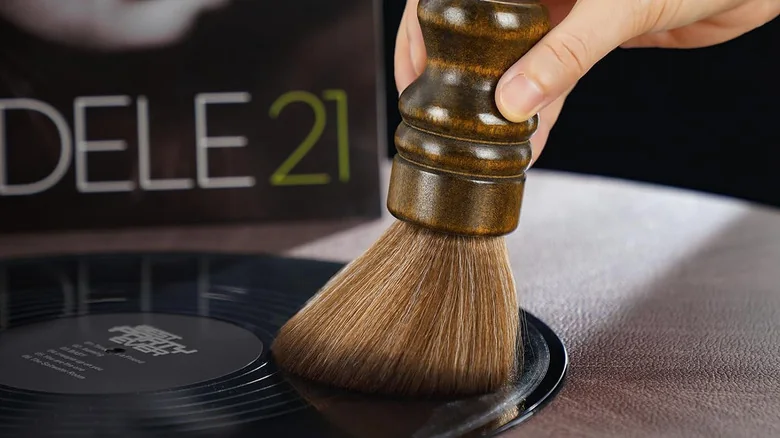
For regular maintenance, a carbon fiber brush is one of the easiest places to start. Rest it lightly on a spinning record for a few turns, then sweep it off toward the edge. This will not do much if your record needs a deep cleaning, but it keeps loose dust from piling up.
An air duster, whether canned or electric, is another option to blow off surface dust. If you use the canned variety, be sure to hold it upright so it does not spray propellant. Keep all air blowers away from the record player needle.
Anti-static guns are handy for static, which can attract dust. Keep in mind that they will not remove dirt; they just make it harder for dust to stick to the record in the first place.
Do not neglect your needle, either. It is worth buying a small stylus brush, which you move gently from back to front to clean your needle. Stylus cleaner gel is another option: lower the needle onto the sticky pad, repeating a few times until the tip is clean.
Level 2: Liquid cleaning and beyond
Wet cleaning is the next step up. Whether that means hand-washing a record or using a machine, this approach is much better than brushing at removing dirt that has sunk deep into the grooves.
Fluid made for records from reputable companies is a simple and cheap option. Spray the liquid on a soft brush or pad rather than straight onto the record, move in circles along the grooves and avoid wetting the label.
Diluted alcohol shows up in plenty of commercial record fluids and tends to be fine for brief contact with vinyl. You can make your own with isopropyl alcohol-based cleaner by mixing about two to three parts distilled water with one part alcohol. Always rinse with distilled water afterward to avoid residue, and never let alcohol touch old shellac 78s.
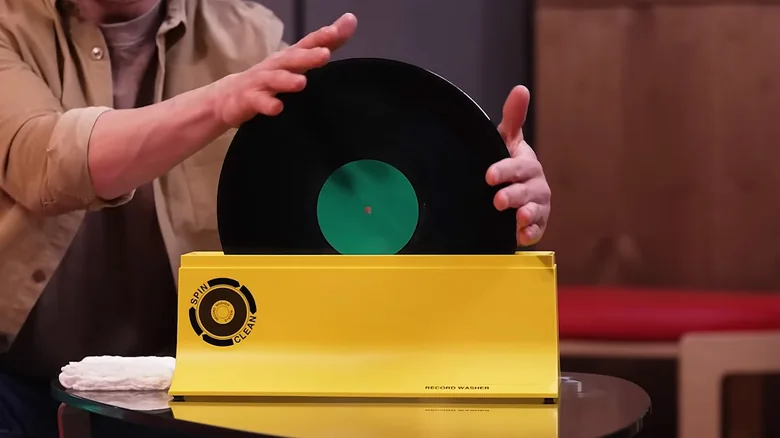
If you are willing to spend around $80 to $125, a record washer like the Spin-Clean can be a worthwhile investment. Put cleaning fluid and distilled water in the reservoir, place your record between the brushes, and give it a spin to clean both sides at once.
Stick to microfiber for drying, and air-dry rather than machine-drying. Avoid fabric softeners. After wiping, set your records on a dish rack to dry completely before returning them to their sleeves.
Level 3: The (bubbly) deep end
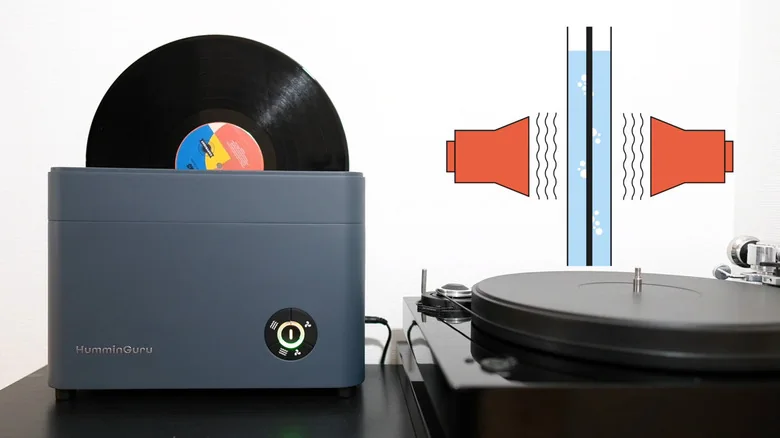
If you are willing to spend real money, ultrasonic cleaning is the gold standard. These machines dip the record in a bath and use high-frequency sound waves to create tiny bubbles that loosen stubborn grime from the bottom of the grooves.
The big drawback is the price. The cheapest ultrasonic cleaning machines start at over $100. All-in-one machines like the HumminGuru start at several hundred dollars, while premium models like the Degritter climb well into the thousands.
Vacuum record-cleaning machines, like the Record Doctor VI around $350, are another premium option. They scrub the record with fluid and then suck it back out of the grooves. For budget-conscious audiophiles with an existing shop vac, a $30 Vinyl Vac wand is an alternative attachment.
Before diving into premium options, consider how serious you are about your collection. Unless you have money to spare, a Spin-Clean is a modest investment that gets most of the job done.
Other best practices
Avoid wiping records with Windex or household cleaners, as they leave residue. Skip paper towels which shed lint, and avoid tap water which leaves mineral deposits.
Handling matters as much as cleaning. Hold records by the edges and label, keep them away from sunlight and heat, and store them upright in polyethylene or poly-lined paper sleeves.
Beyond that, some wear and tear is out of your control. Embracing minor imperfections and surface crackle is simply part of the charm of listening to vinyl.