Design and Market Positioning
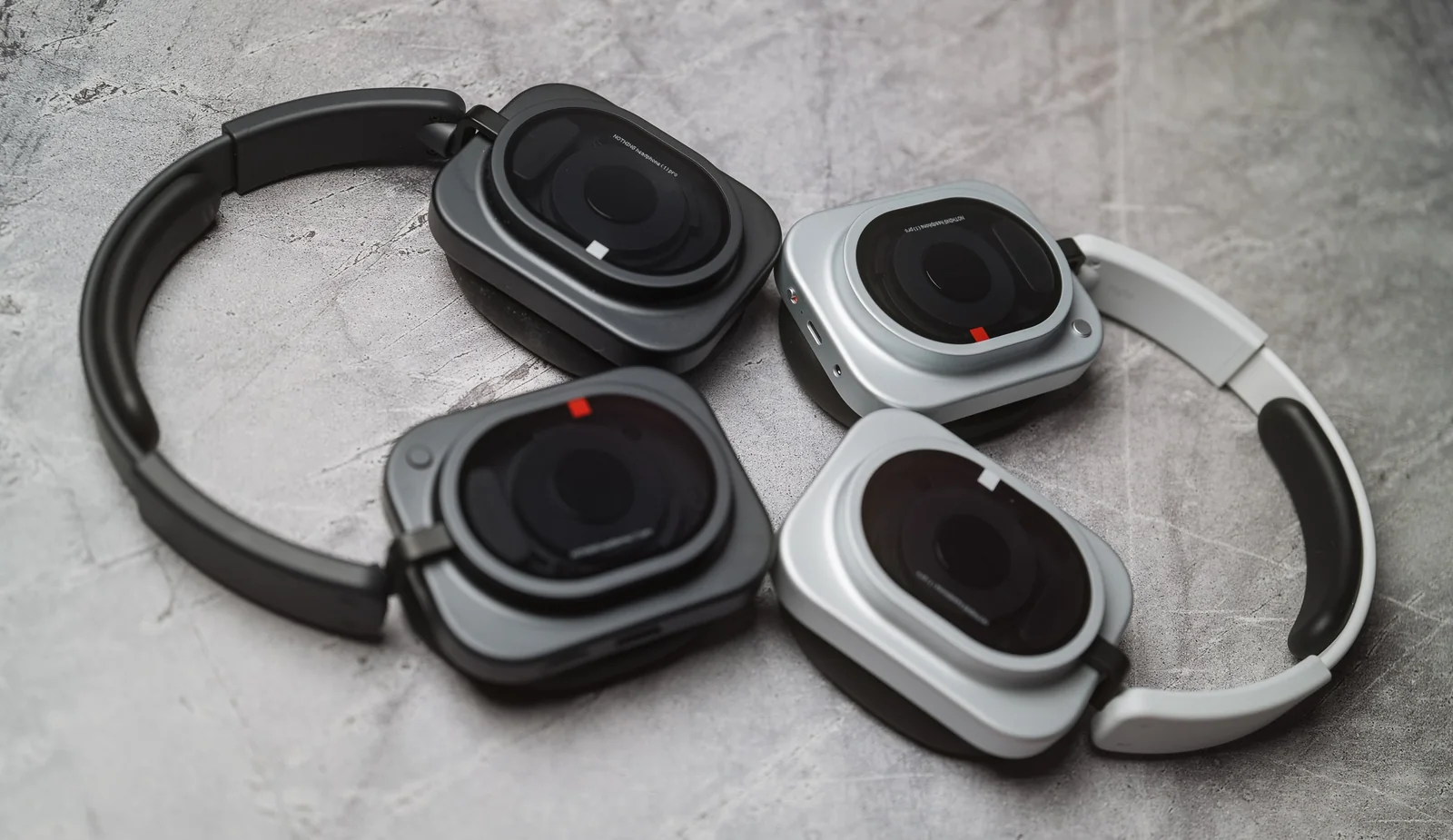
Positioned as a consumer audio brand targeting users looking for stylish alternatives, Nothing has released its most advanced and expensive over-ear headphones to date at $399. The device aims to capture market share with distinctive hardware choices.
The over-ear headphones feature new transducers with a triple-driver configuration, improved active noise cancellation, and a premium build utilizing machined metal and Panda glass on the earcups instead of standard translucent plastic. Despite an unwieldy carrying case, the hardware proves to be a strong contender in its price tier.
Nothing Headphone (1) Pro design
The company has maintained its signature translucent theme across various product lines since its founding, aiming to appeal to design-conscious consumers.
While priced at $400, the headphones sit below several flagship alternatives from competing major consumer tech brands while offering robust feature sets.
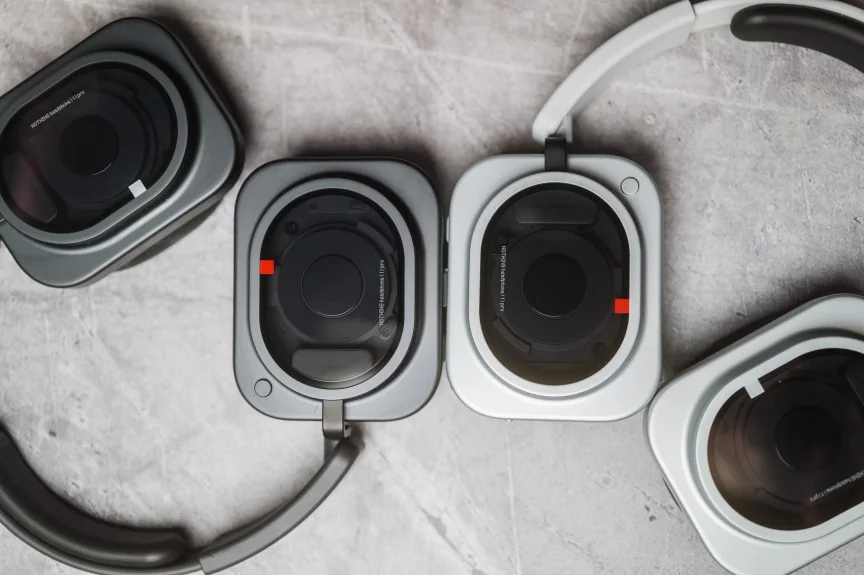
The distinct rectangular design language stands out against a market dominated by round-earcup alternatives, though personal aesthetic preferences will vary.
Upgrades over the standard model include extended aluminum framing, smoky glass oval windows showcasing the internal components, and the visible triple-driver layout.
Internal architectural changes, such as titanium arms instead of steel, reduce the total weight slightly to 327 grams. Ergonomic improvements include a wider adjustable headband with thicker padding and softer earpads featuring a silicone baffle wall that enhances acoustic sealing.
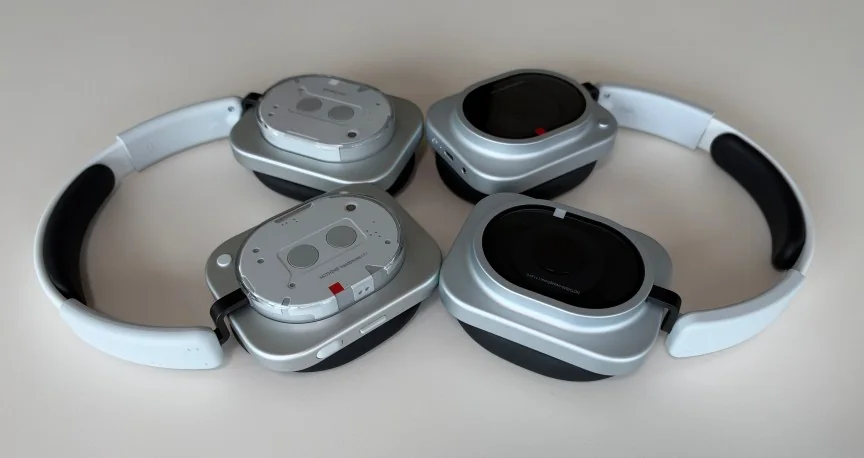
The hardware includes Bluetooth 6.1, Auracast support, and wear-detection sensors. An IP52 splash- and dust-resistant rating adds durability.
Although lighter than some heavy alternatives, the device is heavier than certain leading lightweight flagships, though the streamlined shape prevents them from protruding excessively.
Physical controls receive high marks for usability, featuring an on-off switch, a volume/ANC roller button, a track-skip paddle, and a customizable button assigned to voice assistants or quick app toggles.
A specialized internal switch inside the left earcup toggles a flat EQ mode intended for neutral monitoring environments.
The case is a bit much and not enough
The included hardshell carrying case adopts a rugged utility aesthetic akin to protective gear, providing robust physical security at the cost of added bulk.
While protective and rubberized on the inside, the case lacks dedicated storage space for wired headphone cables.
Built-in attachment loops allow users to attach optional shoulder straps for alternative carry configurations.
Acoustic Performance
Marketed for both everyday listening and production environments, the headphones aim to bridge the gap between consumer enjoyment and professional utility.
The triple-driver architecture assigns dedicated dynamic drivers for bass and midrange frequencies alongside an xMEMS driver dedicated to high-frequency delivery.
While multiple drivers do not automatically guarantee superior output, proper engineering implementation yields notable acoustic benefits.
Unlike previous collaborations, internal engineers handled tuning for everyday playback while partnering with professional studio experts for refined sound profiles.
Users can access a Flat EQ switch for neutral monitoring, dynamic spatial audio modes with head tracking, and custom equalizer presets tailored for specific musical styles.
Hi-res wireless and wired playback over USB-C supports audio up to 24bit/192kHz, accompanied by a personalized hearing test profile feature inside the mobile companion app.
Codec support includes AAC, SBC, LDAC, and LC3 for low-latency broadcasting.
The source review indicates that the Pro model delivers improved depth, instrument separation, punchy bass, and enhanced treble sparkle compared to its predecessor.
The sound profile positions itself competitively against top-tier market alternatives, particularly for listeners favoring dynamic and energetic tuning.
Direct comparisons note a slightly warmer and less aggressive tonal balance on alternative flagship hardware, though individual preference remains subjective.
Extensive equalization settings and spatial audio modes allow for significant sound customization to suit personal tastes.
Evaluators generally recommend utilizing the default balanced application profile for consistent benchmarking against other devices.
Improved noise canceling
An upgraded real-time adaptive active noise cancellation system utilizes a ten-microphone array to achieve stronger noise reduction and wider frequency coverage than previous hardware iterations.
Real-world testing in urban environments and against low-frequency ambient sounds demonstrates high-level attenuation, trailing slightly behind select market leaders.
The transparency mode offers natural environmental passthrough, earning solid marks alongside an overall high rating for noise suppression.
Battery and Microphone Performance
Battery performance reaches up to 30 hours with active noise cancellation enabled and up to 68 hours with it disabled. Fast-charging technology yields approximately two hours of playback from a five-minute charge.
The minor reduction in ANC longevity compared to the non-Pro variant is likely attributed to the power demands of the advanced processing array.
Voice-calling performance
Voice calling evaluations in loud outdoor environments confirm that background noise suppression operates effectively, keeping vocal delivery clear with minor artifacts.
Nothing Headphone (1) Pro final thoughts
The Headphone (1) Pro successfully bridges the gap into legitimate premium territory, offering robust feature additions and improved physical design.
While the inclusion of studio-grade features and wired connectivity broadens its appeal, the polarizing carrying case and competitive pricing require careful consideration against established rivals.
Future firmware enhancements and potential retail discounts will likely strengthen its positioning as a top recommendation in the over-ear headphone category.