TDM Neo: Two-minute review
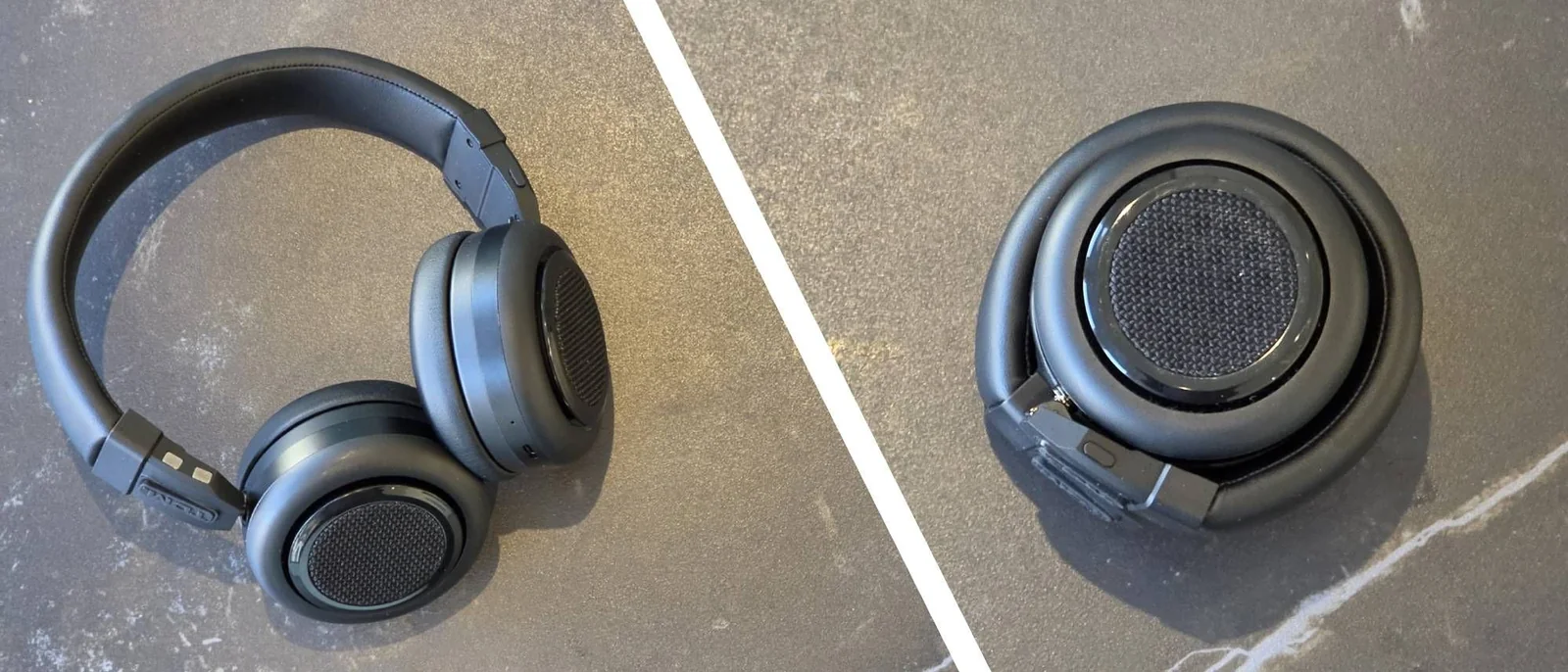
If you follow your audio news, no doubt you followed the early-2026 unveiling of the TDM Neo with fascination. It’s a novel audio gadget: it functions both as a loudspeaker and as a pair of headphones, with a neat twisting mechanism folding it or unfolding it between the two.
Months on, and the TDM Neo has been released, so reviewers naturally made sure to test a pair to see how well they work… and unfortunately, the device is hard to recommend to anyone outside of dedicated gadget collectors.
The problem is almost entirely in the audio department: the Neo just doesn’t sound good. As a pair of headphones it’s okay, but imprecise in a way that many rivals aren’t. However, when you turn it into a portable speaker, you get a tinny bass-less hiss which even bargain-bin options easily beat.
It is likely that high-tech driver systems cannot fit in a gadget with this form factor. At the same time, a valid engineering constraint does not make the acoustic shortcomings any more appealing.
Not helping the Neo's case are a few other imprecisions. Take, for example, the design: the twisting mechanism locks the speaker mostly in place, but not always; it’s a bit loose. This means you don’t always get a secure fit, and the speaker can be quite wobbly.
Another gripe involves software integration: there’s a TDM app, but to use some of its key features, users need to make an account. Forcing data hand-off just to change an EQ profile on a piece of standalone hardware remains an unnecessary friction point.
It’s a real shame that the TDM Neo has these issues, because there are signs that the company put some real thought into the device, with some neat touches. There are some useful in-box extras such as a sturdy carry case and high-quality cables, and some of the features let you tweak with the nitty-gritty.
Pricing matches top-tier Bluetooth speakers or mid-range headphones, despite the compromised sound and build quality, making the overall proposition difficult to justify.
As a viable consumer product, the TDM Neo isn't easy to recommend. It’s a neat concept, with some thought put into its various departments, but several gaping weaknesses mean you’ll likely be disappointed if you spend your money on it.
TDM Neo review: Price and release date
Unveiled in January 2026, sold from October
Available for $249 / £249 (about AU$500)
TDM also sells battery replacements
The TDM Neo was initially unveiled at CES 2026 in January, but it took until September for the device to go on sale and October for it to ship.
You can buy the Neo for $249 / £249. It’s a high price, but a little more justified when you consider that you’re getting two devices in a single chassis.
While repairability isn’t touted as one of the Neo’s key marketing points, TDM does sell battery replacement kits online for $29 / £23, and provides an online guide on how to swap them out, giving the brand a well-earned nod for longevity efforts.
TDM Neo review: Features
Incredibly good battery life
App brings EQ and extra tools
Account required for some features
One real strong suit is the TDM Neo's battery life. You’re looking at 16 hours of listening in speaker mode, which is above-average for a device of this size… and a wild 200 hours of listening when you’re in headphone mode.
That endurance covers well over a week straight of listening without a recharge, dwarfing many standard competitors. Helping that figure is the lack of active noise cancellation, which is standard for on-ear designs.
On smartphones, users can download the TDM app to access extra features. Locating the correct app can be slightly tricky given similar naming conventions in app stores.
The app offers essentials: users can monitor battery levels, toggle a low-latency gaming mode, locate a misplaced unit, customize the twist action, and utilize battery saver modes.
The equalizer includes several presets and space for two custom modes, with separate EQ setups remembered independently for headphone and speaker modes. It is a thoughtful touch demonstrating strong design intent.
However, to edit the 5-band equalizer manually or use the find-device function, users must create an account and log in. Requiring an account for core local hardware controls remains a frustrating limitation.
TDM Neo review: Design
Twisty mechanism: headphones to speakers using magnets
Headphones are fairly sturdy, but a little heavy
Speakers feel unstable and wobbly
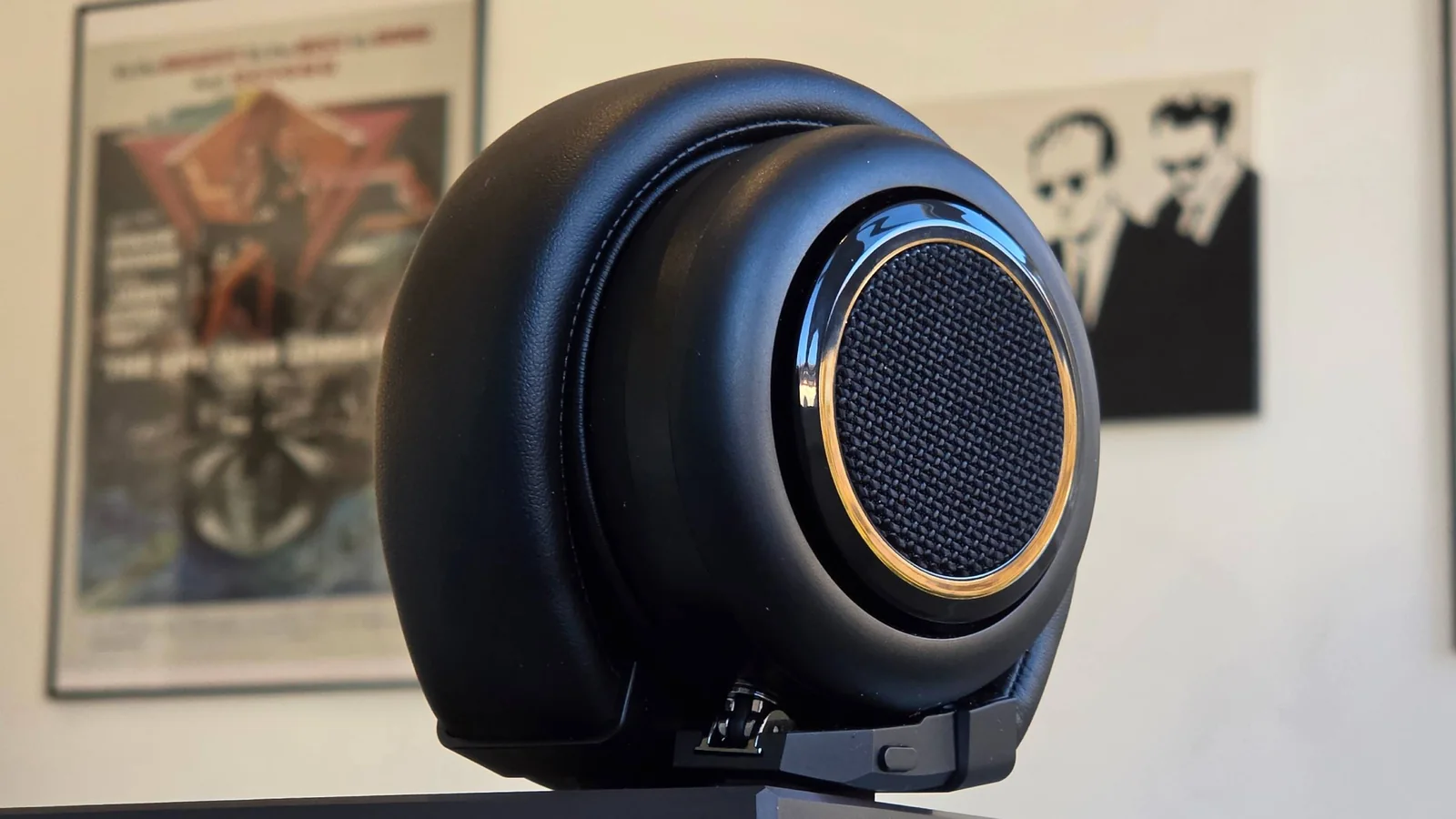
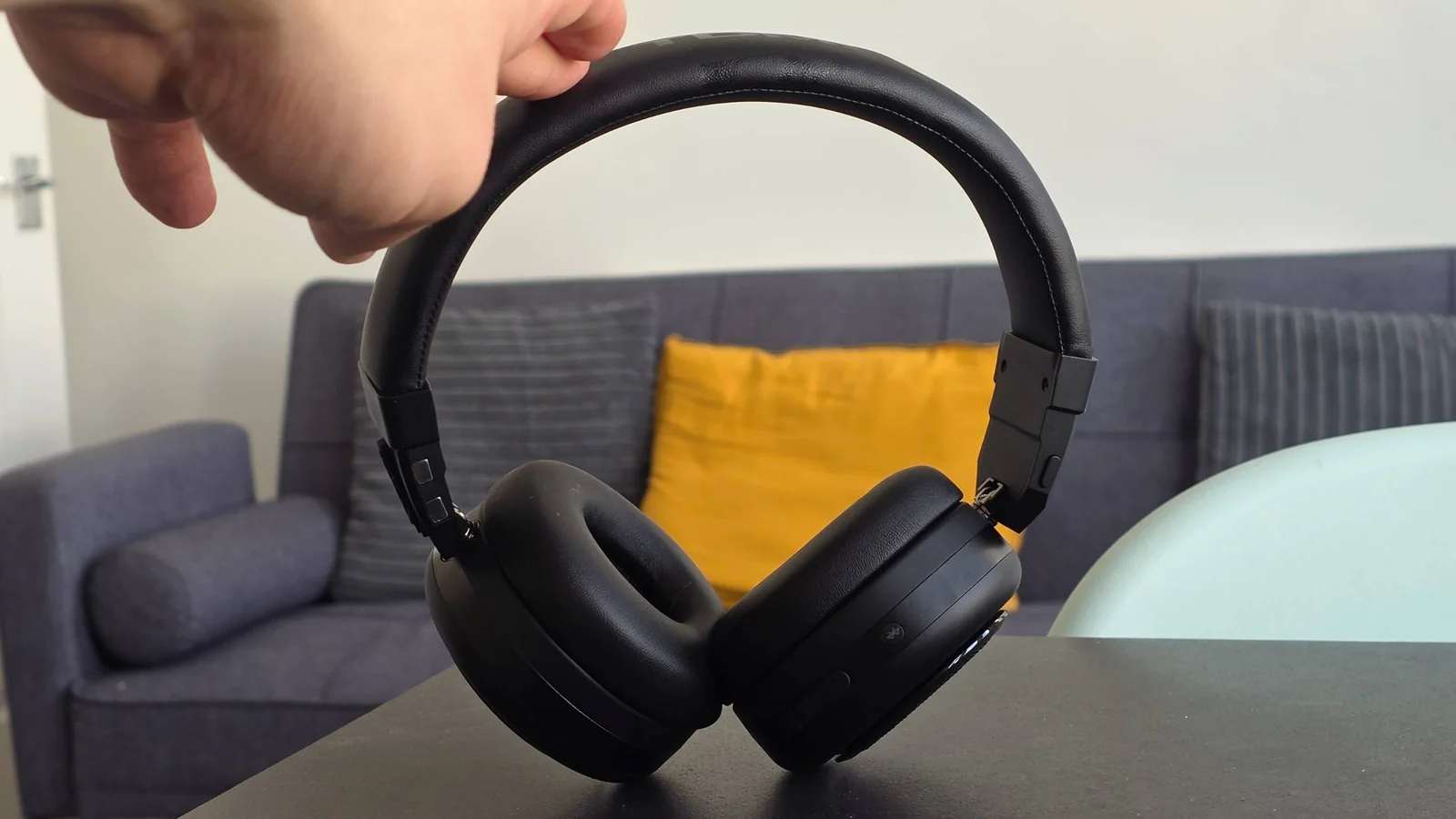
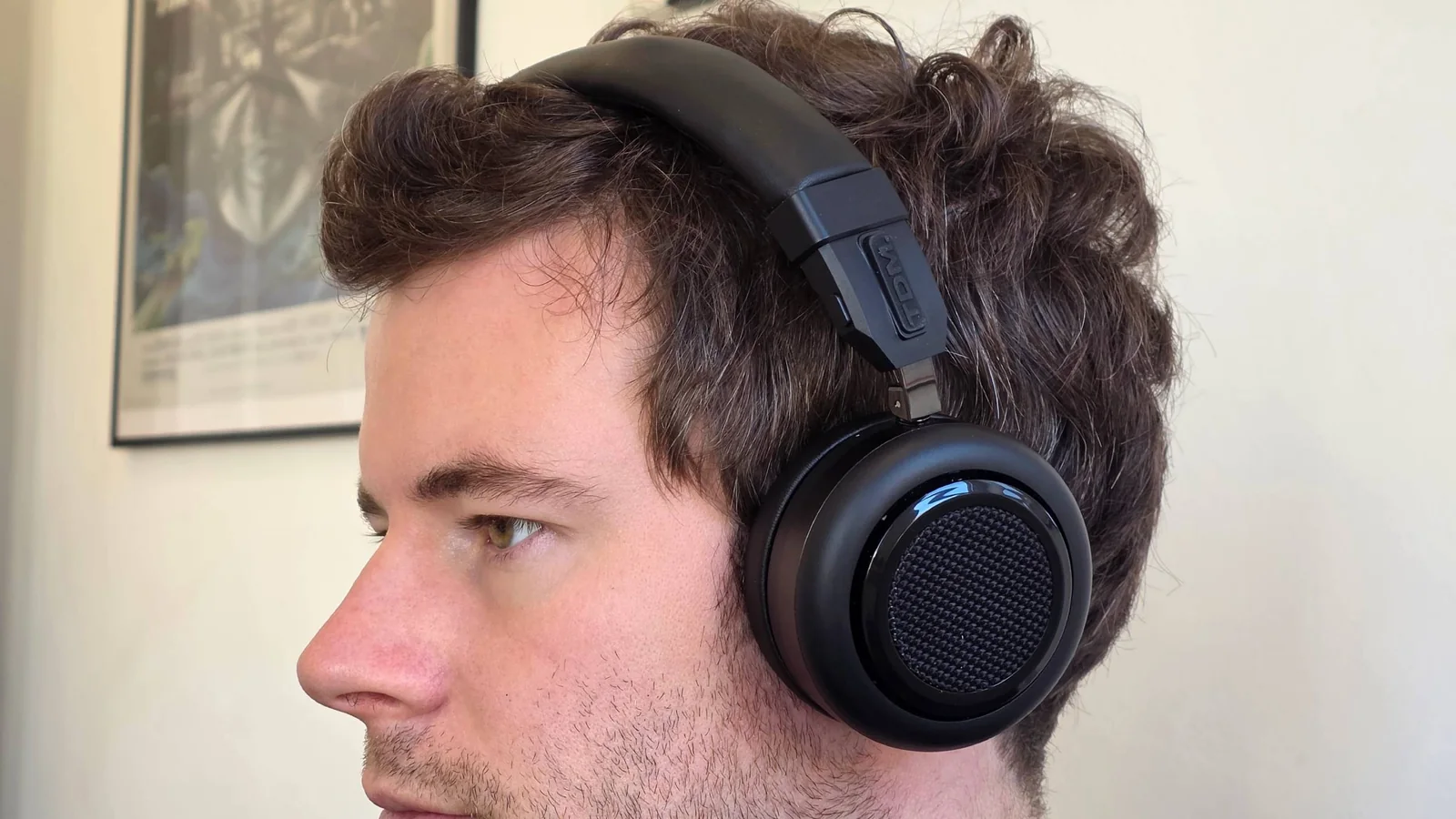
The defining characteristic of the TDM Neo is its dual-purpose nature. It begins as a pair of on-ear headphones and transforms via a twisting mechanism into an outward-facing speaker configuration.
As headphones, they feel fairly sturdy and comfortable despite weighing a heavier-than-average 340g. A reliable fit is maintained during standard wear, though vigorous activity like jogging is discouraged.
Twisting the Neo into speaker mode initiates an automatic audio switch when the cups reach a specific threshold, bringing band magnets close together to secure the frame.
The transformation lacks surgical precision; the two halves of the speaker can align differently with each twist, sometimes resting at divergent angles.
This shifts the weight distribution unevenly, leaving the speaker without a flat base. Consequently, the unit tends to rock or vibrate continuously if placed on an active surface.
One cup houses an LED indicator and an upward-facing USB-C port, posing potential vulnerability to moisture or debris in the absence of an IP rating. The other cup contains a 3.5mm jack, pairing button, volume rocker, and power button.
Despite these quirks, the unit remains compact enough to transport easily inside a standard bag without consuming excessive room.
TDM Neo review: Sound quality
Headphones and speakers use dual 40mm drivers
Speakers sound tinny and lack adequate bass
Headphones deliver a muddy, rumbly sound signature
The TDM Neo incorporates two separate sets of drivers to prevent room-filling audio drivers from deafening the listener when worn directly on the head.
This hardware split results in two distinct sound profiles, which unfortunately range from mediocre to poor depending on the active mode.
Loudspeaker mode proves especially weak, sounding thin and heavily reliant on harsh treble while omitting core mid-range presence and low-end depth.
Testing with varied acoustic instrumentation reveals a distinct absence of solid bass foundations during complex musical passages.
Acoustic guitars can take on a harsh, metallic character, while track harmonics are frequently masked or omitted entirely.
Fortunately, headphone mode performs somewhat better, avoiding outright distress while still falling short of premium audio standards.
Headphone bass is prominent though slightly loose and rumbly, complementing a balanced V-shape sound profile that proves significantly more pleasant than the external speaker output.
While mid-ranges recede slightly within the V-shape profile, vocals remain adequately legible above the low-end instrumentation.
With support limited to SBC and AAC codecs, high-resolution streaming is absent, and onboard EQ adjustments merely mask rather than solve fundamental acoustic limits.
TDM Neo review: Value
Combines two form factors into one device
Purchasing individual dedicated items costs less
Separate dedicated hardware offers superior performance
Much like foldable smartphones commanding a novelty premium, hybrid audio gear introduces extra engineering overhead reflected in the retail cost.
Consumers can easily purchase a top-tier budget Bluetooth speaker and a solid pair of budget headphones independently for less combined expenditure, outperforming the TDM Neo across every audio metric.
At $249 / £249, the pricing tier encroaches on established audio heavyweights like Sony and Bose. Unless a specific space-saving use case demands a 2-in-1 hybrid, the novelty fails to justify the investment.
Buy them if…
You only have space for a single hybrid device and require an integrated solution for travel or tight quarters.
You need a pair of headphones with unprecedented multi-day battery endurance.
Don’t buy them if…
Audio fidelity is a primary concern and you expect clean, dynamic sound separation.
You prefer hardware that functions without forced app registrations and user accounts.