There’s a fast-growing category of two-wheeled electric vehicles splitting the difference between high-end scooters and entry-level motorcycles, fresh bikes with avant-garde style but approachable performance.
The Maeving RM2 is high-style electric riding with a few compromises
It’s ultra-smooth and looks fantastic, but a few rough edges keep it from greatness
Design and Aesthetic Appeal
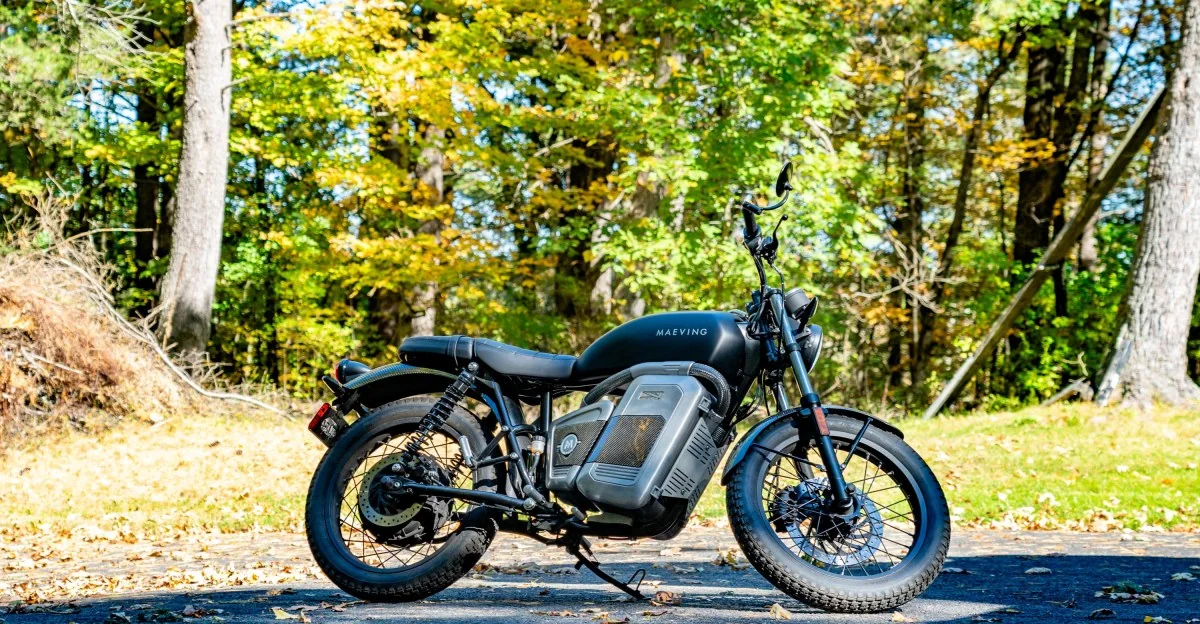
The Maeving RM2 stands out among similar concepts with wildly different attitudes. It has a distinctly retrofuturistic flair, bringing together the vibe of classic British motorcycles like the Triumph Bonneville or Royal Enfield Continental GT, just without the internal combustion.
The RM2 is one of the quietest, smoothest motorcycles available, featuring an innovative solution to common electric motoring problems. Unfortunately, its rough edges make the $10,995 asking price feel a bit extravagant.
UK-based Maeving offers motorcycles based on the same basic drivetrain and battery technology, featuring similar power output and range.
The RM2 features a longer saddle and beefier frame that allows for a passenger, differentiating it from solo-seat stablemates.
Performance and Handling
The RM2 features a 15-horsepower, 193-pound-foot electric hub motor integrated into the rear wheel. While it gets off the line reasonably well due to high torque, its modest power figure means it struggles to pick up speed dynamically.
The bike is officially rated for up to 70mph, but in testing it barely clipped over 63mph with the throttle held wide open.
Under specific aerodynamic tucks it could creep up to 67mph, but struggled to maintain 60mph on inclines.
That performance level makes riding with a passenger questionable, though the RM2 certainly retains plenty of distinct charm.
Riding electric offers a unique serenity, and the RM2 delivers exceptional peace and quiet during operation.
The hub motor design eliminates drivetrain noise completely, leaving only the sound of the wind.
However, the absolute silence of the EV layout brings previously masked noises to light, such as a persistent buzz from the front fender over bumps.
The source review also observed loose mirrors and front-wheel chatter over asphalt imperfections due to an unsettled, nonadjustable front fork.
Overall suspension tuning struggled with larger bumps, causing harsh impacts even with upgraded rear shocks.
Practicality and Charging
Mounting the heavy hub motor to the rear leaves room within the frame for a clean look, keeping total weight down to a manageable 320 pounds with a 30.5-inch seat height.
A forward-leaning battery unit houses a pair of removable packs that can be unlatched and carried inside for charging.
In practice, release mechanisms can be finicky, and the bike sometimes required multiple attempts to recognize when doors were shut properly.
Each 2.73-kilowatt-hour pack weighs 36 pounds and features a thin plastic handle, making indoor transport a notable workout.
While officially rated for 80 miles, higher speeds drop real-world Sport mode range closer to roughly 50 miles per charge.
Direct charging utilizes a proprietary connector, requiring an expensive separate adapter for standard public charging stations.
Conveniently, the faux-fuel tank houses a locking storage compartment sized adequately for small errands.
Verdict and Value
The RM2 leaves plenty of room for mechanical refinement, yet its striking aesthetics and easy riding dynamics retain strong appeal for short trips.
Long-distance road trips are impractical given the limited range and a four-hour charging window for an 80 percent replenishment.
With optional upgrades pushing testing samples past $13,000 from a $10,995 base, the financial proposition faces steep competition from traditional internal combustion alternatives.