The source review revisits the core titles in the Grand Theft Auto series ahead of future franchise releases, examining what made each entry remarkable upon its initial launch.
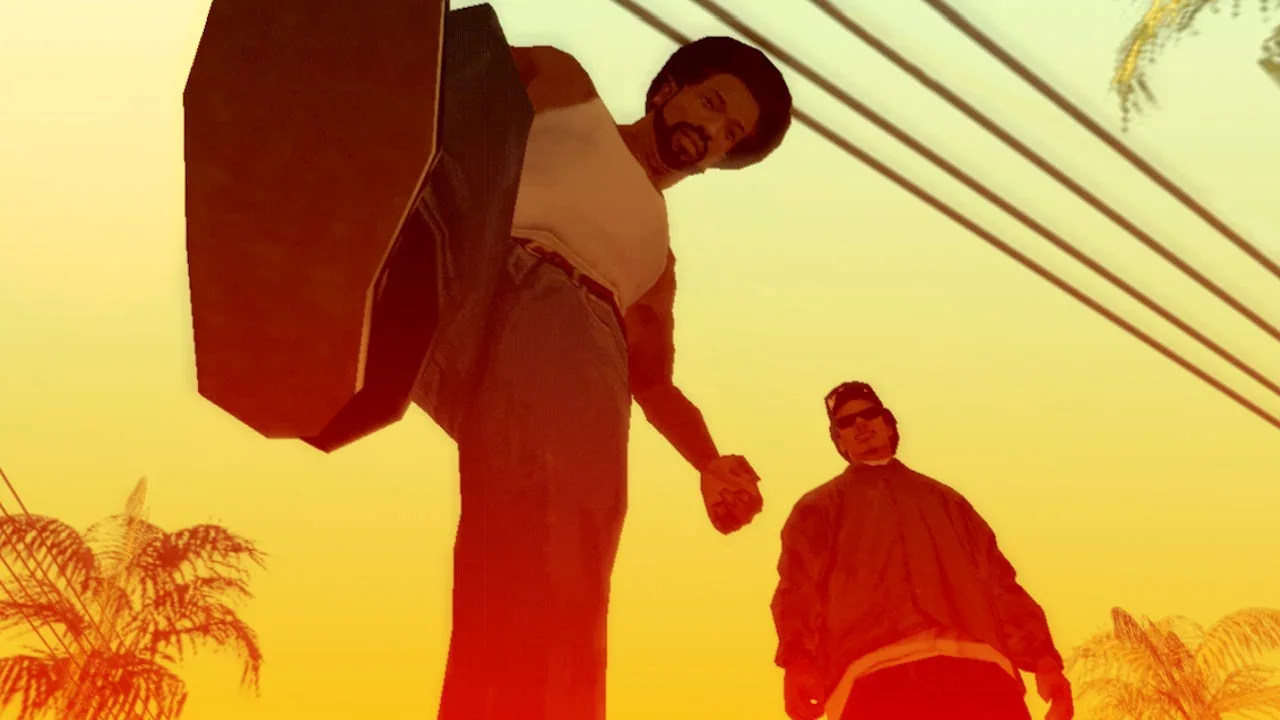
This retrospective focuses on Grand Theft Auto: San Andreas.
Released during a legendary banner year for video games in 2004 that included titles like World of Warcraft and Half-Life 2, San Andreas managed to emerge as the year's bestselling game by offering an experience that was rich, surprising, innovative, and essential.
While predecessor titles defined early 3D open-world mechanics and distinct stylistic eras, San Andreas pushed hardware limitations to their absolute maximum. Set in 1992, it expanded the formula exponentially by introducing an entire fictional US state featuring three full-scale cities.
An Expansive Open World
The in-game state covers an area roughly six times larger than Vice City. Its three major metropolises—Los Santos, San Fierro, and Las Venturas—feature distinct visual identities, climatic details, and architectural designs, all connected by rolling fields, forests, and desert landscapes.
Players can travel across the entire map without a single loading screen. Achieving this seamless streaming environment on the PlayStation 2 required innovative data management from the development team, constantly balancing hardware constraints to render the world in real time.
The game's vehicle roster expanded significantly to match the geography.
Density and Gameplay Depth
Beyond its sheer geographical scale, San Andreas is notable for the remarkable density of its side activities, mini-games, and systemic interactions.
The source review highlights the massive variety of activities available, from valet missions and trucking jobs to lowrider competitions and casino gambling, demonstrating an immense amount of optional content.
Vehicles handle with a distinct sense of weight and variety, numbering around 200 distinct types ranging from standard bicycles and semi-trailers to jetpacks and fighter jets.
The sheer breadth of activities allowed players to engage in house robberies, gym workouts, triathlons, and various unconventional pastimes, though it also led to well-documented controversies regarding hidden assets.
Regulatory scrutiny followed the discovery of locked-off content within the game's code, leading to temporary rating changes and retail bans in certain regions before subsequent revisions restored compliance.
RPG Mechanics and Combat Improvements
San Andreas introduced light role-playing mechanics, allowing protagonist Carl Johnson to modify his physical appearance and improve specific skills through repetition, such as driving, flying, and weapon proficiency.
Third-person combat controls received meaningful upgrades, notably introducing right-analog camera control, free-aiming capabilities, intelligent target prioritization, and basic stealth mechanics.
Soundtrack and Presentation
The game's presentation is further elevated by its audio design.
Featuring eleven radio stations and over 150 tracks, the soundtrack serves as a comprehensive historical audio tour of early 1990s hip-hop, funk, soul, and R&B, complete with dynamic song sequencing and DJ banter.
An extensive suite of cheat codes allowed players to drastically alter the gameplay rules, spawning vehicles, arming civilians, or modifying environmental physics.
A same-screen cooperative mode further expanded multiplayer options, enabling shared chaotic sessions.
The voice cast featured a mix of fresh talent for the lead role alongside recognizable professional actors in supporting parts, anchored by memorable performances from antagonists like Officer Tenpenny.
Conclusion
Grand Theft Auto: San Andreas cemented its legacy through unprecedented scope, exceptional attention to detail, and enduring replay value. While mid-2000s technical constraints are visible today, its overwhelming ambition remains unmatched.