The Progression Problem
The most satisfying part of any action role-playing game is the constant feeling of progression, watching an on-screen hero grow from a novice into a powerful force that mows through armies. However, the source review notes that Minecraft Dungeons 2’s aggressive level scaling robs the player of that experience.
Throughout the campaign, the amount of time required to take down each newly spawned foe remained near-constant. While players unlock more interesting abilities and weapons, the scaling system leaves the overall power fantasy flat.
Although this design choice allows players of vastly different levels to group up effortlessly without friction, it ultimately undercuts the motivation behind grinding for better gear.
Co-Op and Art Style
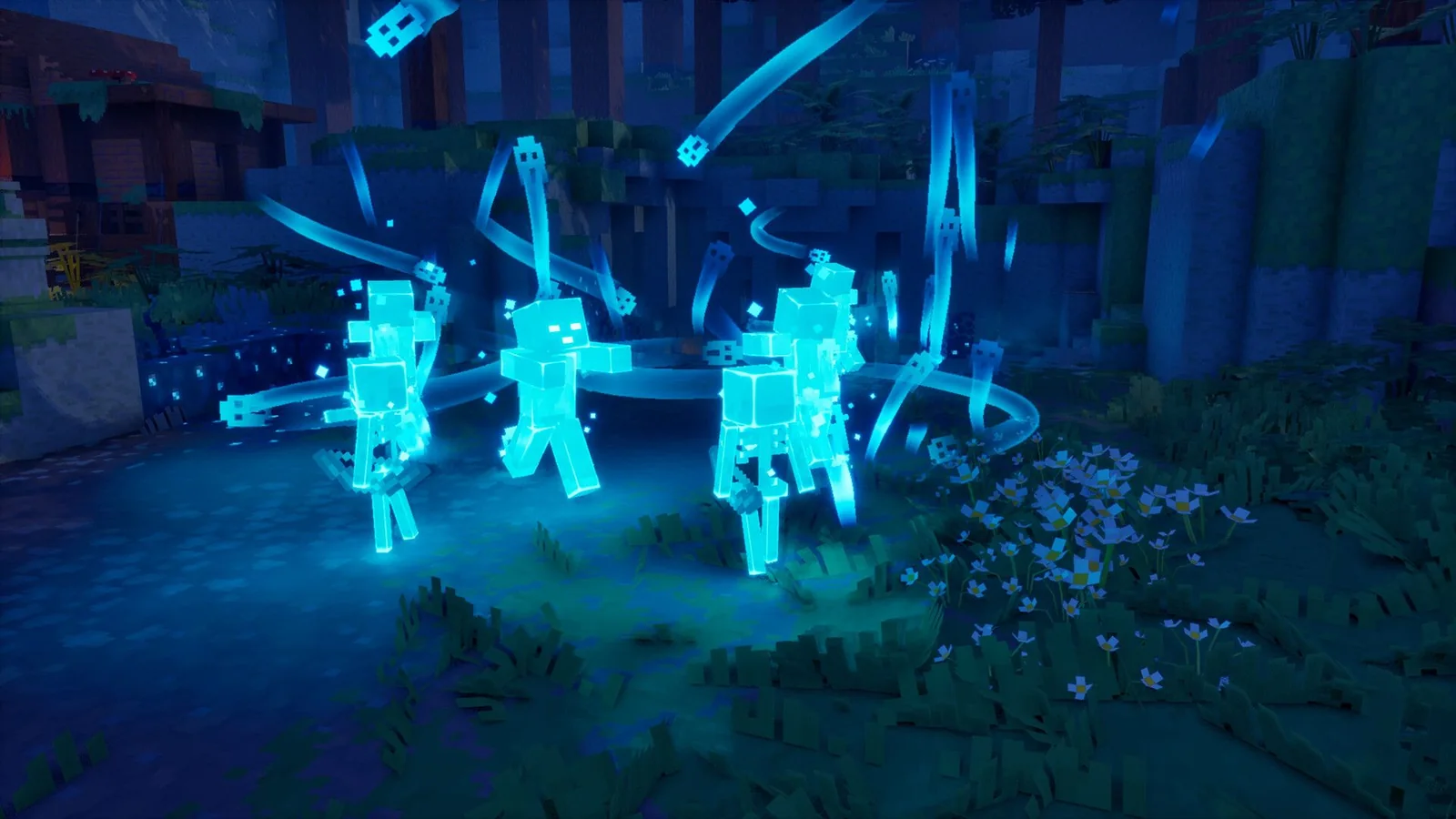
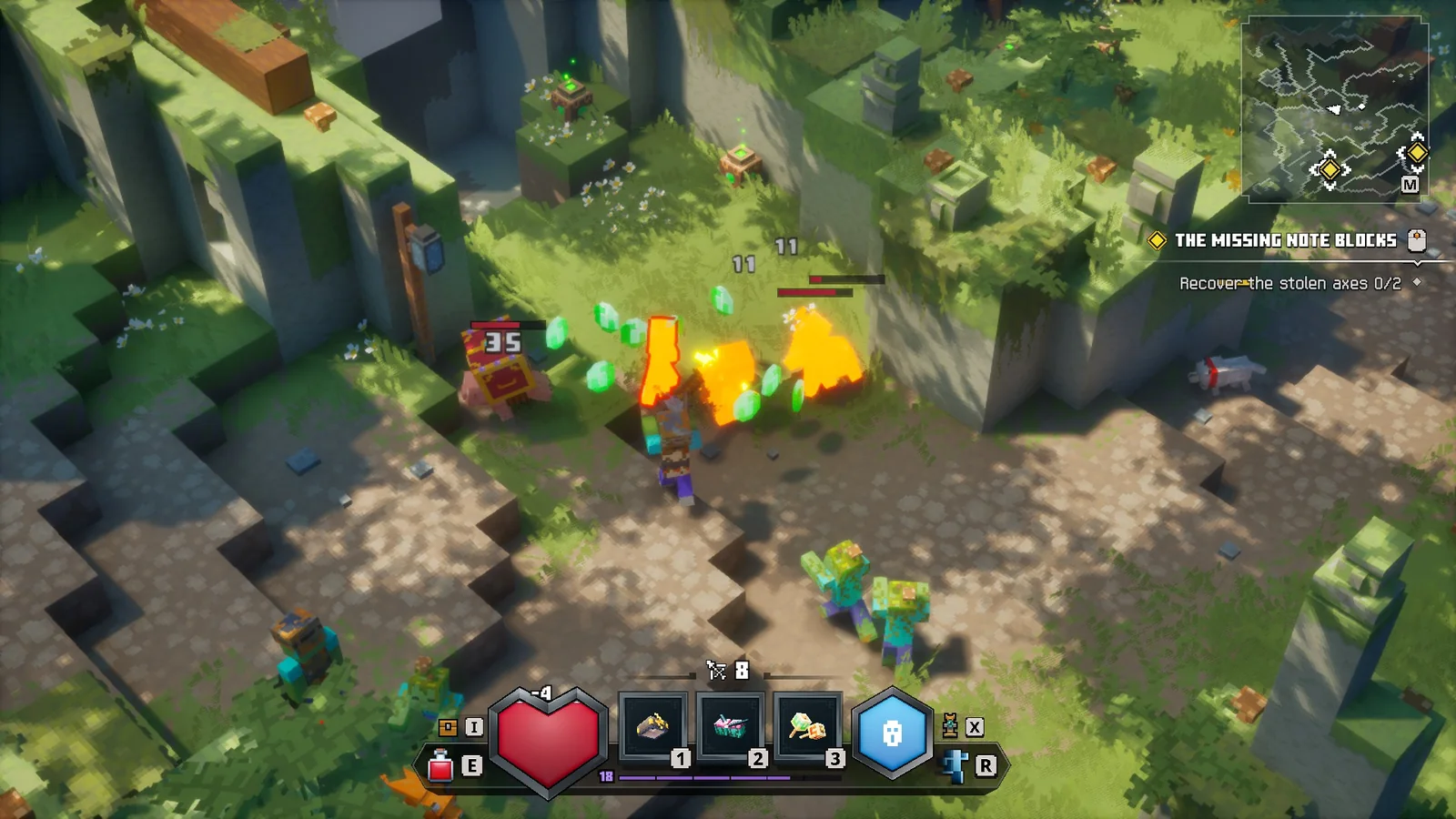
Despite progression grievances, the standalone spinoff successfully recreates the blocky look of the popular survival franchise with stylized twists, expressive lighting, and Pixar-like character animations.
The cooperative experience is a major highlight. Forming a group with up to three companions is straightforward due to seamless cross-platform connectivity, alongside rare couch co-op support that makes the title appealing for younger players.
Combat and Variety
For experienced gamers, however, the content can feel too straightforward. Enemy variety suffers, with most foes behaving identically by either firing projectiles from afar or rushing the player in large groups.
Combat often devolves into repeatedly pressing the attack button while occasionally dodging. Boss encounters follow a similar pattern, requiring players to chip away at large health bars while waves of repetitive low-level enemies spawn.
On paper, the combat systems do possess depth, offering melee and ranged attacks alongside three customizable active abilities governed by equipped items.
Weapon variety is reasonably strong, allowing players to choose between fast-attacking daggers, heavy war hammers, and slow claymores, with upgradeable enchantments adding minor modifiers like chain lightning.
Abilities run on a soul-meter filled by defeating foes, intended to establish a combat rhythm between melee, ranged strikes, and special abilities, though the lack of deep strategy blunts its impact.
While complex builds can be assembled, the aggressive enemy scaling largely neutralizes tangible power gains.
Exploration and Narrative
Marketing materials highlighted an expanded world, but the layout functions more like a linear corridor funneling players from one mission to the next rather than a true open world.
Optional dungeons and side quests are scattered across the map, but the source review indicates they offer little meaningful deviation from the main campaign path.
Visually, the game excels with bright color palettes and stylized art direction, even if the narrative remains purely functional and largely devoid of personality or memorable non-player characters.
The presentation relies entirely on a detached second-person narrator, offering little atmospheric depth.
The game also introduces players to a new dimension known as The Sift, featuring a distinct aesthetic and unique enemies, though it ultimately plays identically to the standard overworld.
Ultimately, the title delivers a serviceable experience tailored as an entry-level action RPG, though it frequently flirts with tedium.
Reviewers noted that given the brand's association with creativity, a more adventurous design approach would have elevated the experience.
Who Should Play
The title suits players seeking an accessible cooperative experience, thanks to smooth cross-platform capabilities that make teaming up effortless.
Action RPG veterans should look elsewhere, as the title lacks the mechanical depth found in genre staples like Diablo.
Due to repetitive encounters and a relatively short campaign, players looking for long-term engagement may lose interest quickly.
On the accessibility front, the game includes a default guidance trail, customizable subtitles with adjustable sizing and color, and font choices.
Additional options include multiple colorblind modes, a high-contrast mode, and customizable HUD color configurations.