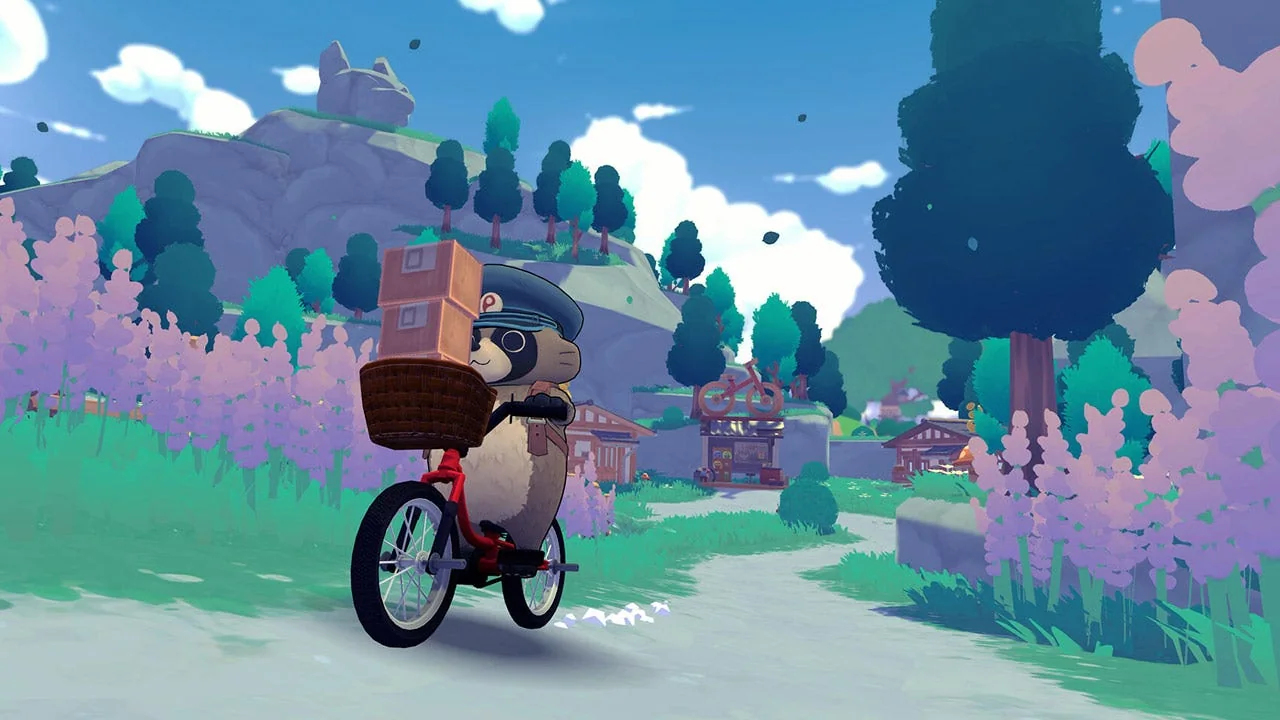
Tanuki: Pon's Summer, developed by Kyoto-based studio Denkiworks, offers a warm, nostalgic homage to summer in rural Japan. The game provides a relaxing reprieve, focusing on the simple, meandering days of the season.
A Summer in the Countryside
The game follows Pon, a tanuki tasked with restoring an aging shrine. After neglecting his duties, Pon is pressured by local gods to repair the grounds before a major festival. To fund these repairs, Pon takes a job as a mail carrier, navigating the island on his BMX bike. The structure follows a calendar-based month, perfectly capturing the relaxed pace of a summer break.
The island is dense and bike-friendly, featuring terrain designed for BMX tricks. Traversing the environment is a core pillar of the experience, as walking is inefficient and lacks the mobility provided by the bike.
Community and Gameplay
Each day begins with a Tetris-like mail-sorting ritual before Pon heads out to make deliveries. While the narrative is linear, the open-world design allows for non-linear delivery routes. Along the way, Pon interacts with a cast of eccentric islanders, including rival chefs and aspiring artists, whose personal stories form the heart of the game.
The relationships between these characters evolve as Pon assists them, shifting from skepticism toward the lazy tanuki to genuine community connection.
The Minigame Experience
The game utilizes a wide variety of minigames to facilitate these interactions, ranging from cooking and serving food to playing music and baseball. These tasks aim to evoke the feeling of childhood summer adventures.
However, the quality of these minigames is inconsistent. Some feel like monotonous chores, such as sanding logs or cutting bamboo, which can detract from the enjoyment of the core BMX gameplay.
While the variety is appreciated, the source review notes that these slower tasks often interrupt the momentum of the more enjoyable traversal mechanics.
BMX Traversal
The core of the experience is the BMX freestyle movement. Players can perform bunny hops, grinds, and tricks across rooftops and cliffs. While the trick system is relatively simple, stringing combos together provides a satisfying sense of freedom and skill expression.
The most frustrating moments occur when minigames linger too long, breaking the flow of the otherwise engaging bike exploration.
Shrine Decoration
The game includes an optional shrine decoration feature, allowing players to place furniture and decor collected during quests. While this may appeal to fans of simulation games, it lacks depth and feels somewhat extraneous to the main experience.
The campaign lasts approximately 10 hours. Players are advised to utilize manual saves frequently, as the autosave system can be unreliable, particularly in the presence of potential software bugs.