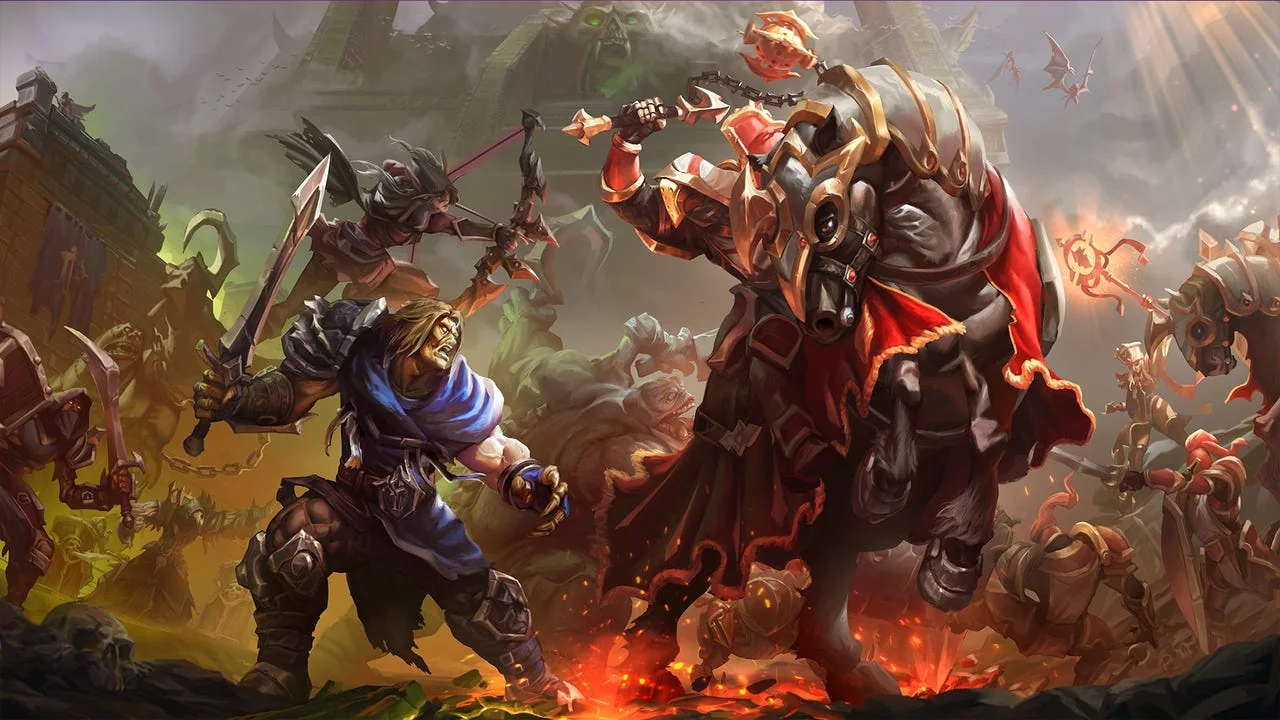
The "Forsaken Kingdom" expansion for Warcraft 3, released 23 years after its last expansion, "The Frozen Throne," has been surprisingly well-received, especially given the mixed reception of "Warcraft 3 Reforged." The source reviewer expressed enjoyment at returning to Azeroth's world, noting that Blizzard has not released new single-player RTS content since 2016. This expansion successfully blends classic Warcraft 3 elements with novel concepts, and while it may not reach the peak of earlier campaigns like "Reign of Chaos" or "The Frozen Throne," it offers a welcome return for fans.
This review focuses on three key additions introduced with "Reforged": the "Forsaken Kingdom" single-player campaign, the "Forsaken Paladin" multiplayer hero, and the "Definitive Edition" graphics update, which aims to improve upon the art style introduced in 2020. The campaign is the primary focus.
The Forsaken Kingdom Campaign
The "Forsaken Kingdom" begins with the "Last Days of Lordaeron" prologue, a four-mission campaign described as ambitious and engaging. It revisits the critical moment of Arthas's return from Northrend to confront his father, a significant event in Warcraft lore. Players follow the new hero, guard lieutenant Garek Bandarion, through besieged Andorhal and devastated Stratholme in a desperate effort to defend his homeland from the Scourge. This chapter concludes with a battle against Baron Rivendare and includes many subtle references to both Warcraft 3 and World of Warcraft.
The mission design largely adheres to the classic Warcraft 3 RTS formula, which the source reviewer found enjoyable. "The Siege of Andorhal" mission introduces a MOBA-inspired mechanic where capturing towers generates waves of friendly AI soldiers to assist in map progression. Another part of this mission required holding specific objectives to unlock unit recruitment, deviating from the standard base-structure requirement.
The post-purge Stratholme mission is structured as a winding dungeon crawl, requiring players to coordinate two separate groups: one led by Garek and another by the elven priest Ilastar Songbreeze. These groups operate independently for the initial half of the mission, creating strategic opportunities for one group to facilitate the other's progress. They eventually converge for a climactic final push, effectively concluding the scenario.
Following a predictable turn of events, Garek is defeated by Rivendare and subsequently resurrected as a free-willed Forsaken in the main campaign. Under Sylvanas's command and accompanied by Dark Ranger Anya, Garek embarks on a quest-driven adventure focused on establishing the Forsaken presence in the Undercity, located beneath the ruined capital. This segment is comparable to the "Founding of Durotar" epilogue campaign from the original game.
The main campaign spans three chapters, primarily focusing on Garek and Anya as they undertake quests throughout the Undercity and its environs. The progression system is extensive, featuring a level cap of 20 and a new gear-slot system reminiscent of "World of Warcraft" or "Diablo." However, the source reviewer desired more variety, noting that the campaign largely functions as an RPG, with only one mission after the prologue utilizing traditional RTS mechanics.
Regular troops are only available from mercenary camps, using the same currency that could otherwise be spent on hero gear. This led the source reviewer to primarily rely on the two heroes, Garek and Anya. New units, such as the Forsaken Deathguard, were found to be fragile and less cost-effective than permanent hero upgrades. The ability for Garek and Anya to respawn freely at map altars (excluding scripted events) encouraged a strategy of repeatedly engaging challenges with heroes rather than building up a supporting army.
The campaign's writing, while not groundbreaking, possesses a classic Blizzard style, described as grittier and edgier than contemporary "World of Warcraft." The opportunity to explore the Undercity from a fresh perspective and witness significant lore events, such as the emergence of the Scarlet Crusade, was appreciated. Garek's narrative arc, culminating in his transformation into the first Forsaken paladin, offered a satisfying emotional conclusion.
Definitive Edition Graphics
"Forsaken Kingdom" introduces a third, new graphical style for Warcraft 3, known as the "Definitive Edition." Initially, the source reviewer was not highly impressed, particularly with its appearance during zoomed-in cutscenes. Many textures appeared flat, matte, and somewhat unfinished, with visible pixelation on some armor details, especially noticeable on certain units within the campaign.
However, during a custom skirmish match against AI, the intent behind the "Definitive Edition" graphics became clear. When playing zoomed out at a fast pace, the source reviewer noted that the visuals closely resembled the original 2003 graphics, but with enhanced fidelity. This "magic trick" makes units and buildings appear as remembered, suggesting it will likely become the preferred graphical option for multiplayer and custom games for most players.
A significant drawback is the uneven distribution of these graphical enhancements. While the "Forsaken Kingdom" campaign is exclusively playable with the "Definitive Edition" graphics, and multiplayer/skirmish modes offer a choice between Classic, Reforged, or Definitive Edition, the original "Reign of Chaos" and "Frozen Throne" campaigns only support Classic or Reforged visuals. This limitation, preventing the use of "Definitive Edition" in the classic campaigns, was identified as the most disappointing aspect of the package.
The Forsaken Paladin Hero
Another major addition, particularly impactful for multiplayer, is the "Forsaken Paladin," Warcraft 3's first new tavern hero since 2004. The hero, based on Garek, occupies a unique thematic space given the existing Human Paladin and Death Knight heroes. As an undead neutral hero, the Forsaken Paladin can only heal living units, making him ironically less useful for Undead faction players. His abilities include a mobile dash that slows enemies, strong melee attacks as a strength hero, and a "Consecration"-like ability that damages undead foes while healing friendly living units in an area.
The Forsaken Paladin also features a passive aura that mitigates magic damage and boosts incoming healing. His ultimate ability is an area-of-effect purge and stun that heals nearby friendly units, providing additional healing and a temporary damage buff if a debuff is removed. This hero introduces a playstyle reminiscent of "Dota" and is expected to offer strong counterplay against specific builds, though the source reviewer suggested he might currently be slightly overpowered.
Additionally, the maximum number of units in a control group has been doubled across all game modes. This is a significant change for a legacy title, which some veteran players may find controversial, but the source reviewer views it as a positive enhancement overall.