Oscal Pilot 8: 30-second review
Rugged phones usually make one promise: they will survive. Everything else after that tends to be an afterthought or, on some devices, even a distraction.
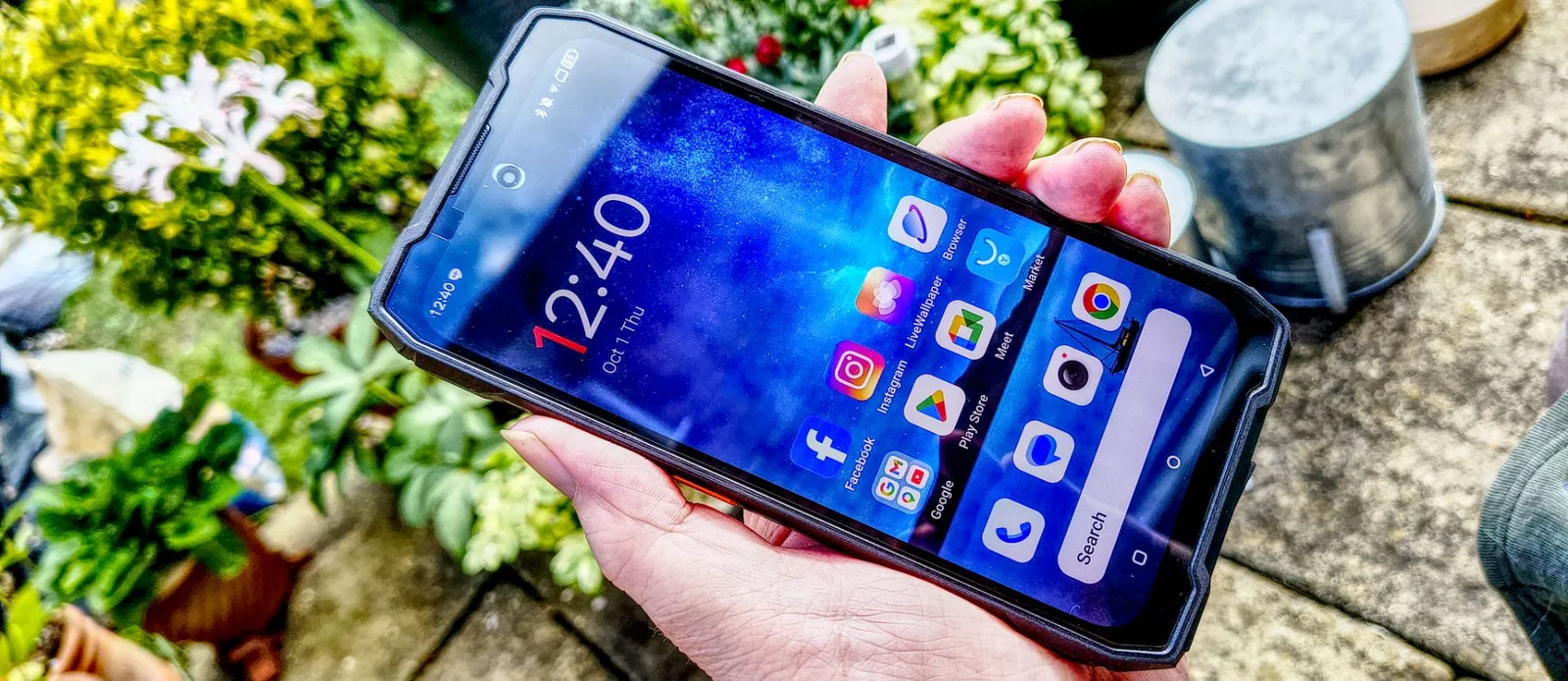
The Oscal Pilot 8 tries to change that narrative somewhat, while remaining reasonably tough. It uses a new Qualcomm Dragonwing QCM6690 chip instead of the usual MediaTek SoC. It includes a 6.83-inch AMOLED screen, WiFi 7, and a 10,000mAh battery. But its best trick is fitting all that tech into a body just 17.9mm thick and weighing just 389g.
That makes for a practical, rugged design that fits in a normal pocket, and with a 108MP primary camera, it can capture detailed images and 4K video at up to 60fps.
Given these mostly positive aspects, it's reasonable to expect a high price, but the quoted launch price was just $356.99. That was a special offer, and the retail cost is higher, but it still isn’t expensive for what is a decent specification.
Is this one of the best rugged phones for those out in the field who have to choose between durability and performance? Maybe, but prospective buyers should carefully weigh its specs before parting with cash.
Oscal Pilot 8: price and availability
How much does it cost? $360/£350/€405
When is it out? Available now from selected outlets
Where can you get it? Primarily available through specialized online storefronts
The device launched globally with an initial introductory price before settling into a standard list price for its single 12GB RAM and 256GB storage configuration.
The primary drawback regarding distribution is that this model is not widely listed on official regional brand portals or mainstream retail networks like Amazon.
Availability has largely been limited to international shipping platforms, translating to roughly $360 in the US, £343 in the UK, and €402 for European buyers.
Considering the built-in SoC, AMOLED display, and 108MP camera, the asking price remains remarkably competitive for a niche hardware category.
The manufacturer appears to be manufacturing the device in smaller batches compared to mainstream handsets, which may account for its restricted global footprint.
Compared to other lightweight rugged designs, there are a few phones with a similar profile in terms of performance and portability.
Alternative options from competitors like Oukitel feature MediaTek Dimensity processors and vary widely in pricing, often demanding a steeper financial investment for extra storage or thermal capabilities.
Additional specialized versions of the Pilot 8 featuring thermal cameras or satellite communication are planned, though standard pricing for those variants remains unconfirmed.
Given recent price increases across the mobile market, the Pilot 8 represents a solid deal, provided buyers can secure reliable shipping.
Oscal Pilot 8: Design
Clean design
No wireless charging
Bright AMOLED display
The Pilot 8 measures 178.7 by 85.4 by 17.9mm and weighs 389g. For a phone packing a 10,000mAh battery, that is relatively slim and lightweight by rugged phone standards.
The frame is constructed from aluminium alloy with reinforced corners made of stiff TPU polymer. The back panel uses transparent acrylic, offering a clear view of internal-styled graphics.
Given the flat layout of the rear panel, wireless charging might be expected, but the build budget unfortunately omitted this capability.
The phone carries IP68, IP69K, and MIL-STD-810H certifications. However, the official drop rating is capped at 1.2 meters, which sits on the lower end for specialized rugged devices.
Many competing models boast 1.5-meter drop resistance, meaning clumsy users might need to exercise extra caution despite the reinforced frame.
Screen protection is handled by CSG KK9 glass, advertised to offer enhanced scratch resistance compared to standard glass panels.
The device features a 6.83-inch AMOLED panel running at a 1280 x 2772 resolution, yielding a sharp pixel density of 446 ppi.
The display supports a 120Hz refresh rate alongside a 240Hz touch sampling rate and Widevine L1 certification for high-definition media streaming.
While peak brightness claims of 2000 nits appear overly optimistic in practical usage scenarios, the screen easily maintains strong legibility under direct sunlight.
Outdoor visibility is significantly superior to that of standard consumer smartphones.
The operating system includes practical outdoor-focused software additions, such as an integrated function to clear dust and moisture from the speaker grill.
Additional utilities include glove-touch compatibility, rain-mode touch rejection, and customizable physical shortcut keys for emergency signals, flashlights, or the camera.
The physical rubber cover protecting the USB-C port feels somewhat flimsy and vulnerable to tearing off with prolonged heavy use.
Oscal Pilot 8: Hardware
Qualcomm QCM6690
256GB of UFS 2.2 storage
10,000 mAh battery
The inclusion of Qualcomm's QCM6690 processor serves as the core highlight, offering an octa-core layout with an Adreno 7-series GPU and built-in enterprise mobile features.
Clock speeds reach up to 2.9GHz, matching manufacturer specifications.
Benchmark testing confirms the chip operates as a capable upper mid-range processor rather than a true flagship.
Manufacturer-quoted benchmark scores compare favorably against older entry-level targets, aligning closely with modern mid-range competition.
The device features 12GB of physical RAM, though marketing materials heavily emphasize a total figure achieved by dynamically allocating storage space as virtual RAM.
Storage is capped at 256GB utilizing older UFS 2.2 standards, supplemented by a microSD expansion slot supporting cards up to 2TB.
Because the expansion slot shares space with a secondary SIM, users must choose between dual physical lines or expandable storage, though built-in eSIM support helps mitigate this limitation.
In order to maintain a slim, pocket-friendly profile, the battery is limited to 10,000mAh—smaller than massive ultra-rugged bricks, but double the capacity of standard consumer phones.
The phone supports 55W wired charging alongside 5W reverse power sharing for accessories, boasting exceptional standby endurance metrics.
Power delivery tests indicate that high-wattage third-party charging bricks may not negotiate maximum charging speeds, and regional retail packages may exclude wall adapters.
Overall hardware composition is strong, though minor logistical quirks prevent a flawless experience.
Oscal Pilot 8: Cameras
108MP and 20MP on the rear
50MP on the front
Three cameras in total
The camera array includes high-resolution sensors for both standard photography and specialized low-light tasks.
The optical lineup consists of a 108MP Samsung ISOCELL HM6 primary sensor, a 20MP Sony night vision camera backed by infrared emitters, and a 50MP front-facing shooter.
The dedicated night vision sensor performs well within the operational boundaries of its infrared illumination range.
Standard review samples exclude thermal imaging hardware, focusing instead on conventional high-resolution optical captures.
Employing a 50MP sensor for selfies provides ample detail for high-resolution self-portraits and video conferencing.
Video recording supports up to 4K resolution at 60fps across both front and rear modules.
Software performance presented occasional hiccups, with the camera application locking up under specific conditions and requiring a full device restart.
Image processing intervals between consecutive shots proved slightly longer than expected given the hardware specifications.
Routine cache clearing fails to resolve these minor software latency quirks, pointing toward necessary firmware optimizations.
Overall photographic output remains quite good despite minor software interruptions.
Oscal Pilot 8: Performance
Comparative analysis against devices running competing mid-range silicon highlights competitive processing power and energy efficiency.
The Qualcomm processor holds its ground well against alternative mid-tier platforms, delivering smooth everyday operation.
While it sits behind ultra-premium flagship silicon, the overall execution easily handles demanding daily workflows.
Battery efficiency is a standout trait, easily surviving extended intensive benchmark tests and pointing toward multi-day endurance under normal usage conditions.
Achieving this battery profile within a relatively lightweight 389g chassis adds significant practical value.
Users must ensure they source a fully compatible high-speed charger to benefit from maximum power input capabilities.
Oscal Pilot 8: Final verdict
If pricing remains stable and availability broadens, the Pilot 8 presents an attractive option for field workers looking for strong performance without excessive bulk.
Potential buyers should note the modest drop thresholds, optimistic screen brightness claims, and uncertain long-term software update schedules.
Major software version upgrades are unlikely beyond the shipping operating system, though security patches may be issued intermittently.
Such update policies are common among specialized manufacturers, but worth keeping in mind for multi-year device retention plans.
Ultimately, the device delivers a compelling package of performance, display quality, and camera capabilities at an aggressive price point.
Future specialized variants focusing on thermal imaging and satellite communications will expand the lineup's versatility.
Buy it if...
You need 4K video recording capabilities across both primary and front-facing sensors to document field operations, keeping storage limits in mind.
You require a practical outdoor handset with reliable water and dust resistance that avoids the extreme weight of oversized rugged bricks.
Don't buy it if...
You require absolute maximum battery capacity for multi-device power sharing, as bulkier alternatives provide larger reserves.
You rely on dedicated macro photography for close-up inspection shots, which this sensor configuration does not natively support.