Introduction to AI Visibility
When a competitor appears in an AI answer and a brand does not, the immediate challenge involves identifying the specific queries used, understanding user intent, and determining whether the assistant referenced a competitor website, an independent review, or neither.
Which answer?
What was the person asking?
And did the assistant reference your competitor's website, an independent review, or neither?
Those questions shaped this evaluation. The source review compared Saily eSIM with two of its close competitors, Airalo and Holafly, aiming to find actionable insights and evaluate whether the Brand Radar data holds up under practical usage.
The evaluation focused primarily on the existing AI Visibility Index, moving from combined-platform reports to ChatGPT-specific checks using recent data.
Plans and Pricing Structure
Brand Radar separates purchases into distinct modules. The AI Visibility Index lets users search data Ahrefs has already collected, while Custom Prompts run selected questions from the moment tracking is initiated. Brand Radar is sold separately from the wider Ahrefs SEO suite.
Ahrefs pricing breaks down options into monthly US-dollar rates, though expenses scale depending on usage needs.
Existing Lite, Standard, and Advanced subscribers receive base monthly allowances of custom checks, providing a small starting allocation without requiring immediate full index access.
A notable limitation is that checks are not fully interchangeable with prompts. Each platform, location, and scheduled run consumes allowance at varying rates. For example, Claude consumes multiple checks per execution, causing its allowance to disappear significantly faster.
For agencies researching different brands every week, the index serves a clear purpose. However, for a small business following a limited set of buying questions, paying for the entire archive before utilizing smaller allowances may feel premature.
Core Index and Visibility Metrics
Entering an eSIM provider along with key competitors into the overview opens a consolidated dashboard.
Mentions, citations, estimated impressions, and AI Share of Voice are displayed alongside platform comparisons. The index incorporates historical data to explore, allowing users to investigate competitors before committing to ongoing tracking.
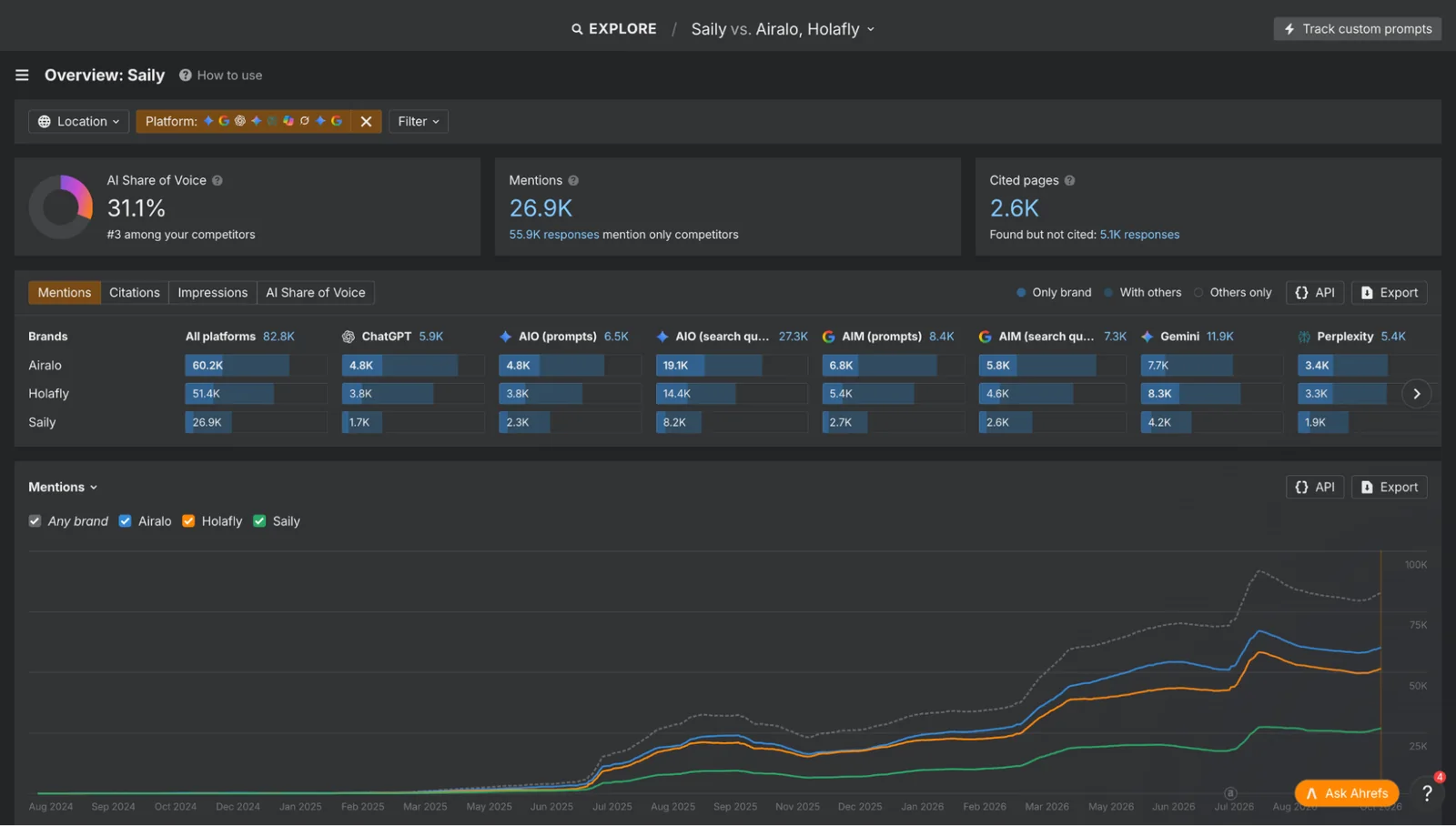
A cross-platform comparison illustrates relative market presence.
Smaller mention footprints help direct investigations, while performance histories and associated topics bring broader brand comparisons into sharper focus.
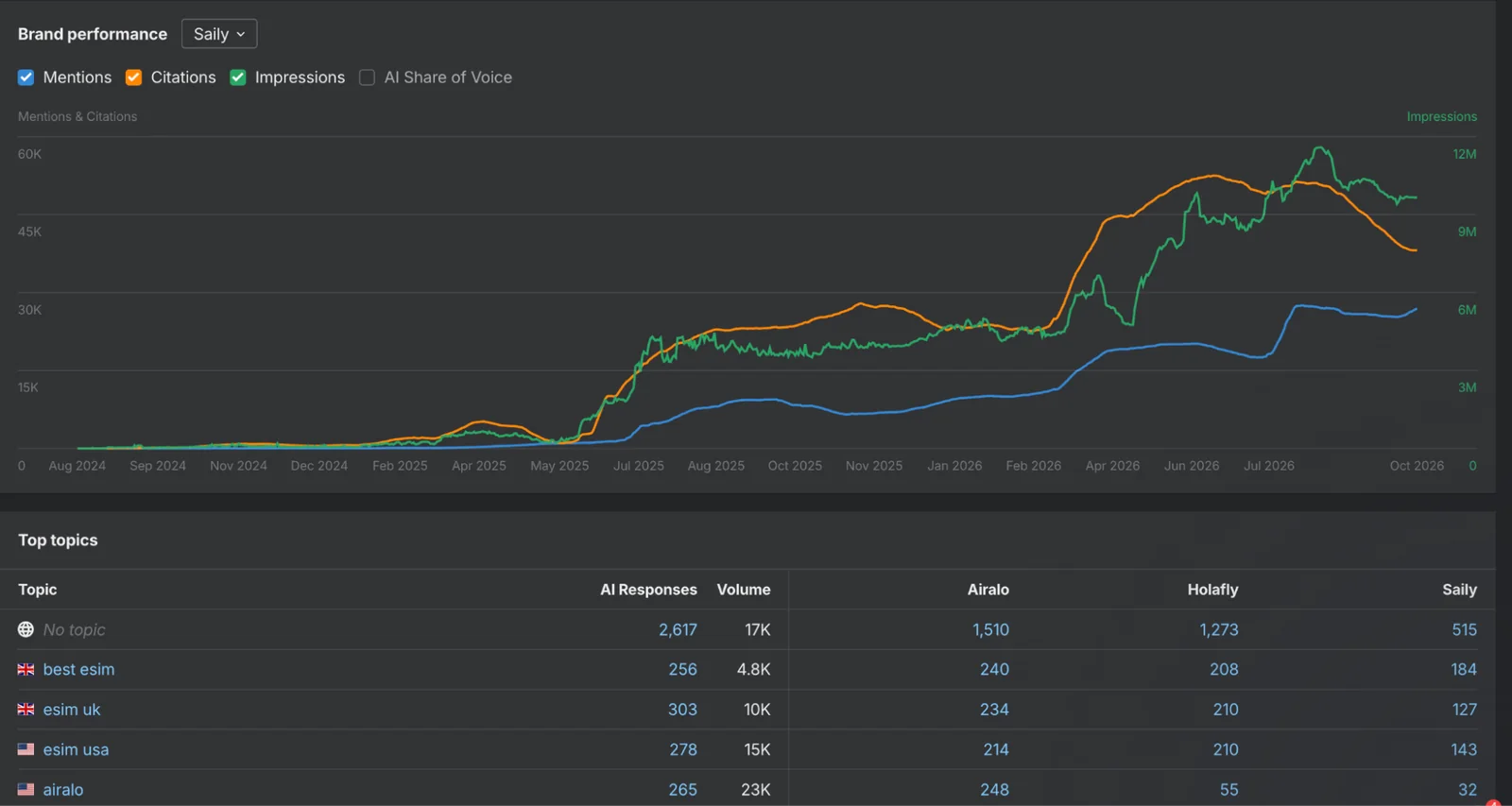
Performance trends and topic breakdowns successfully narrow broad brand evaluations.
Users must understand the underlying sample methodology, which combines search-informed questions with semantic expansion. These metrics rely on modeled usage estimates applied to search volumes rather than private user conversations.
While this approach avoids treating standard search demand directly as AI demand, it remains a model. Rising visibility lines do not automatically guarantee increased customer acquisition, and dataset changes can impact comparisons.
Competitor Gaps and Citations
Isolating answers that mention competitors while excluding a specific brand transforms intimidating reports into actionable reading lists, helping teams investigate content gaps rather than guessing competitor strategies.
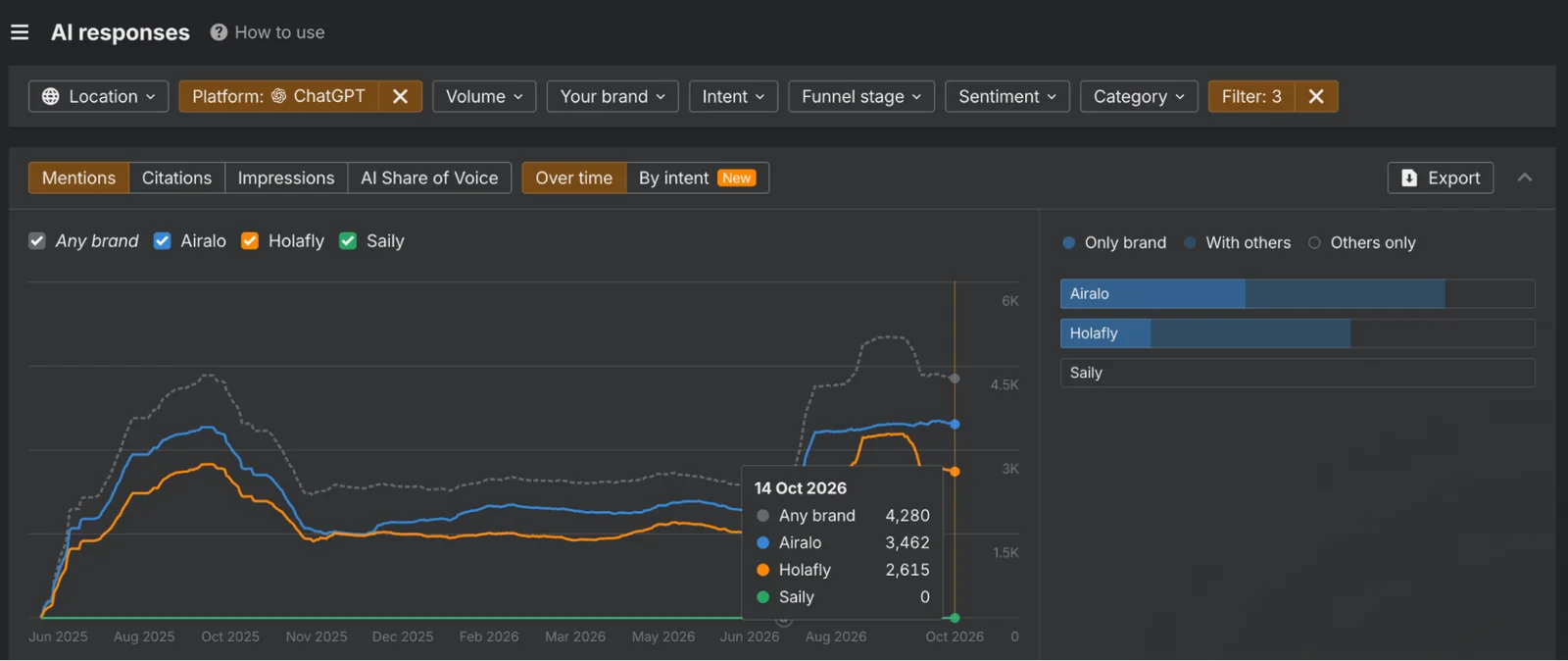
Filtered views help isolate specific brand visibility without skewing overall market reports.
Inspecting specific prompt responses reveals stored interactions and highlights how queries can sometimes mix domestic services with travel data, demonstrating that relevant prompts cover diverse consumer needs.
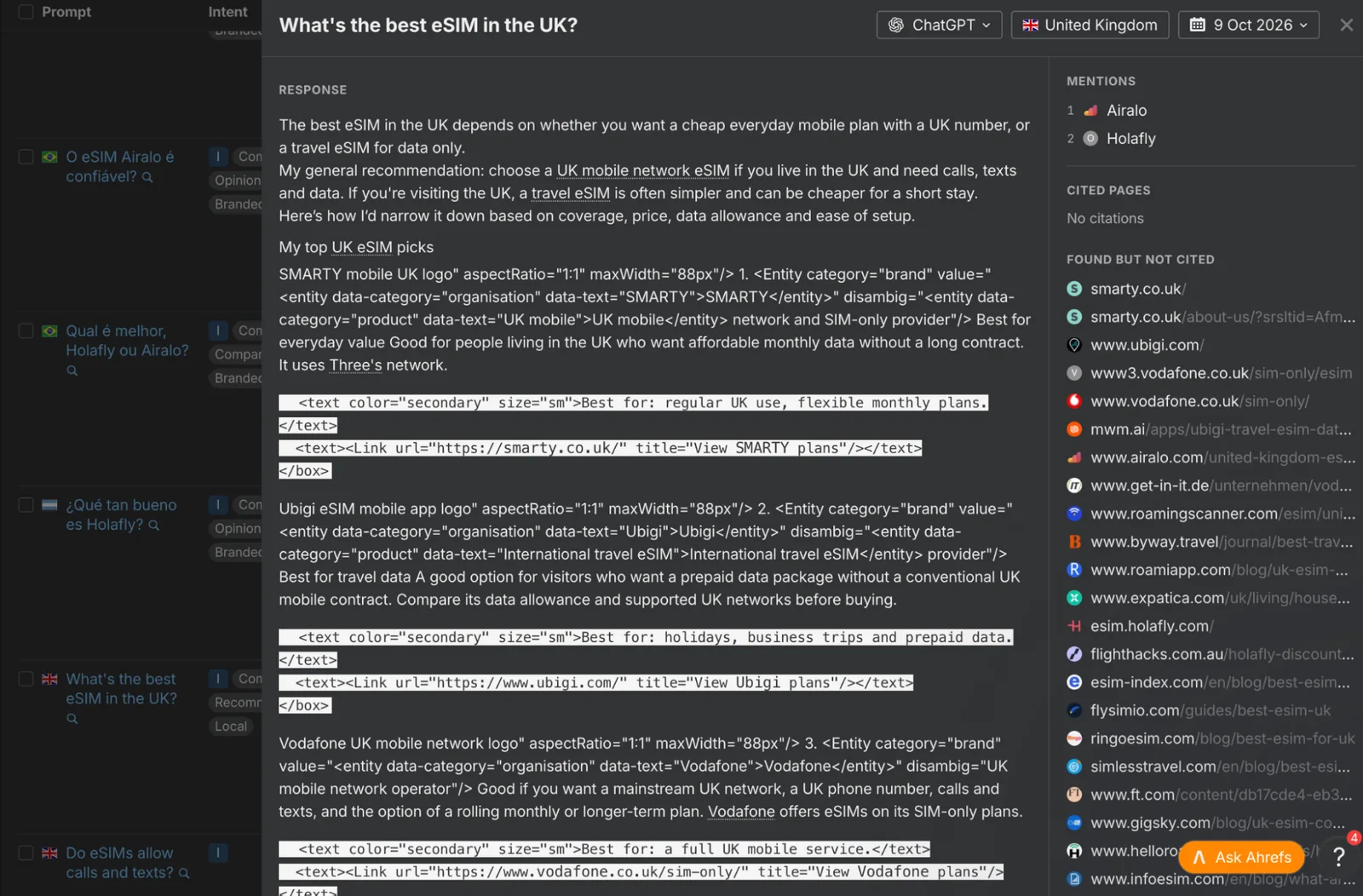
Individual responses clearly separate tracked-brand mentions from cited and uncited sources.
Some interface friction exists, as parts of answers may display raw markup. Separating citations from pages found but not cited proves helpful, even if the presentation occasionally requires tidying.
Editorial judgment remains essential. A missing brand warrants investigation when questions fit its product profile, though a mention does not automatically equate to a positive recommendation.
AI citation analysis
The Cited pages report groups results into formats like articles, landing pages, and reviews, providing a strong starting hypothesis before inspecting individual URLs.
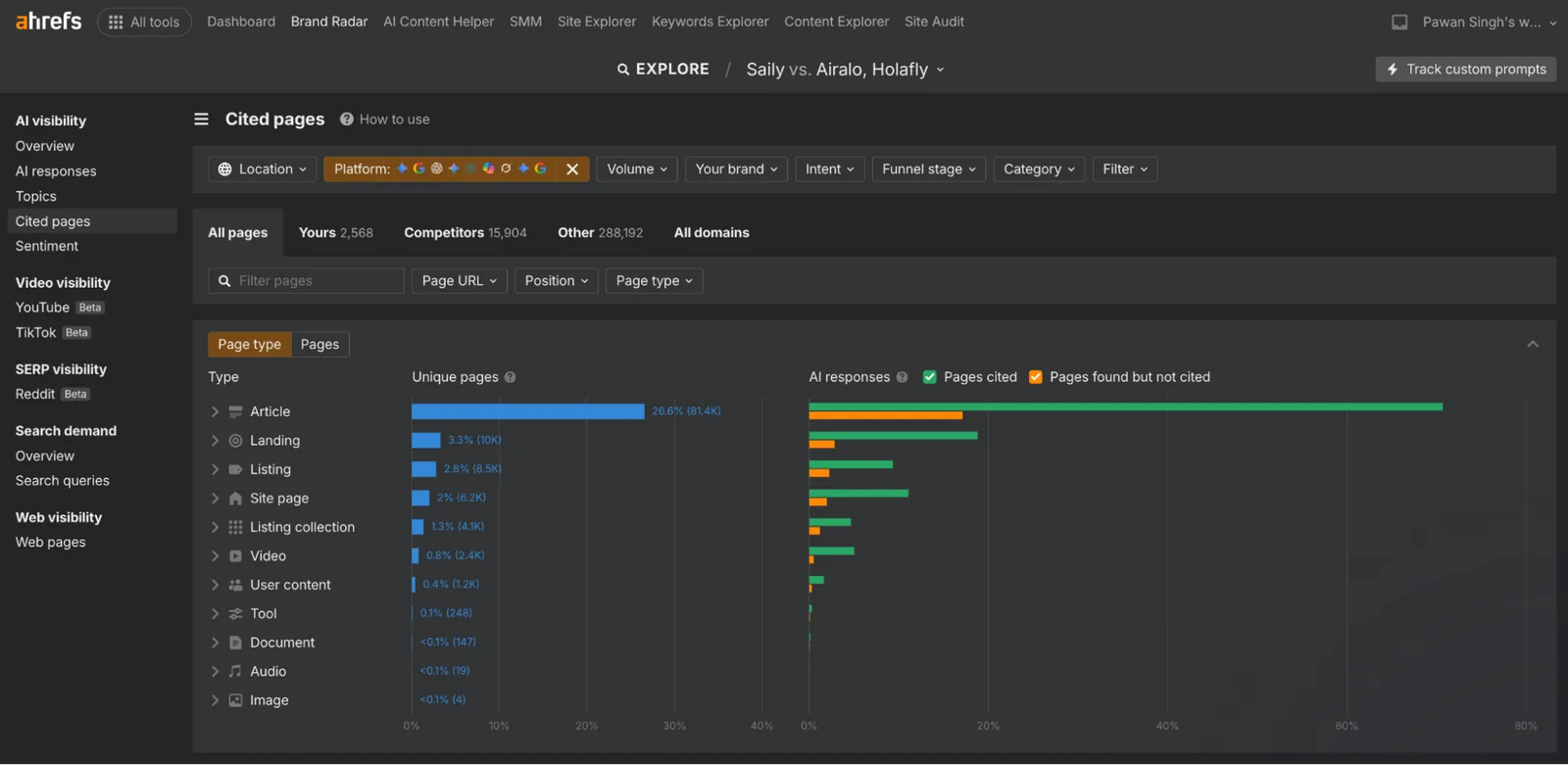
Page-type groupings offer clear starting points for source material investigations.
Switching to individual pages clarifies the distinction between discovery and citation. Pages found during answer production differ from those explicitly cited, ensuring users do not mistake frequent retrieval for visible credit.
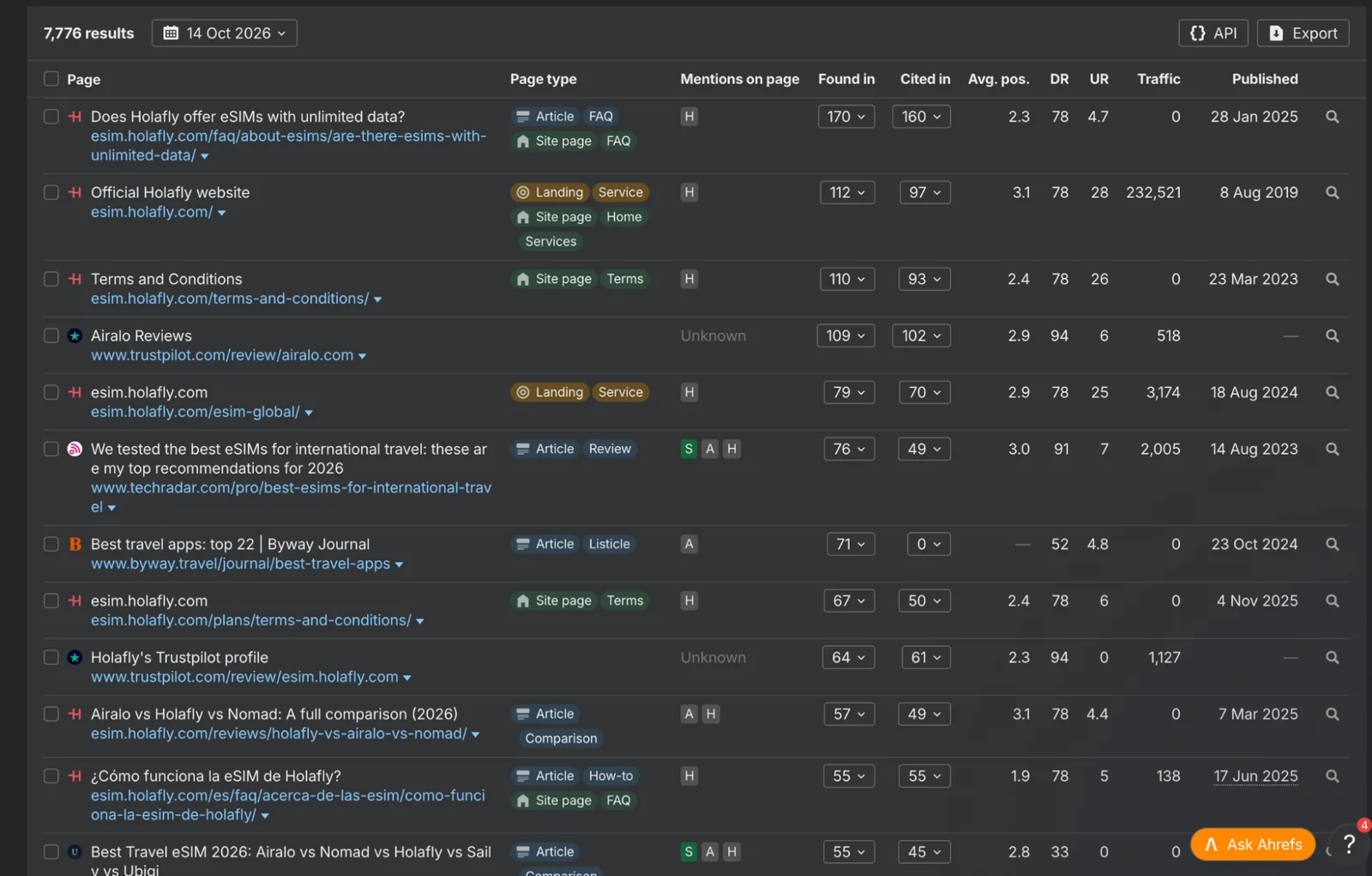
Individual URLs highlight the variance between retrieved pages and cited pages.
External guides and review listings often appear alongside provider-owned pages, demonstrating that roundups can mention products without assistants carrying those mentions directly into final user responses.
This provides a valuable research lead for inspecting coverage and identifying omitted information, though inclusion on a cited page does not guarantee future AI recommendations.
Sentiment Tracking and Custom Prompts
A native Sentiment report adds a crucial analytical dimension by evaluating how AI platforms describe brands when they are mentioned.
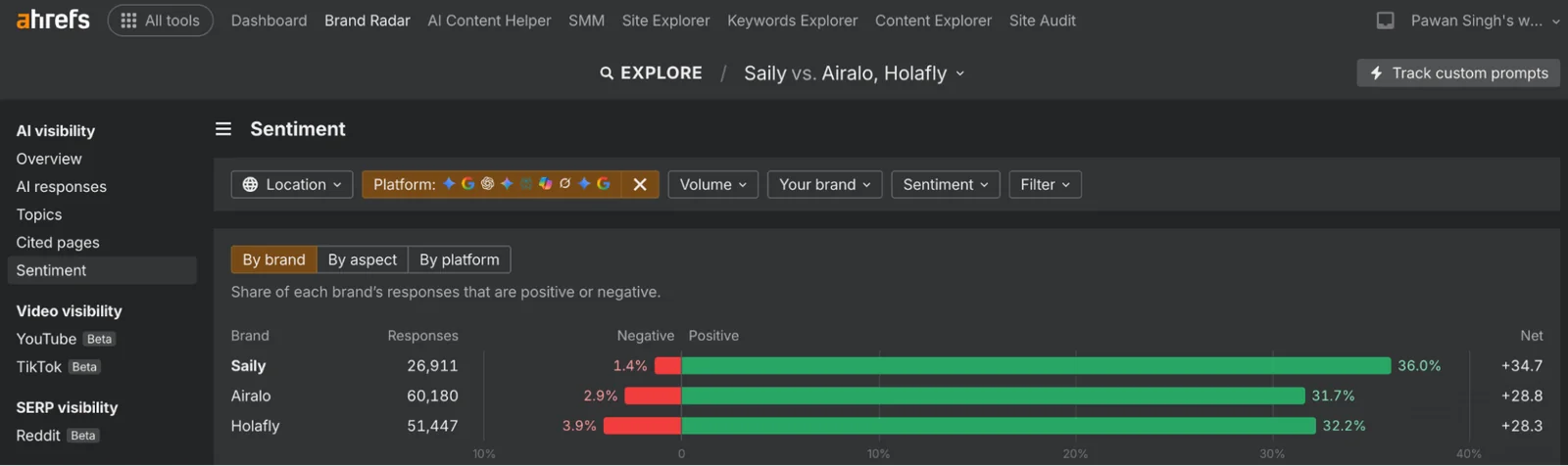
The sentiment report provides clear visibility into brand descriptions.
Lower mention volumes can occasionally coincide with higher positive-response shares, highlighting that frequency and sentiment are distinct challenges requiring different strategic responses.
While sentiment classifications require careful manual verification, the reports successfully identify answers worth reading for deeper textual analysis.
Custom prompt tracking
Custom Prompts allow users to track specific questions across chosen platforms and locations, organizing queries with tags and scheduling automated checks.
For supported platforms, Brand Radar exposes fan-out queries that suggest useful supporting topics generated during assistant searches.
Platform coverage requires careful inspection, as certain tools like Claude are restricted to custom prompts while others have paused collection states.
AI research tools
Additional reports cover YouTube transcripts, Reddit visibility, and TikTok beta analytics, offering ways to investigate surrounding web coverage.
These surrounding reports involve separate plan conditions, serving as supplementary research avenues rather than proof of direct AI influence.
Interface assistants and automation tools provide further support for deep analysis and workflow execution.
Is Ahrefs Brand Radar worth it?
The strongest argument for Brand Radar lies in its seamless transition between competitive overviews, individual answers, and source materials, revealing nuanced stories behind visibility metrics.
For agencies and teams investigating multiple competitors, entity matching and depth justify the investment, especially when monitoring non-distinctive brand names.
Smaller businesses with limited question lists should opt for restricted allowances or manual checks to ensure costs remain proportionate to expected utility.
Ultimately, Brand Radar simplifies evidence inspection, but converting insights into effective content and visibility strategies depends entirely on subsequent user execution.
What does Ahrefs Brand Radar do?
Brand Radar researches brand mentions, citations, and estimated visibility across supported AI platforms, enabling competitor comparison and custom tracking.
Is Brand Radar included in an Ahrefs subscription?
Brand Radar is included in Lite plans and higher with limited custom prompt allowances, though full AI Visibility Index access requires a separate purchase.
What is the difference between the index and Custom Prompts?
The index provides an immediate searchable database, while Custom Prompts schedule ongoing answer collection from the point of setup onward.
Does Brand Radar track Claude and Grok?
Claude is supported via Custom Prompts but excluded from the public index, while Grok collection remains temporarily paused with historical results preserved.
Does AI Share of Voice measure traffic?
No, it compares modeled impression shares rather than counting direct visits, clicks, or conversions.
Can a brand be mentioned without its website being cited?
Yes, chatbot answers can name brands without linking directly or can cite third-party roundups that discuss multiple competitors.
How often does Brand Radar update its data?
Chatbot question sets refresh monthly using 90-day windows, whereas custom prompts follow individual user-defined schedules.
Which prompts should an SEO team track first?
Teams should prioritize buying decisions, comparisons, pricing queries, and specific customer requirement prompts while maintaining manageable list sizes.
Will Brand Radar improve my AI citations automatically?
The tool identifies evidence and opportunities rather than guaranteeing automated ranking improvements.
Is Brand Radar worth it for a small business?
It depends on workload, as small recurring question lists rarely justify full index investments without regular topical research needs.