Challenging Computational Foundations
OpenAI released solutions to three blockbuster math problems that have long vexed researchers. One was a surprise rejection of the Exponential Time Hypothesis (ETH), a durable assumption in computer science that plays a large role in how we understand what is difficult to compute.
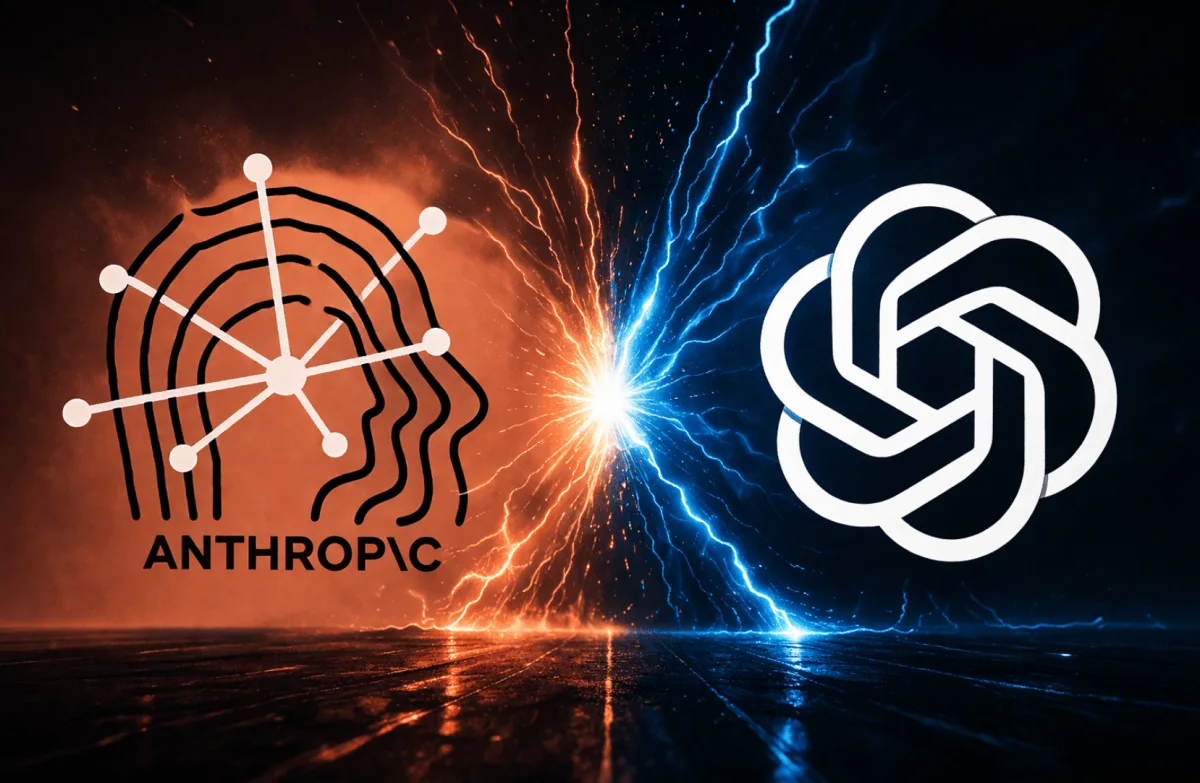
As with previous proof-drops from the frontier lab, scientific communities responded with a mixture of thrill and dismay. Anthropic mathematician Levent Alpöge suggested that OpenAI was basing its solutions on pre-existing work, and hours later, Anthropic subsequently released its own refutation of ETH.
However, OpenAI’s process is evolving. This time, the lab structured its releases differently for each of the three disciplines involved: Mathematicians got the work dropped on GitHub; the computer scientists formed a working group, asked for the proofs to be shared publicly and OpenAI to fund a conference to discuss them; the physicists formed a working group that will determine how their result will be released.
MIT professor Ryan Williams is the computer scientist who is organizing his field’s response to the new finding. Williams, whose work focuses on these questions of computational complexity, has criticized OpenAI’s approach in the past.
However, he agreed to collaborate with the frontier labs in order to help shepherd ideas that are vital to the field. The lab asked him to help interpret the solution, along with UC San Diego computer scientists Russell Impagliazzo and Ramamohan Paturi, who first published the ETH in 1999.
Their first step was to release an open letter calling for feedback from scientists interested in these problems and a discussion of the norms around AI contributions to their work.
Some parts of OpenAI’s proof are routine, but there are alien-looking parts that indicate the whole community needs to work on the findings together, Williams noted.
Understanding P Versus NP
The ETH is part of a broader class of problems known as P versus NP, which has animated computer science and many other fields for decades. Reductively, researchers are trying to understand if any problem whose solution can be easily verified (NP) can also be easily solved (P).
A simple example is the game Sudoku: Once a solution to a puzzle is in place, it can be quickly verified, but finding the solution is time-consuming. That dynamic underpins cryptographic systems, where cracking an effective code takes too long to be useful.
However, scientists have yet to prove whether that is always true. P = NP asserts that if you can verify a problem quickly, you can also solve it quickly, which many researchers consider too good to be true.
That is why most scientists assume that P does not equal NP. ETH provided evidence for that assumption by suggesting that even the fastest computer algorithm needs exponentially more time as variables grow in specific tricky logic puzzles.
Claims from OpenAI and Anthropic indicate their models have generated algorithms solving those puzzles in sub-exponential time, potentially proving the ETH to be false and opening a path for algorithms that generally perform P = NP.
Every computer scientist should perhaps reconsider the plausibility of P = NP, according to Williams, though he believes OpenAI’s current algorithm is unlikely to be the absolute best attainable option.
Implications for Research and Security
The durability of ETH means it is included in numerous scientific papers over the past decade that will require re-examination if the AI labs' claims hold up under peer review.
Beyond scientific concerns, questions remain regarding cybersecurity. Williams consulted with OpenAI science lead Dan Roberts to check whether current cryptographic systems are compromised, and preliminary checks indicate no immediate security breaks.
This new paradigm of AI-driven scientific discovery remains a work in progress, raising questions about how to train the next generation of scientists and mathematicians.
AI is forcing researchers to be more ambitious and to think more deeply about how to raise the bar for scientific inquiries when routine tasks become automated low-hanging fruit.