Expansion to India
Google has launched its experimental AI app Dreambeans in India, its first market outside the U.S., as the company looks to tap the world’s second-largest internet market to bring personalized visual stories drawn from users’ digital activity to a broader audience.
Google expanded Dreambeans, available on Android and iOS, to India with support for 13 local languages, including Hindi, Punjabi, Tamil, Telugu, and Bengali, alongside English. The launch comes less than two months after Google made the app available to all eligible U.S. users aged 18 and older.
App Functionality
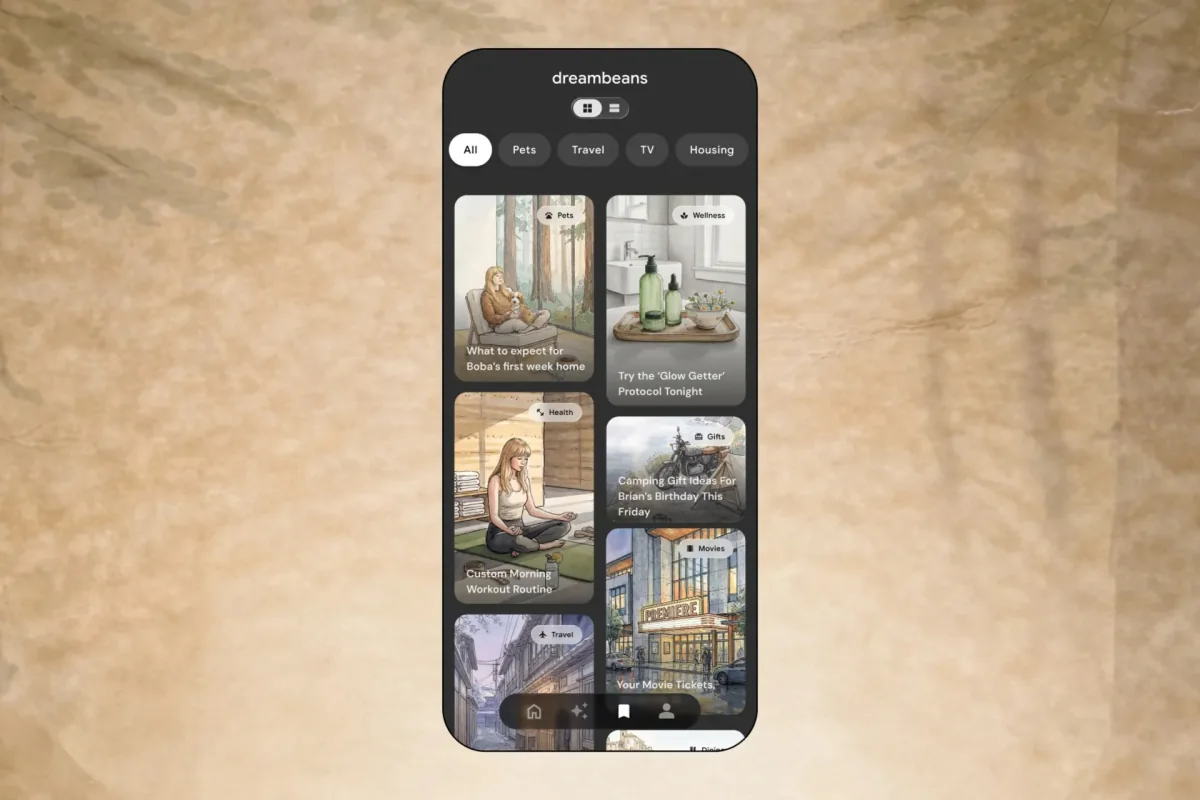
Google’s Dreambeans uses information from connected Google services, including Calendar, Gemini, Gmail, Photos, Search, and YouTube, to proactively generate personalized, illustrated stories about users’ interests and everyday lives, without requiring them to enter a prompt. The app initially featured static, AI-generated illustrations, but Google recently added a feature that uses its Veo video-generation model to animate images in select stories.
Google selected India as Dreambeans’ first international market because of strong interest from Indian users and the widespread use of its services in the country. India stood out for its high overlap of users across Gemini, Gmail, and Google Photos, according to product management representatives.
Adoption Metrics
Dreambeans recorded nearly 55,000 downloads in the U.S. since its June debut, according to estimates from market intelligence firm Sensor Tower. About 63% of those downloads occurred in September when Google opened the app to all eligible U.S. users aged 18 and older. However, downloads decreased the following month.
Unlike general-purpose AI applications such as ChatGPT or Claude, Dreambeans focuses specifically on generating personalized stories rather than responding to a broad range of user queries.
Language and Privacy Considerations
Although Dreambeans supports multiple Indian languages, users can select only one language at a time for their generated stories. The app can draw on information across Google services in multiple languages, but it cannot currently generate stories that mix languages.
This limitation could affect user engagement in regions where multilingual communication, such as mixing Hindi and English, is common.
Privacy and Data Access
The app's dependence on information from users’ Google accounts raises considerations regarding privacy and data access. Dreambeans uses Google’s Personal Intelligence technology to draw on connected services and personalize its AI-generated stories.
Users can choose which Google services to connect to Dreambeans and disconnect them at any time. They can also delete their Dreambeans data from within the app, and information removed from underlying connected services is also cleared from the personalization system.
Users can instruct Dreambeans to avoid certain subjects, such as business-related information. The app is available exclusively to personal Gmail account holders and is not supported for enterprise users, with generated stories visible only to the individual account holder.
The proactive nature of the app introduces the possibility of generating memories involving sensitive topics or deceased individuals. Google provides controls allowing users to tell the app to stop showing specific subjects, similar to memory management features in Google Photos.
Google is also exploring ways to make Dreambeans more actionable, moving beyond personalized stories and recommendations to help users act on the app’s suggestions.