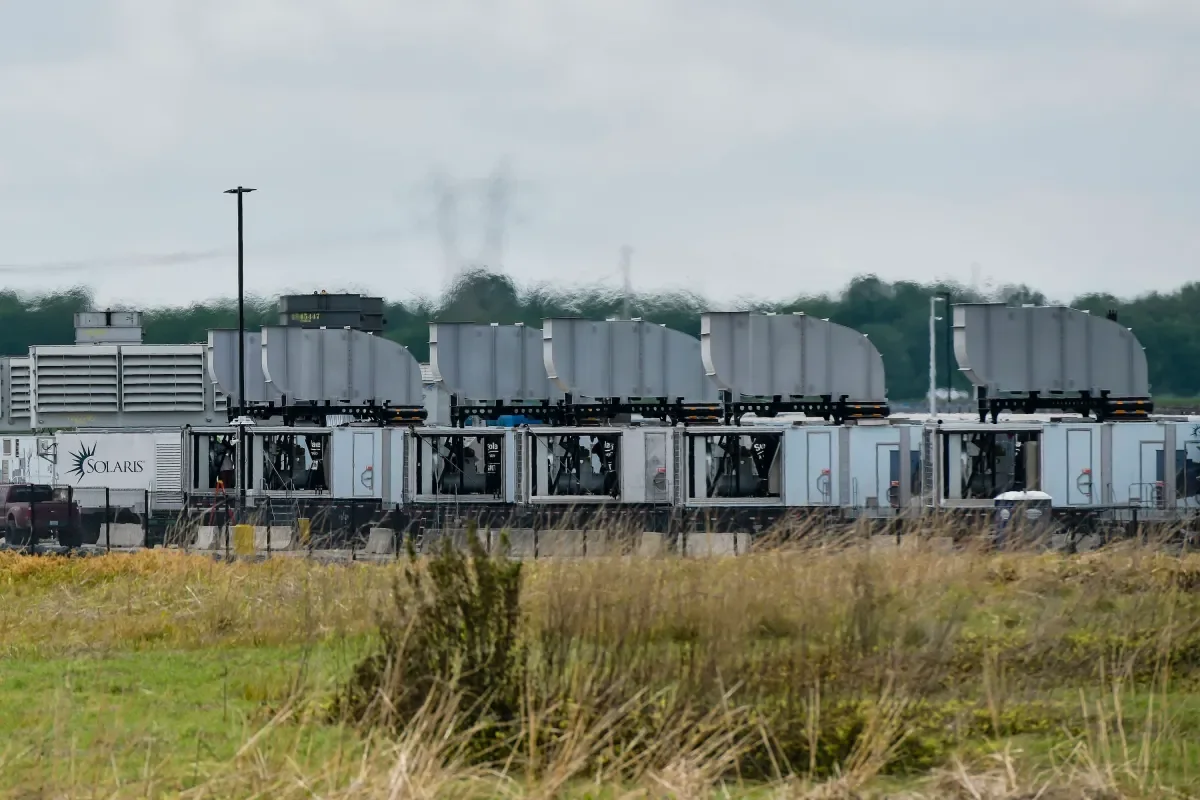
The Rise of Data Centers as a Political Flashpoint
If there is one issue that activates voters across the United States, it is the rapid buildout of massive server storage facilities. The infrastructure construction, high energy demands, and associated expenses have sparked local opposition and become a major platform in congressional and gubernatorial campaigns.
Data center backlash is uniting America
Some midterm races come down to candidates opposing data centers versus those arguing for stricter regulations.
Data center backlash is uniting America
Some midterm races come down to competing arguments over how to manage facility growth.
Tech funding has poured into many of these political races. Super PACs backed by venture capitalists and AI leaders have spent tens of millions of dollars supporting both Democratic and Republican-aligned groups. These organizations have launched advertisements focusing on data center development, energy consumption, and artificial intelligence safety policies.
Candidates from across the political spectrum are distancing themselves from unconstrained infrastructure buildouts. While many Democratic candidates lean toward supporting a temporary development pause, some Republicans favor maintaining local control over zoning rather than implementing outright bans.
State-Level Battles: Texas and Florida
Texas holds the second-highest number of planned data center projects in the country. In the Senate race, Democratic candidate James Talarico has proposed environmental protections and an AI profit tax, while Republican candidate Ken Paxton has focused on keeping foreign technology out of US infrastructure and forcing facilities to cover their own energy costs.
Talarico unveiled a plan to end state sales tax incentives, give communities more development oversight, require closed-loop water systems, and establish federal standards to protect the electrical grid.
Paxton proposed repealing sales tax exemptions for data centers, preventing rural developments, and introducing legislation to hold facility operators legally accountable if their systems undermine child safety.
Talarico also proposed an AI Dividend funded by a tax on artificial intelligence profits.
In the Texas governor's race, Democratic challenger Gina Hinojosa criticized incumbent Greg Abbott over his shifting stance, following an announced state audit that could slow new facility grid connections.
Political analysts view the Texas races as highly competitive, changing ratings from safe incumbent leads to toss-up statuses.
Florida gubernatorial race
In Florida, Democratic candidate David Jolly pledged a one-year ban on hyperscale data centers, whereas Republican opponent Byron Donalds proposed legislation requiring developers to fully fund their own energy and water needs.
Donalds introduced the Protecting Ratepayers Act to safeguard consumers from rising utility costs, though energy experts warn that relying on natural gas and nuclear power could still impact consumer bills.
Polling indicates substantial voter skepticism regarding large server facilities in local communities, though general election polling maintains a lead for Donalds.
Key Purple State Contests: Pennsylvania and Ohio
In Pennsylvania, Gov. Josh Shapiro and Republican challenger Stacy Garrity both faced criticism for tempering their previous enthusiasm for major technology investments amid growing community pushback.
Shapiro signed an executive order prohibiting nondisclosure agreements for data center developers and removed AI proposals from fast-track permitting programs.
Garrity expressed support for a temporary development pause lasting up to three years, emphasizing the need for robust community engagement from tech developers.
University polling in Pennsylvania showed a strong majority of voters believe AI data centers will cause more harm than good.
Ohio Senate race
In the Ohio Senate race, Democratic candidate Sherrod Brown made opposition to data centers a core part of his platform against Republican incumbent Jon Husted, whose past support for tax breaks became a prominent campaign issue.
Brown criticized Husted over previous tax incentives, while Husted maintained that local communities should retain the authority to decide whether to host infrastructure projects.
Internal party memos warned that political fallout from data center opposition in Ohio could influence national legislative approaches.
Political strategists noted that electoral outcomes in key Senate races could signal broader national shifts in how politicians approach technology infrastructure.
Husted introduced the Ratepayer Protection Act to require large-load customers to cover infrastructure upgrade costs, though the legislation ultimately failed to pass the state Senate.
Developments in Michigan, Wisconsin, and Nevada
In Michigan, both candidates for an open Senate seat expressed support for moratoriums on data center construction amid a surge of new local proposals.
Democratic candidate Abdul El-Sayed called for halting new builds until comprehensive safety and federal protections are established, competing closely with Republican Mike Rogers.
House races in the state have similarly focused on zoning buffers, worker protections, and banning nondisclosure agreements for developers.
Wisconsin gubernatorial race
Wisconsin gubernatorial candidates walked back prior support for technology investments, with Democratic nominee David Crowley stating he would sign legislation to repeal tax subsidies.
Republican nominee Tom Tiffany opposed a moratorium in favor of regulatory guardrails, while competitive polling marks the race as a dead heat.
Nevada gubernatorial race
Nevada Governor Joe Lombardo signed an executive order tying tax incentives to energy and water standards, while Democratic challenger Aaron Ford advocated for pausing tax breaks entirely.
The debate remains prominent in a state facing severe water management challenges.
Southern and Western State Perspectives
In Georgia, Democratic nominee Keisha Lance Bottoms supported a development pause to evaluate environmental impacts, whereas Republican nominee Rick Jackson argued that local communities should decide facility placement.
Candidates sparred over past municipal approvals and tax abatements associated with mixed-use technology projects.
Arizona gubernatorial and AG races
Arizona water conservation concerns divided Democratic leaders, with Attorney General Kris Mayes supporting a statewide development pause while Governor Katie Hobbs opposed a moratorium.
Water concerns made Arizona a key focal point for internal political debates regarding technology infrastructure.
Hobbs argued that data centers require proper integration rather than outright bans, aligning her approach closer to Republican opponents who also reject moratoriums.
Iowa gubernatorial race
Iowa wind energy resources attracted significant corporate infrastructure development, leading to local community concerns.
Democratic nominee Rob Sand proposed ending tax breaks and nondisclosure agreements, while Republican Zach Lahn called for an outright moratorium on new data center developments.