Introduction to AI Search Tracking
Asking AI tools for recommendations regarding specific tech reviews introduces a unique challenge for digital publishers and brands. Understanding whether a brand receives a mention or sends users straight to competitors forms the core premise of HubSpot AEO.
HubSpot’s answer engine optimization tool tracks selected questions across ChatGPT, Gemini, and Perplexity. It reveals which brands appear, highlights the pages cited in those answers, and suggests targeted content improvements based on those findings. A key advantage is the ability to inspect the underlying answers and verify the cited sources independently.
The source review evaluated the platform using a free trial tracking 11 prompts. While a single day of data cannot guarantee long-term search gains, it provides enough insight to judge whether the tool genuinely helps navigate AI search or merely adds complexity to daily workflows.
Pricing and Plan Structures
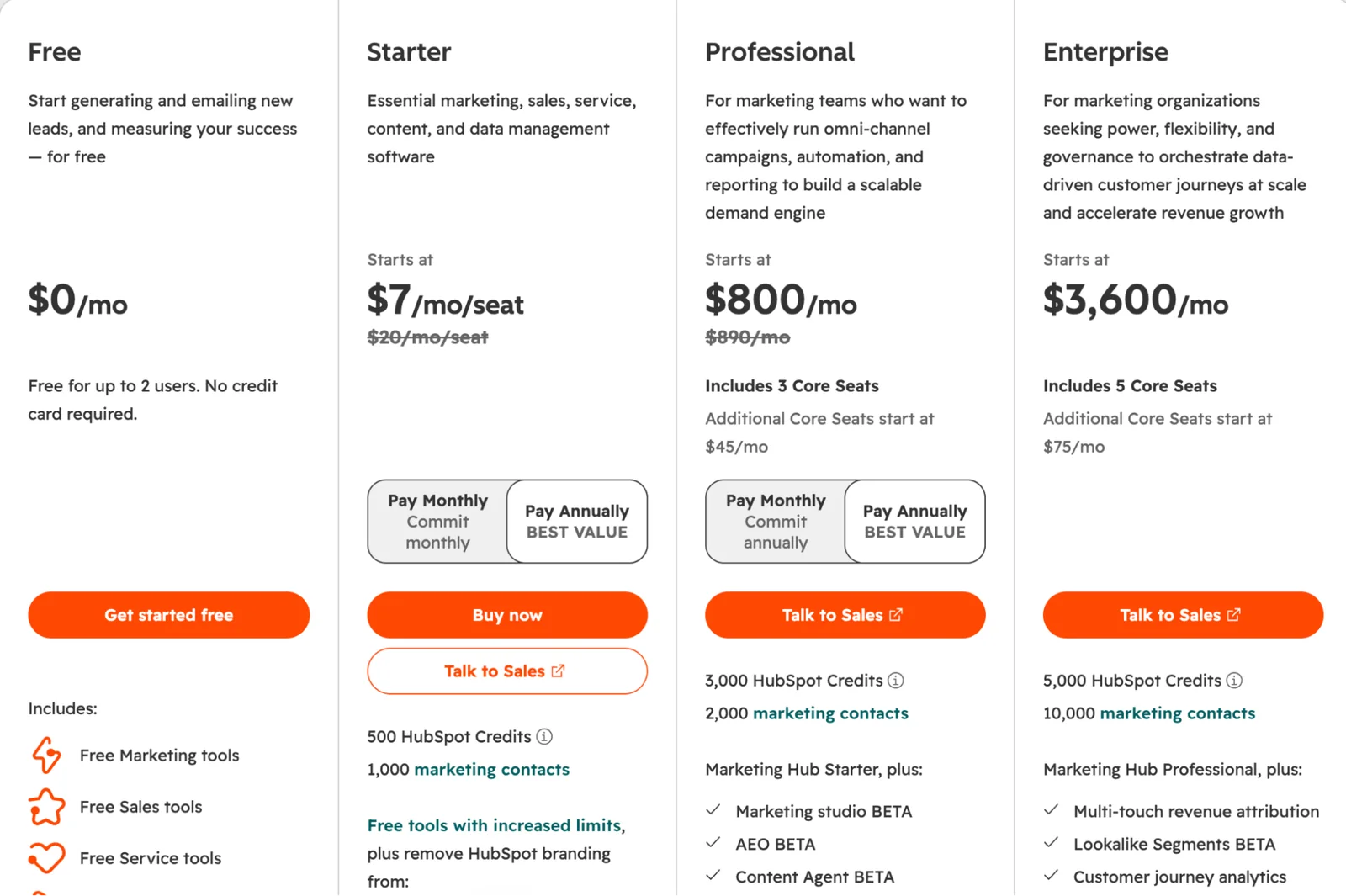
The standalone price for HubSpot’s AEO tool is $50 a month, or $45 a month billed annually ($540 a year before tax). A 28-day free trial is available without requiring a credit card or a prior subscription to other HubSpot products.
AEO capabilities are also bundled into Marketing Hub Professional and Enterprise plans, as well as the HubSpot for Marketers package, covering the wider software suite without an extra AEO surcharge.
Users on the standalone AEO plan requiring additional capacity can purchase extra credits at $20 a month for another 10 prompts and 1,000 monthly answers. Tracking additional brands requires setting up separate AEO instances.
Content generation carries separate costs. Generating articles from AEO recommendations requires Marketing Hub Professional or Enterprise and consumes 1,000 HubSpot Credits, with extra credits priced at $10 per 1,000.
Accounts enrolled in HubSpot’s flexible seats-and-credits program operate under separate terms, such as charging two credits per AEO answer, meaning buyers should verify their specific account model before budgeting.
Setup and Configuration
Setting up the platform involves an initial onboarding process where users specify their role, organization name, and target website address.
The configuration flows naturally into competitor and audience settings, allowing administrators to define precise parameters for tracking target demographics.
While the platform suggests relevant competitors, the source review noted that not every automated suggestion aligns perfectly with true industry rivals, sometimes mixing general publishing companies with direct review competitors.
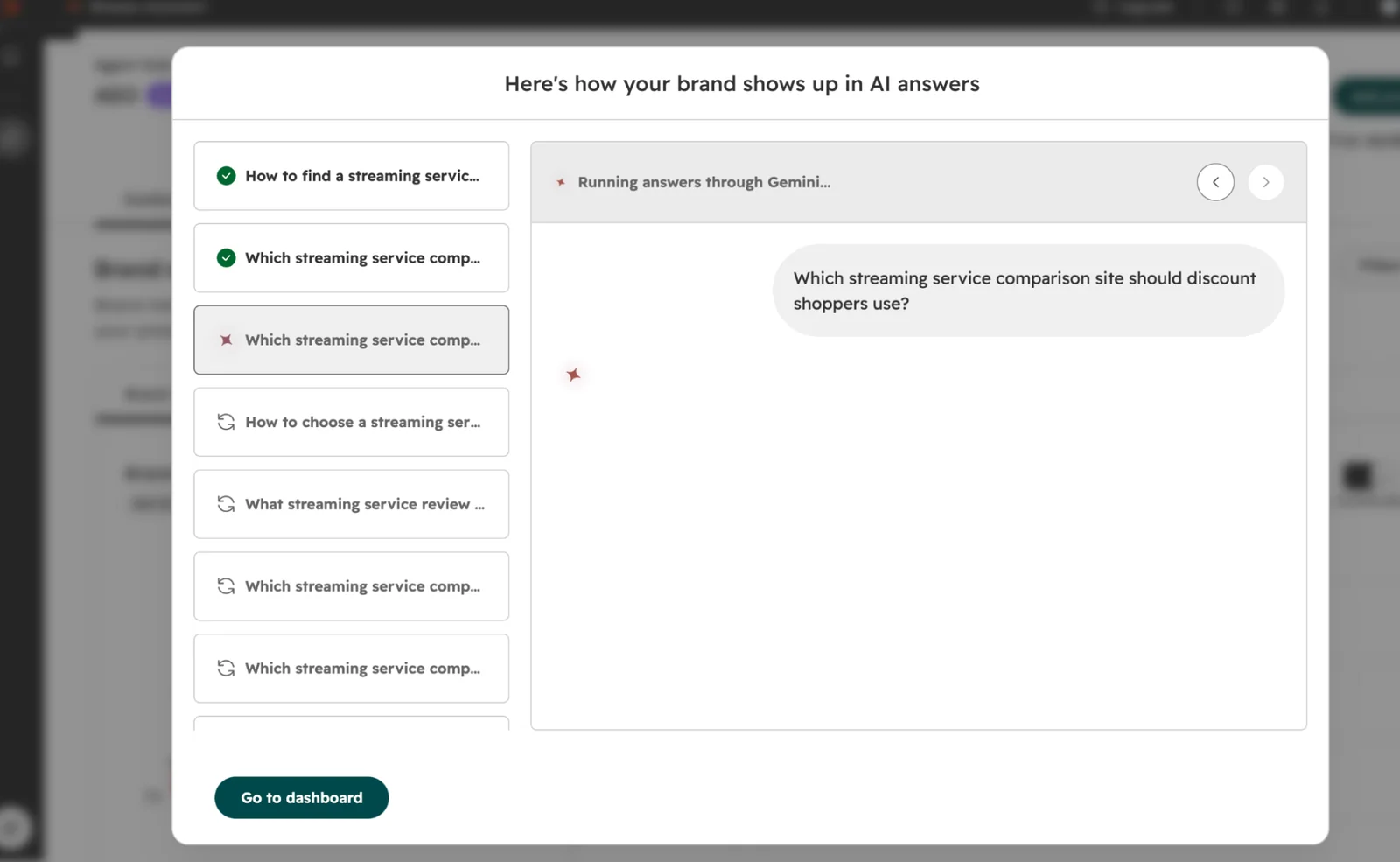
HubSpot uses these configured inputs to generate a list of prompts to track. Users can edit or remove prompts before initiating checks, though initial suggestions can sometimes feel narrow.
Once checks begin, administrators can monitor progress and open the main dashboard to explore brand mentions, generated answers, and cited source URLs.
Features and Reporting Capabilities
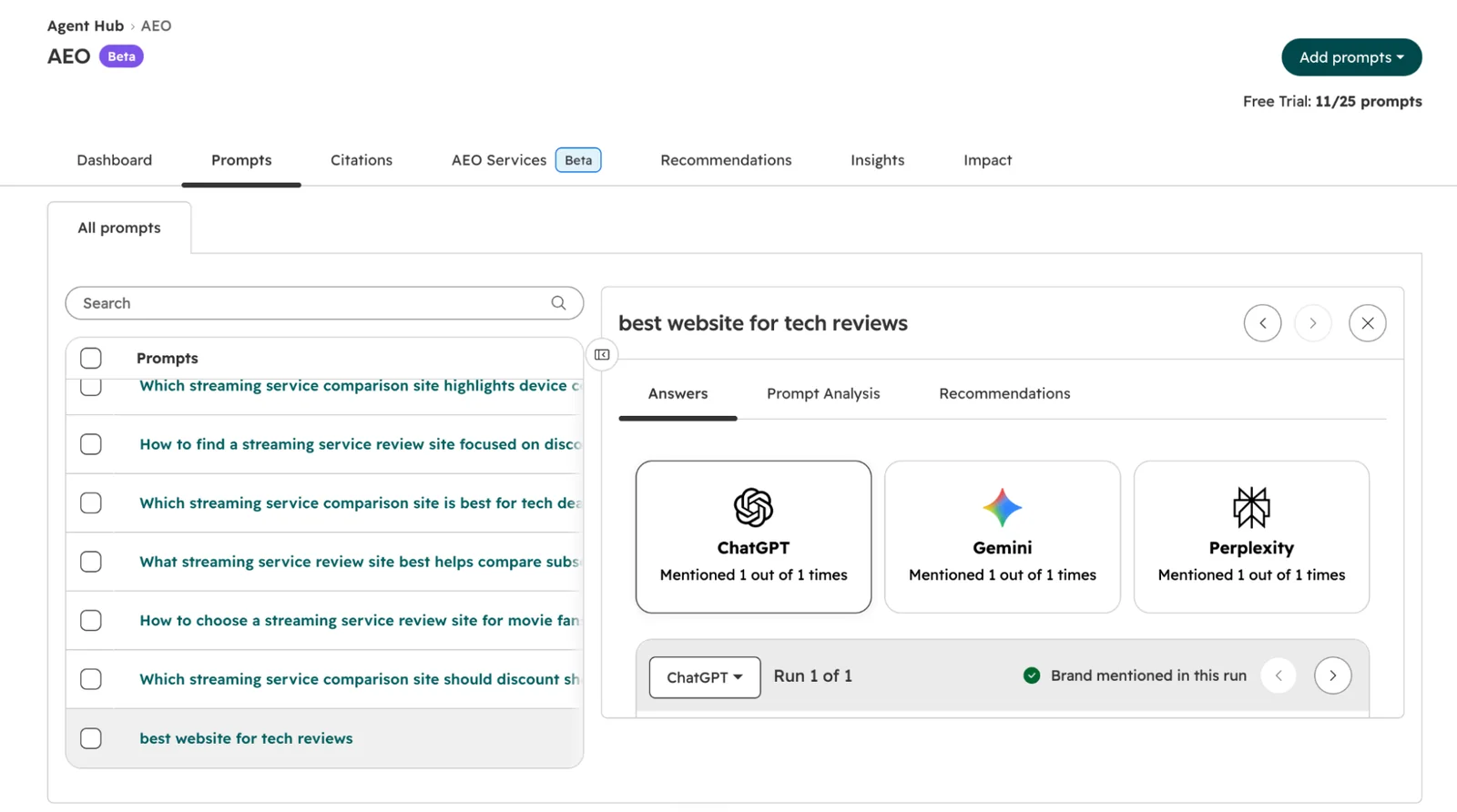
The interface organizes data into distinct panels for Answers, Prompt Analysis, and Recommendations. This structured approach allows users encountering a weak score to inspect specific answers, evaluate underlying sources, and plan content adjustments accordingly.
Brand visibility and competitor analysis
Initial brand visibility metrics establish a baseline score. However, short date ranges and small prompt samples provide insufficient historical depth to definitively measure long-term optimization progress.
Comparisons across different prompt sets highlight how heavily overall visibility scores depend on the specific questions chosen rather than sudden algorithmic improvements.
Visibility metrics calculate how often a brand appears in tracked answers, while share of voice compares mentions against selected competitors. Additional filters for engines, products, audiences, and buying stages help diagnose visibility gaps.
Reviewers note that distinguishing between being listed as a recommended review site and having a specific guide cited in an answer is crucial, as a raw mention score does not capture that nuance.
Citation and Content Strategy
Citation analysis serves as one of the most practical reports for content planning. Rather than just confirming a brand appeared, it pinpoints the exact domains and web pages utilized as sources by AI engines.
The Citations screen categorizes results by format (such as blogs, comparisons, and documentation) and origin channel (including owned, earned, peer, review-site, and user-generated sources).
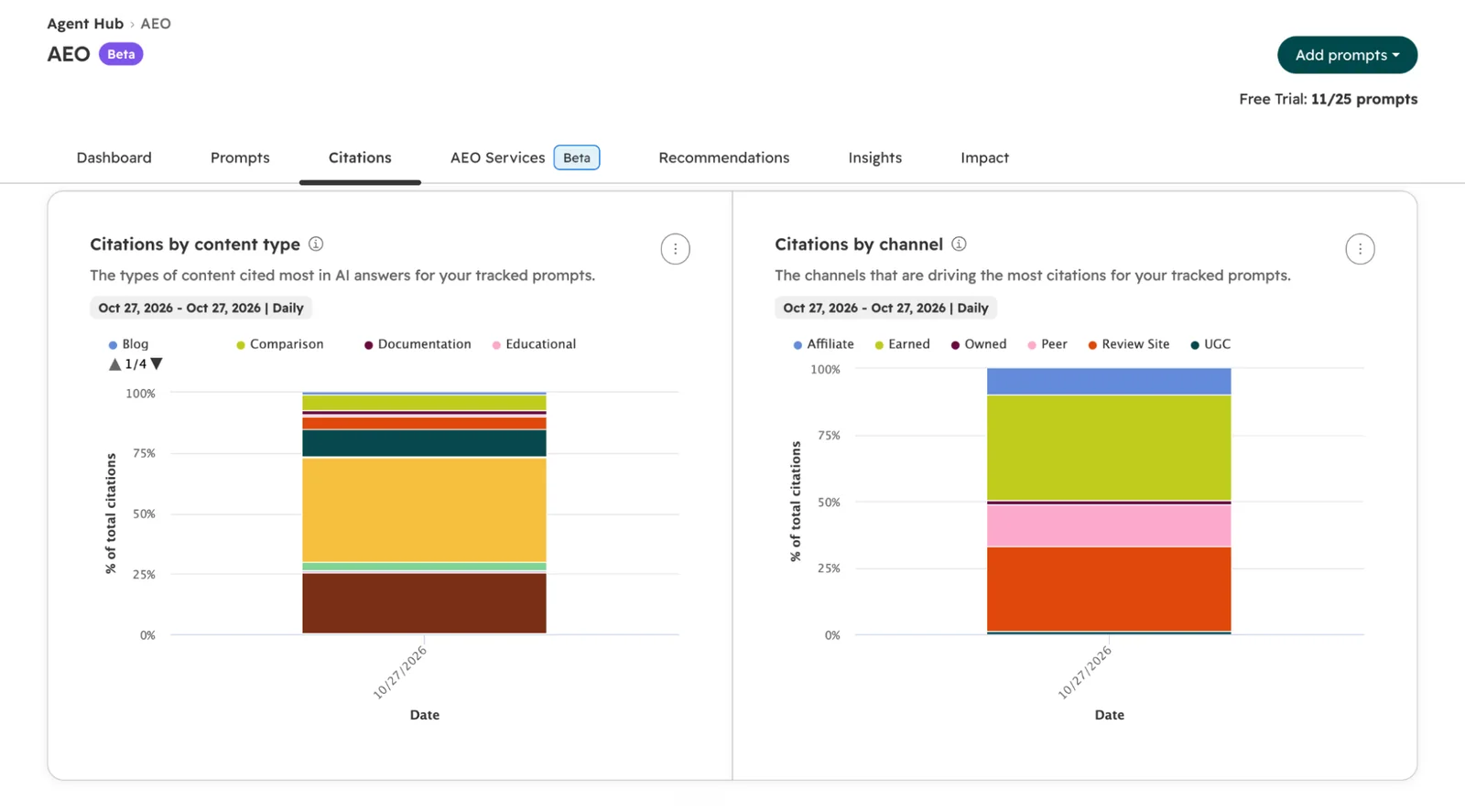
Analysis often reveals that earned and review-site sources occupy a significant share of channel charts compared to owned content, emphasizing the importance of monitoring external web presence.
The reporting suite enables users to inspect top domains and individual URLs, helping determine whether to optimize existing owned pages or pursue external earned media coverage.
Content recommendations
HubSpot uses prompt tracking data and cited sources to generate workarounds for owned content, social amplification, and outreach, assigning priority levels and suggested outlines to each recommendation.
When AI answers consistently cite third-party comparison pages, updating relevant owned comparison content or seeking external inclusion becomes a more effective strategy than publishing generic guides.
These automated suggestions function as valuable briefs for writers or outreach leads, though human editorial oversight remains necessary to evaluate alignment and execute the actual work.
Content generation and impact tracking
For eligible Marketing Hub accounts, the Generate asset feature transfers content recommendations directly into Content Agent, incorporating brand voice, audience data, and cited pages into the drafting process.
While this direct handoff maintains strong continuity between source research and drafting, human editing is still required to ensure the content remains rich in facts, examples, and unique insights.
Following publication, the Impact tab tracks whether a page earns citations for target prompts, providing a useful follow-up mechanism without claiming direct sales attribution.
Is HubSpot AEO worth it?
Reviewers recommend testing the platform via the trial period using a focused product, audience, and prompt set. Initial setups reveal that clean dashboards depend entirely on thoughtful prompt and competitor inputs.
For small teams, the standalone plan provides a practical way to automate manual checks and identify crucial source pages, while existing Marketing Hub users gain even greater value from the connected content workflow tools.
Ultimately, the purchasing decision hinges on whether the reporting actionable changes strategy—such as improving target pages, approaching new sources, or addressing missed buyer questions.
What is HubSpot AEO tool?
HubSpot AEO is an answer engine optimization tool designed to track how brands appear in AI-generated search responses, compare visibility against competitors, identify cited web pages, and suggest content updates.
Is HubSpot AEO free?
HubSpot AEO is a paid product featuring a 28-day free trial with 25 tracked prompts. Standalone access costs $50 a month ($45 billed annually), and the tool is also included in select Marketing Hub plans.
Is AEO different from SEO?
While SEO focuses on traditional search engine rankings, AEO specifically targets brand mentions and content citations within AI-generated answers. AEO functions as an advanced extension of existing SEO strategies.
How to do AEO optimization?
AEO optimization begins by analyzing how brands appear in customer queries, reviewing cited sources, improving pages that lack clear answers, ensuring crawler accessibility, and tracking metrics over time.
How to write content for AEO?
Effective AEO content answers specific user questions directly, supported by original research, expert insights, clear headings, structured tables, and robust contextual details rather than basic rewrites.