AI, Privacy, and the Role of Government
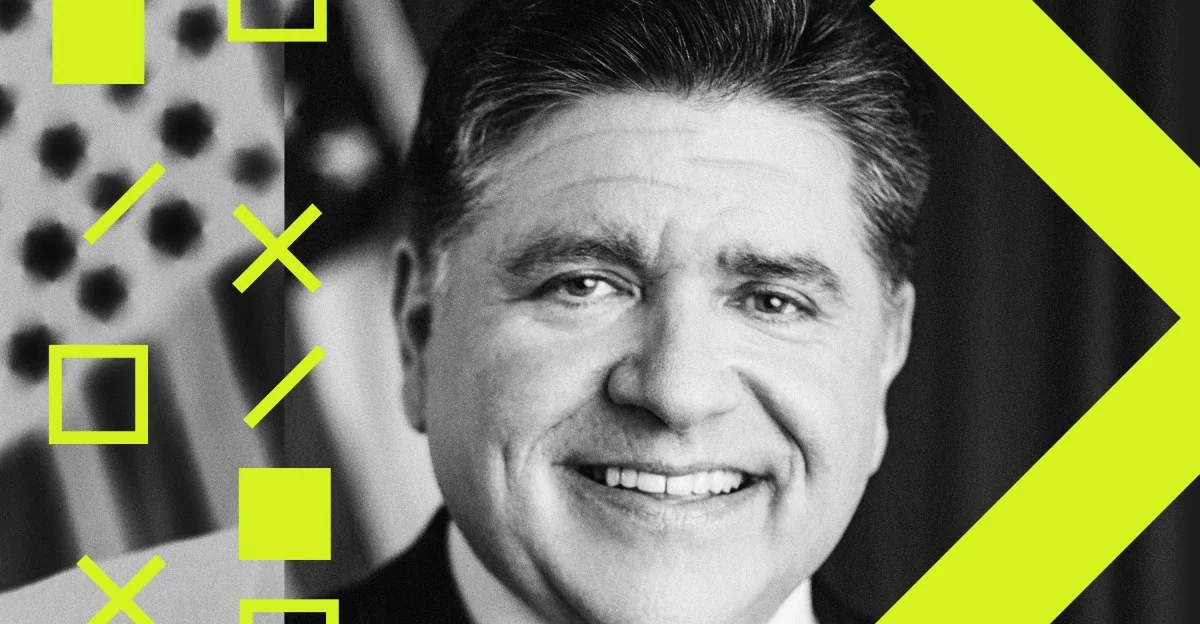
Today, I’m talking with Illinois Gov. JB Pritzker, who has a lot of thoughts about AI, tech, and privacy.
JB Pritzker thinks AI could help us live to 100 — or threaten us like nukes
The Illinois governor on AI, data centers, privacy, and technology policy.
If you’ve been listening to the show, you know that one of my running theories is that those issues are driving a big and maybe kind of unexpected political realignment, and the stakes are pretty high right now.
So I asked Gov. Pritzker about all that, and he was surprisingly willing to dive right into the absolute existential weeds of what government is even for. You’ll hear him say — and it’s hard to disagree — that some problems are just collective action problems that require the government to do a lot of work. We can’t solve all these problems one at a time, or even one state at a time. It’s a pretty deep conversation, and we really got into it on a lot of issues.
And of course, I had to ask him about sports.
Okay: Illinois Gov. JB Pritzker. Here we go.
Gov. JB Pritzker, you’re the governor of Illinois. Welcome to Decoder.
Thanks, Nilay. Great to be with you.
I am very excited to talk to you. We’re in the heart of midterm season. You are running for reelection.
Well, we’re claiming you. Now that I know all that, we’re claiming you. You’re an Illinoisan.
I don’t know about that. I grew up in Wisconsin.
That is not our intention. We are, in fact, in discussions regarding stadium infrastructure.
I’m going to make the comparison here. And the reason I started there is not only because I think that’s a funny outcome, but it feels like we are in the middle of a generational political realignment.
I’m sure you feel that, in this election campaign, the idea of big business and how that should interact with the government, and how the government should be able to push back on big business and not give in to big business. All of that feels up for grabs.
And the comparison I will make in this specific case is your fellow governor, Gavin Newsom, in California.
They settled the lawsuit. I see a parallel here that is connected to that larger realignment, how government and business should interact. Do you see that parallel? Do you feel that realignment?
Well, what I can tell you is we’re pretty tough negotiators in Chicago and Illinois. But I understand your point about realignment. I mean, there is a generational change, and I think it’s also an attitudinal change about protecting taxpayers, protecting people who frankly are among the most vulnerable to all the technology that’s overtaking people’s lives and invading people’s homes.
And so I do believe that the government has to be more active now and become a fighter for our people and not just a collaborator with business on everything. I’m a businessman, as you know, before I became governor. But I also know that, for the people of Illinois anyway, my job is to protect the working people of this state who often don’t have anybody protecting them except a government that will stand up for them. So that’s kind of the realignment that I see.
And that generational shift, I agree with you. It’s partly a Democratic Party generational shift. Generationally, we’re a little more aggressive. I think of myself as having come out of the tech world and as somebody who has been a fighter for progressive values that, yeah, we’ve got to become more aggressive and make sure we’re standing up for our people.
There are two places where I see the realignment in particular. One is data centers, one is privacy, and you just see that as a bipartisan backlash to those things. I would actually add a third, which is antitrust broadly. It’s weird if you go into Silicon Valley. David Sacks is retweeting Lina Khan from the Biden administration talking about whether the AI industry needs an antitrust exemption to manage safety.
They both agree that these companies don’t need antitrust exemptions. They actually should be more competitive. Again, putting that in the context of regulating these companies, thinking about the dynamic between the government and the biggest companies in the world.
I can say once again that our orientation today — and I think about the big AI companies and the big social media companies as well — has to be like, wait a minute, too much power in too few hands.
AI Infrastructure and Employment Impacts
Particularly when we talk about AI, where it’s potentially existential, but certainly transformative, which is probably a kind way to say it about the economy, that we’re going to have to get very engaged. Guardrails, of course, on both parts, but also addressing what I think on the AI front is potentially a significant change in employment in the United States. I’m not somebody who is necessarily convinced that we have to see a whole bunch of job loss, but that does feel like that’s the direction this is going.
What I’m suggesting is we better be prepared, and we better be protecting people who are going to lose their jobs, or at least it appears they’re going to lose their jobs. And I’ll just give you this thought. If these days 4 percent unemployment is kind of the acceptable near full employment number, I think the problem we’re going to see is — if that’s sort of the level that we’re going to hopefully aim for and stay at — that in very short order, we could end up at 7 percent and have that be the baseline, or maybe 10 percent.
And if you think about what’s happened, the upheavals of economies and of governments when you get to 10 percent unemployment in any country. We better be focused on how we’re going to give people the dignity of work and enough income so that they can make a life for themselves when you’re going to put people out of work by virtue of this technology. By the way, much of the benefit of that is going to go to a very, very few people. So we’ve got to wrestle with that and come to a conclusion.
I wanted to start with some of the brinksmanship we have seen in the negotiations between, particularly, states and the big companies, because that brinksmanship is real. The threat is we will leave.
This is what states do. They compete with tax incentives and benefits, maybe for data centers. They compete for land use rights. You’ve got a rural state with a lot of farms in it. How are you thinking about that dynamic? Do you feel like you’re in competition with the other states, or is this bipartisan realignment creating more of a level playing field where these companies are going to have to actually give something?
We are in competition. We just are because it isn’t bipartisan, at least if you ask me. Unless there is a change in the government. If you look at Texas as it’s run today by a Republican governor and a Republican legislature, they have no intention of changing their alignment about incentives.
In the state of Illinois, we don’t want to have to do that. I mean, we obviously want to protect the revenue that we’ve got for the state to pay for the things we think are valuable to our people, but we also want to make sure that we’re attracting jobs and not losing jobs. When I’m competing to have a company move to Illinois, I’ve got to make sure, first of all, that I’m somewhere in the ballpark when it comes to the incentives, because otherwise we don’t even get considered.
And then when I say somewhere in the ballpark, I mean, I want to give away less than more, and then I want to provide whatever other advantages I can that aren’t financial so that I can protect the resources that we have. An example of that is, we like to talk about a kind of white-glove service that we offer to companies. If you’re going to bring a factory here, let’s say, just to give an example, we want to make sure that we’ve got somebody who’s kind of a concierge for your company that’s walking you through each of our departments where you need a permit.
We try to make sure that if we’re going to attract a large company, with 1,000, 2,000, 3,000 jobs, that we’re at least making it a little easier for them to go through without having to give them massive tax incentives. So that’s the way I think about it. We are in competition. There’s just no doubt about it.
I wanted to ask those questions just to set the baseline. A lot of young people are dissatisfied with the status quo. A lot of people in general are dissatisfied with what big tech companies are trying to do with AI, with the potential for job loss.
And the relationship between the people, the government, and those companies seems more fraught than ever, especially as they’re trying to expand their physical infrastructure with data centers, as they all become defense contractors, literally taking our tax dollars to sell weapon systems and collect data for the government. That’s a big swirl.
I wanted to start there, but I just want to take one second here and ask you about how government operations function.
So you were elected governor. How is your office set up, and how have you structured the state government of Illinois?
Just starting from where I sit, and then, of course, we look at it from a customer service perspective. But starting just at the top, I actually did something that no governor of Illinois has ever done — which is that I created not just one deputy governor. What I did was put four deputy governors in place, a general counsel, and my chief of staff.
Why is that important? Because what I’ve tried to do is to break down the silos of government. I took all of the health and human services-related departments and put it all under one deputy governor working directly for me. The idea is that instead of my having, let’s say, 26 direct reports, I’ve got four or five direct reports plus my chief of staff.
From my perspective, what I wanted to do was make sure that I’m breaking down the silos of government, making these departments operate more efficiently.
From the bottom, which is: how do people who live in Illinois interact with the state government? And obviously, technology is one of the upgrades that’s occurred and made it easier. Illinois, frankly, had not significantly invested in those processes before I became governor, or in the technology that was necessary.
I’m talking about outside resources. How do you find a therapist? How do you find a psychiatrist? And how do you pay for those things? Medicaid, if you can’t afford it on your own. But the point is, there’s one door to enter through BEACON that allows you to get access to all of those resources, even if they’re in multiple departments. So that’s just one example. We’re trying to think of this as a customer service operation.
We provide programs that really matter to people. We have a birth equity initiative to reduce maternal mortality, particularly in Black and Brown communities. And free diapers for some people. The problem is, people don’t even know that the programs exist, and how would you ever figure out that the programs exist, especially if you’re a working person who’s working two minimum-wage jobs?
AI Bureaucracy Navigation
It feels like that is one of the bigger opportunities when it comes to AI, just letting the AI navigate a bureaucracy for you and communicate what resources are available. The flip side of that is that people hate AI. They truly dislike it, and it doesn’t feel like that connection has been made — that a lot of these tools can actually just navigate a bureaucracy for you. Are you thinking that should be an investment that you make, that it might be what turns the tide in terms of how people feel about these tools?
Yes, but I’m not plunging headlong into it. And I realize that there are probably states that are plunging headlong into it.
I mean, the United States government rolled out its AI chatbot to look at webpages across the government.
Well, there you go.
I guess what I’m trying to do is make sure that… I created something called the AI Cabinet in my government, and that is to essentially bring the experts on AI together with the leaders of my mainstay agencies of state government, so that we’re thinking about privacy, safety, and efficiency. And those things have to be talked about together. You can’t just say we’re going after efficiency and we don’t really care about the other two.
So that’s the idea, the AI cabinet. It’s also that, honestly, there are things, as you know, about AI that are dangerous. And so we’ve got our emergency management agency on that AI cabinet. We’ve got our state police on that AI cabinet. And remember, a lot of the people that work in those agencies aren’t particularly proficient at AI or really understand the potential and the potential dangers.
That’s why we brought in experts, for example, from the University of Chicago, the University of Illinois, just as two examples of places where we’re drawing expertise. So yeah, there’s a lot to be done. I would say we’re trying to approach it carefully before it gets out of control to a point where we have no way to pull it back in.
The other question I ask everybody is about decisions. You have a big job. You have some constraints in your decision-making process, right? There’s a state legislature, there’s a federal government, you have other agencies in your state. How do you make decisions? What’s your framework?
Well, I don’t do it the way Donald Trump does.
It’s funny you say it that way. I guess I start with the idea that we have a problem to solve and that decisions have to get made. Are those decisions ones that need to come to the governor? Because you’re right, I only have so much bandwidth. So the question is: which are the most serious ones that can’t be solved by other people, or are unlikely to get the outcomes that I would want by handing them over to other people? And then those automatically come to me.
So what I’m making decisions about is kind of the first answer to your question, and then it’s how do I actually make the decisions? For me, I am not one of those people who thinks that I’m right 100 percent of the time. Maybe a good way to describe it, and I’m joking a little bit when I say it, is that I’m 90 percent sure I’m right, but there’s also a 10 percent chance that I’m dead wrong. I want to make sure that I’m getting input and a debate before I actually make the final decision.
Someone once told me that the best CEOs are ones that, in their organization, are a little bit below average in terms of their capability and intellect. I’m not saying we want below-average leaders. I’m just saying you’re so good at hiring that you’ve got people in your organization who are really far better than you are at various things that you’re not particularly good at. Maybe knowing what you don’t know and being willing to ask for help is a philosophy that I have. Be willing to ask for help if it’s something you really don’t know.
And I’ll be honest, when you become governor of a state, there are a whole lot of topics within the purview of a governor. Making decisions about all those topics, maybe a human being who has super intelligence might be able to do it, but most people don’t start out knowing everything there is to know about public health, public safety, and education. And so you start out with what you know and then try to add expertise to it and then make decisions based upon the best experts debating one another in front of you. At least that’s how I like to do it.
Give me an example. Give me an example of when you became governor, and there was something where you just didn’t know.
COVID.
Sure.
I mean, honestly, no one runs for governor thinking there’s going to be a global pandemic. You think you’re going to solve education problems for people or put more money in people’s pockets by raising the minimum wage or whatever, but COVID comes along. And I have to admit, the level of expertise, I don’t think any governor… for the rest of us humans, that was one where we were learning on the job.
We were working 18 hours per day. My entire team was all in, and we had to do things like emergency procurement of ventilators and masks, and we had to go outside the box.
I’ll tell you a quick story about my interaction with federal leadership at the time because I think it’s interesting, anyway.
We need to be able to get these things and afford them, and I’m competing against all the other states. We need to invoke the Defense Production Act in order to make sure that we’re making enough masks in the United States.
The challenges in COVID were mighty, and the organization that we had to create around it… I had meetings every morning just on this topic.
And so these were all the things we had to learn on the fly. And all I can tell you is, once again, back to hiring great people to have around you, I really felt like I proved that I had done a good job of hiring because the people around me were tremendous.
Privacy and Surveillance Concerns
It’s interesting you brought up COVID in the context of our conversation about generational political realignment. I would actually point to COVID as the beginning of a particular realignment around what the government should measure, how much control the government should have over people, and all of that has led, I think, directly into the bipartisan pushback against automated surveillance cameras.
The very notion of privacy is not, in my mind, left or right anymore. We can see in states around the country that there’s pushback against automated license plate readers and tracking cameras. I would point to COVID as crystalline in the beginning of that mindset.
The idea that the government could be too intrusive, and in particular, the government should not be able to measure things. But I see that privacy connection very clearly to COVID. In one world, the government coming together to protect its citizens and build a bunch of systems could have gone a very different way. In the one we live in, there’s ferocious pushback to that, on the left and the right in some ways. How do you feel about privacy right now?
I know Illinois leads the nation. You’ve got the Biometric Identification Protection Act. Every time I fly to Chicago, I’ve got to push the button at the airport to say that it’s okay to look at my face. That’s one way of going about it. But then you do have, I think, hundreds of cameras in Cook County alone. People have smart glasses with cameras in them. There’s something happening with privacy that is running right into the aftershocks of COVID and how people feel about government intrusion. How are you finding a way through that balance?
Well, and don’t forget AI.
Yep.
As you’re suggesting. I mean, talk about a collision. This focus on privacy is warranted and long overdue, to be honest with you. I understand what you’re describing about COVID, but I think something that came out of COVID got accelerated, and that was conspiracy theories.
Yes.
And I’m not suggesting that everything you hear now about the pushback around privacy is a conspiracy theory, but it is easy for these things to spread, and people have misinformation that’s informing them about how these things are used. Having said that, I guess what I think is that we are having to solve multiple problems at the same time, and that AI is coming.
Let’s just go to AI for a second. It’s here. It’s not going to stop. We’re not going to become Luddites without any AI. So the question is, in the context of privacy, what guardrails are we putting on AI, and how are we managing it? This idea where tech executives get all the companies together and say, “Hey, how about you guys self-police?” That’s not going to work, at least not for protecting people’s privacy. And frankly, it’s not going to provide any safety either because everybody’s going to operate in their own self-interest. It’s one of the reasons why you need a government, in my view.
I’m not suggesting the government is any smarter than these companies. But one of the reasons you have any kind of collective action of the government is because, separately, as you know, people operate in their own self-interest. So I think we’ve got to use the government as a tool and also be smart within the government. And that’s where the generational change, I think, is hugely important. Use the government as a smarter, less bureaucratic collection of people devoted to protecting the privacy of everyone and making sure that we’re addressing all the other challenges that come from AI.
So I guess I’ll just say, I don’t think we’re anywhere near where we need to be, but I will say, if we don’t have a federal government action, I’m very proud of the things that we’ve done here in Illinois around the AI Safety Measures Act, which is the toughest in the country, the Children’s Social Media Safety Act, and so on. I’m proud of the work we’ve done, but state by state, this is not the way to do this. We’re doing the best we can in the absence of a federal government that is addressing these issues.
And when I say federal government, I’m pointing at Congress. No action on their part means that we’re going at it alone. And right now, I don’t know how many AI safety measure acts have been passed, but it looks like three to me. I mean, it’s New York, California, and Illinois. Maybe you could name a couple of others, but we three were the first. And yet, we’ve got 47 other states.
This worries me a great deal. People sometimes say that the states are laboratories of democracy. They’re actually laboratories of policy, and we are trying to, at least in Illinois, use ourselves as a laboratory for policy while not creating disadvantage for ourselves. And so that’s a very challenging thing to do, and why we need to change what’s happening at the federal government.
Focus on privacy for one second. I understand what you’re saying about AI. I think part of the privacy debate around camera networks, for example, is, well, sure, you can have one license plate reader in one intersection. And if the cops had to go there and pull the storage card out of it, drive it back to headquarters, and look at it manually, maybe people would feel one way about it.
But those cameras are all networked. They don’t have any access controls really. There are infinite reports of local authorities tracking individuals across state lines with these cameras. People see that.
The turn that is being made is that you can connect a lot of databases of information together, search them without a warrant, and track people across the entire country. You could ban that state by state. You could regulate it city by city, and you could maybe have some federal controls around privacy there. None of it’s really happening, but on the ground, people are ferociously pushing back. And that’s the connection I’m making to COVID, conspiracy theories, and how much power the government should have to surveil you and look at you.
Something happened in there where people’s attitudes about that really shifted. And I would say one of my core beliefs is that Americans do not like being told what to do. Party politics aside, Americans don’t like being told what to do. Something about that flipped and connected to: we have a network of reading cameras, and we’re going to tear them down when we see them because there’s something about that that offends us as Americans.
Illinois does have privacy laws. I think the last update to the biometric law you did was in 2024, and it has changed again. It’s gotten more vociferously opposed to tracking and surveillance in this country. Do you think you need another update to that privacy law?
I think we should be looking at that question every year. I’ll give you an example of it. We passed it, and again, I’m back to AI because I think how you’re describing it was a perfect way to say it. If it was a physical card that they had to go grab and then analyze back at the station, it’d be a different thing. But it’s AI that’s operating these things, and that’s allowing this stuff to move instantaneously and track people.
Look, should we be addressing it? Yeah, every year. It’s like the issue of ethics in government. What I mean is, the minute you put an ethics law in place, there’s somebody who’s trying to get around it. Put a tax law in place, and someone’s trying to figure out how to get around it. And I think the point you’re making is that that’s why you need to have a proactive government, less bureaucratically and more aggressively trying to address these things. Are we going to be able to keep up with it? I’ll be honest, I don’t think so. And I also don’t think you can say, “Well, we’re just going to shut it all down” because there are things you’re missing out on.
It’s sort of like, and again, I keep going back to AI, but I think a lot about it. My children are 21 and 24. They’re going to live to 100 or 110 years old because AI is going to solve a whole bunch of medical challenges, and already is. There’s a cure now for sickle cell anemia, and people who would otherwise die at 25 or 30 years old are going to live full lives. This is going to happen across the board in cancer and everything else. And so there’s all good in there, and then there’s the bad. So I know what you’re saying. I guess all I can tell you is I’m a believer that we can progressively address these challenges.
In Illinois, we passed a law that disallows the use of AI in therapy for people because we think too much information gets collected, not enough humanity in the process, and we think that it should have humanity in it. Again, we’re not trying to shut it down across the board, but we’re going to have to see how it gets used and where it’s improper.
And I know that sounds imperfect because the technology is moving so fast that the idea that we’re going to be able to keep up with all the ways in which someone’s privacy could be breached seems very difficult, but I don’t know any other way to do it. That’s why you have a government, and maybe in the end we’re going to have this competing use of things like AI, where AI is monitoring AI, and AI that’s kind of privacy-friendly or focused on privacy is going to be monitoring the AI that’s not.
I am concerned. This issue of privacy has been around for a long time. This is like everybody giving over their personal information in exchange for access to something. And that was happening for a while, and then we’re all getting ads that are personalized to us based on stuff that we’ve essentially given up privacy for.
No, it’s funny. People believe, and we can write as many stories as we want about how your device is not actually listening to you, but the ad tracking is so good that everyone believes that their phones are listening to them. The next turn is that it is now technologically feasible for these systems to listen to you all the time.
There are already devices that purport to listen to you all the time and turn that into some actionable data. And it feels to me like the tech industry is trying to drive a truck through our privacy law, through our lack of AI regulations, through an entire system of governance that is designed for the pre-AI era.
The notion that you don’t have privacy in public worked really well when everyone didn’t have a cell phone that could connect to the cloud and instantly search every photo all at once, all the time, and do facial recognition. We live in that world now. I would say the public sentiment towards the idea that you don’t have privacy in public places has turned.
They don’t like smart glasses with integrated cameras. And somewhere in there is, well, the federal government should pass privacy law. It is a failure of imagination in the United States. We don’t have federal privacy law. And then somewhere in there is the notion that the states are laboratories of democracy and policy.
It is amazing, by the way, how often the very notion that the government is there to serve as an extension of us solving collective action problems comes up. It comes up over and over again because I think the tech industry does not want to respect that dynamic.
This is why I started with that relationship between government and business, and the pushback and the negotiation, because here it feels like the tech industry is in a bubble of its own making. And then all of the polling is, well, we hate AI. In particular, young people hate AI. And then all of the action is around data centers where local pushback is being pulled to keep these data centers out of communities. And that’s one way to stop AI.
You just pulled back on data center tax incentives in July. You’re pushing the state legislature to adopt a suite of guarantees on reforms for new construction. Do you think data centers and the pushback on data centers is an effective route towards AI regulation?
No, I don’t. I think it’s an effective route toward data center regulation. I know that people have conflated and put together their opposition to data centers with their opposition to AI. And a lot of people can’t describe why they’re opposed to one or the other because they’re conflated with one another. But I can say that — I mean, at least our aim is focused on the idea, and people really feel this, right, and there’s real data to back this up — the data centers themselves put aside what they’re doing inside a data center.
Energy Grid and Infrastructure Demands
The data centers and what’s happening are eating up the available electricity, and that’s causing your electric bill to go up. At least that’s how everybody feels. There are a lot of things that we should have been doing in many years gone by to get to a point where electricity bills shouldn’t have to go up now. And that has to do with building out the grid. It’s a world where regulation and cross-border challenges have made it nearly impossible for a lot of the grid to get built the way that it should have. We produce a lot more electricity in the United States than we use, but we just don’t transport it well enough.
Okay, but even if you think that can’t happen efficiently, we need to build more capacity on the grid. My only point is the opposition to data centers is, in part, a result of the economic situation that’s happening right now in the country, where electric bills, gas, rent, everything has gone up. Your electric bill shows up every month, and it continues to go up, and people kind of scratch their heads and say, “Who am I paying for?” This is happening, and this is particular to Illinois.
We produce more nuclear power in the state of Illinois than any other state. Roughly 53 or 54 percent of our electricity comes from nuclear power, and we’re a net electricity exporter. So we have an excess in Illinois, but our bills are going up, and that’s because of the methodology of the regional transmission organizations. If another state decides to build a hyperscale data center, our bills in Illinois are affected, and that’s shocking to people who live in Illinois. But what they know is they don’t want their bill to go up, so they don’t want another data center nearby.
So this is a challenge. I think there’s a lot of information that needs to be spread. But most of all, we just need a whole lot more capacity and a whole lot more grid that will, I think, subside some of the concern about data centers. To your point, privacy is, I think, more related to AI than data centers. And it’s not just AI, but the way AI is used. So we’re going to have a lot of opposition. You make an excellent point. I think this feeling of being out of control — you are not in control of your environment anymore — that’s the thing that is causing anxiety.
We need better people running for public office. We need smarter policy development in government. And part of that is a generational shift that’s needed and a better understanding. We have people who are serving in leadership positions who have no idea. Because we have older people who don’t have any exposure who are making policy theoretically on these things, and it should disturb us all. It’s one of the reasons we’ve got to advance the cause of better people and better systems in government.
We are on the cusp of an election. There might be a new Congress. There might be new leadership in Congress. Do you think that you need a wholesale change of leadership of older politicians as well?
You said, “Do we need a wholesale change?” I mean, I can tell you that I don’t think we should be telling —
Well, now I live in New York. I’ll just ask you, do you think specific leaders should remain in power?
That’s a decision people are going to make. I have no influence over it. I can tell you this: I am opposed to term limits because I think that you should have all the choices. You’re a voter. If you want to vote for an older candidate, I mean, go ahead.
I’m just suggesting that a great case could be made for younger leadership that has a modern look at the issues around AI privacy, everything else we’re discussing, and a more aggressive view of how we ought to be reining in big corporations in their invasion of our lives. But I think people ought to make their own choices. I mean, for us to say, “Well, we should have an age limit. You’re 70, that’s it, you’re out.” I think that belies who we are as a democracy.
Well, you convinced me. I’m announcing my run here.
Listen, I would vote for you in a second.
A low bar, but I’m glad I crossed it.
Let me tie two ideas together at the end. We’ve talked a lot about AI regulation. You mentioned social media regulation a little bit earlier in this conversation. I know that Illinois has a social media law. You have restrictions on phones in schools for kids.
If you look at how major tech companies talk about social media regulation, they basically describe the tragedy of the commons. You signed the landmark settlement. Illinois is due to get a significant amount out of that settlement. And a big part of it is that platforms have to agree to the same terms. Executives have said that’s because if one platform falls back on engagement bait and others don’t, users will just migrate. And so the government has to get everyone to agree.
Look at how AI executives talk about AI regulation. There’s none of that dynamic at all. They’re like, “It should be a free-for-all. We’ll all compete. If it’s not safe, the market will tell us. We’ll be fine.” And in my mind, these ideas are at total odds with each other.
In the market where companies make all the money, the government has to step in and stop them from hurting kids because apparently there’s no market demand for safe social media. And in the market where the AI CEOs are telling us they might kill us all if we don’t stop them, it’s a free-for-all, and the market will tell us if they accidentally kill everybody. How do you reconcile those things? Are you just happy that you got the social media case done after a decade of failing to regulate social media, or do you think you can solve AI with regulation this time instead of letting it just cook?
Look, I’m an optimist at heart, so I’m not going to suggest to you that I absolutely know that we can solve all the problems that we’re now facing, but I don’t know what else we can do. Other than, again, progressively making sure that we’re trying to address each of these things, trying to anticipate them to the extent we can. Can we be faster than AI is developing? I don’t know. But we can’t stop trying. I know that. And I would suggest to you that my optimism is founded because I think the vast majority of people want what you’re describing, which is reining it in.
And again, without destroying companies. What we’re trying to do is stop the invasion into our home, stop the invasion into our children’s lives. I do think we can do that, but that’s because we’ve solved a whole lot of huge problems. That’s kind of like my answer to: is AI potentially existential? The answer, of course, is yes. And can we solve it? I don’t know. Nuclear weapons... I mean, just to give something of an analogy to something else. I mean, nuclear weapons are still hanging over us as a danger to humanity. And so far anyway, we’ve managed not to blow up the world.
We, as a country, can figure out how we want to rein it in here. That we, as a country, can work with our allies to figure out how we want to collectively try to rein it in. And then we have competitors in the world, and we’ve got to figure out how we’re going to... Maybe it’s mutually assured destruction, like it was with nuclear weapons, but these are all things we’re going to have to work on, and work on fast.
And it’s scary because someone analogized this to... think about the early 1950s when every kid had to learn that if there was a nuclear blast, an atomic bomb that went off, get under your desk. The point is, people lived with the idea that a terrible nuclear holocaust could occur with a nuclear explosion. And so I think we’re heading into that world again with AI.
Let me ask you this, and it’s a little bit of a wild card here at the end.
We cover this industry so closely here, and the big difference with nuclear weapons is that there weren’t five private companies building bleeding-edge nuclear weapons, led by executives who all competed fiercely. But that’s the dynamic of the AI industry. They are all trying to make as much money as they can as fast as they can.
And then some of them think the AI is alive. If you ask some AI labs, “Is this technology alive?” They don’t say no. They will argue with you about the definition of alive and suggest that, to them, alive means having a biological component, but it might be conscious.
There’s a race to build artificial general intelligence in the industry. Some people truly believe they’re building alien minds that have a different kind of consciousness. I’m not sure any government at any level has ever had to regulate that, or has ever come up against an industry that is intense about the fact that it might be building the next kind of intelligence.
Where do you stand? Do you think that they’re building a next kind of consciousness that stands alongside humans, or do you think that this is normal technology as some others do?
Boy, that is really another discussion, but I’ll just say this one thing: Nobody could ever imagine a nuclear weapon either. And...
But the government built nuclear weapons.
I understand. I’m not suggesting it’s the same. I’m suggesting it’s so new at the time that figuring out how you’re going to rein it in… Because remember, it’s not just one government, and the same thing with AI. It’s not just a few entities either. There are developers in other countries as well.
But all I’m saying is, yeah, this is a proliferated situation and it’s not government-controlled. One hundred percent, you’re right; it’s not like nuclear weapons in that sense. But it is like nuclear weapons in the sense that nobody’s ever seen it before. It’s a complete mystery to start with. How are we going to rein it in? Nobody thought certain countries were going to get the bomb, and they got it. We’ve figured out somehow how to deal with it.
Again, you’ve got to be an optimist to believe we can end up with the right solution here. I don’t know that we have the answer to “how do we rein it in?” I will say, though, that if we had the power to create it, we have the power, in my view, to rein it in. Is it conscious? You’re asking a deep question.
Have you felt the AGI?
I mean, do you think it’s conscious? Because I understand why people think it might have consciousness or it’s going to be conscious. But I think that’s why the ethicists and technologists need to be involved. And especially, in my view, the government’s got to be involved because how else are you going to rein in the companies that have developed this? There is no other way.
I will tell you, I don’t think it’s conscious. And every now and again, you have an experience where it’s blindingly clear why other people believe that. When you watch a reasoning model take numerous steps over an hour and arrive at a conclusion, it’s impressive, and you can see why people believe that. I do not, and I have a lot of reasons for that.
It just occurs to me that if you set out to regulate a technology like this, if you believe one thing, you would maybe go down one path. And if you believe that you were building a consciousness, you might go down another.
Again, the whole industry itself does not agree on this. Different executives do not agree on whether it’s alive. Some want to sell hardware and will happily tell you it’s just technology and you can control it. Others think they’re building artificial general intelligence, and that requires different kinds of regulatory structures. I’m just asking you, have you felt the AGI? Do you think it’s one path or the other?
I’m not going to give you a satisfactory yes or no.
I mean, I haven’t felt it. I guess that’s what I’m... My basic answer is I haven’t felt it.
Governor Pritzker, thank you for indulging this last existential loop of a question.
I would like to do that. Thanks.
Questions or comments? Hit us up.